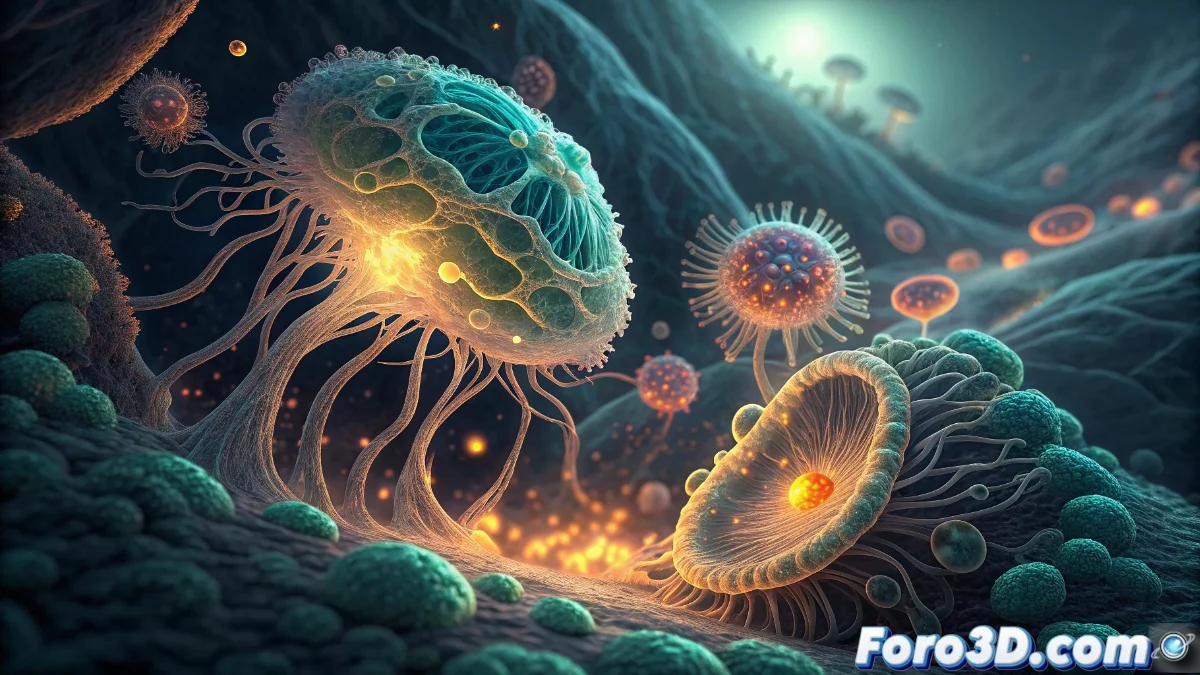
Procedural Biological Textures in Material Design
The biomimetic revolution is radically transforming the creation of digital materials by emulating natural microscopic structures 🧬. From cell membranes to intricate fungal mycelium networks, these organic inspirations are enabling digital artists to develop dynamic surfaces with visually fascinating evolutionary behaviors.
Advanced Procedural Generation Techniques
The creation of these biological textures is based on sophisticated procedural systems that replicate authentic natural processes. Developers implement specialized shaders and particle configurations that simulate phenomena such as cell mitosis or bacterial colony expansion, achieving results that would be unattainable with traditional texturing methodologies.
Main Tools and Algorithms:- Cellular noise nodes in Blender and Substance Designer to recreate biological clustering patterns
- Reaction-diffusion algorithms that generate morphologies similar to animal skins and coral formations
- Multilayer workflows with displacement maps that provide real physical depth to simulated microestructures
The beauty of these systems lies in their ability to emulate the complexity of nature through simple mathematical rules that generate visually rich and organic results.
Innovative Applications in Various Sectors
These bioinspired materials find implementation in fields as diverse as medical visualization and cinematic production. Researchers use precise representations of tissues based on real biological structures, while VFX studios create convincing organic creatures by combining real scans with advanced biological procedurals.
Highlighted Implementations:- Scientific visualization of microorganisms and tissues with anatomical precision
- Development of cinematic visual effects for creatures and organic environments
- Real-time animated textures in game engines that simulate living surfaces
Practical Considerations and Final Reflections
The potential of these procedural techniques is immense, but it requires a careful balance between complexity and artistic control 🎨. As a humorous note, if your materials start showing signs of independent consciousness, you've probably exceeded the node complexity and it's time to rest. The ongoing evolution of these methodologies promises to open new frontiers in digital material design with authentic organic characteristics.