
When 3D Analysis Prevents Architectural Tragedies
Preventive forensic engineering applied to Madrid's IMAX cinema demonstrates how free 3D software can save lives and heritage through early identification of structural risks. This methodology combines precise architectural modeling, stress analysis, and structural behavior simulations using exclusively open-source and free tools. The IMAX case is particularly relevant due to its complex geometry and large spans, characteristics that make it an ideal candidate for this type of preventive analysis.
What makes this approach unique is its universal accessibility: any citizen, group, or professional can replicate these analyses without million-dollar investments in specialized software. Using Blender for modeling and visualization, FreeCAD for basic structural analysis, and open-source simulation tools, we can create an early warning system for public infrastructure. This democratization of forensic engineering represents a paradigm shift in structural safety.
The best structural tragedy is the one that never happens because it was prevented in time
Preventive Forensic Engineering Methodology
The process begins with the thorough documentation of the existing structure using photogrammetry with smartphones and on-site measurements. For the IMAX, this involves capturing the characteristic geometry of the dome and perimeter supports, documenting not only the visible form but also stress indicators such as cracks, deformations, and corrosion. This data is integrated into a unified 3D model that serves as the basis for all subsequent analyses.
The Blender modeling phase faithfully recreates the IMAX structure with special attention to critical points: joints between elements, section changes, and areas subject to higher loads. We use mesh modifiers and precision tools to ensure the model respects real dimensions and documented material properties. The result is an exact digital replica ready for structural analysis.
- Photogrammetric documentation: capture of existing geometry with smartphones
- Precise architectural modeling: faithful recreation in Blender of the entire structure
- Identification of critical points: joints, section changes, and high-load areas
- Preparation for analysis: model optimization for structural simulations
Structural Analysis with FreeCAD and Add-ons
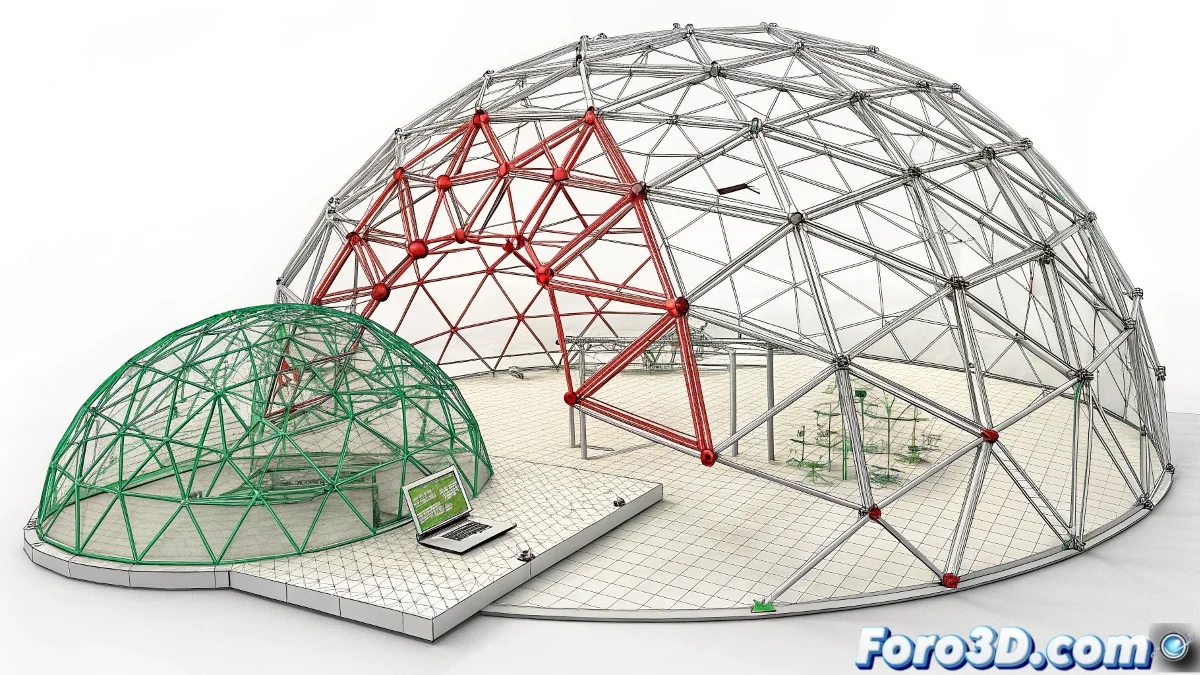
Once we have the model in Blender, we export it to FreeCAD where we use the FEM (Finite Element Method) module for structural analysis. We configure the material properties of concrete and steel according to original specifications, apply realistic boundary conditions, and define the most critical load scenarios: dead load, live loads, wind, and seismic. The analysis reveals stress patterns that identify vulnerable areas before they manifest physically.
For the IMAX, the analysis focuses on the load transfer from the main dome to the supports and the stability of the characteristic cantilevers. We use adaptive finite element meshes that automatically refine in areas of high stress gradients, ensuring precision where it's most needed. The results are visualized through color maps that clearly show zones approaching their capacity limits.
Free software doesn't make analysis cheaper, it makes structural safety more accessible
- Finite element analysis: using FreeCAD's FEM module
- Material setup: real properties of concrete and structural steel
- Multiple load scenarios: dead load, use, wind, and seismic
- Results visualization: stress and deformation maps
Failure Scenario Simulation in Blender
Complementing FreeCAD's static analysis, we use Blender with the physics system to simulate dynamic behaviors and progressive failure scenarios. We configure rigid body and soft body simulations that show how failures would propagate through the structure under different extreme conditions. These simulations are particularly valuable for understanding collapse mechanisms and identifying primary failure points.
For the IMAX, we simulate scenarios such as the failure of a main support, asymmetric overloads, and resonance effects. Blender's particle system helps visualize how loads would redistribute after the failure of a structural element, while animation tools enable the creation of comprehensible visualizations of complex processes for communication with non-experts.
Deterioration Pattern Detection with Visual Analysis
A unique advantage of the 3D approach is the ability to integrate visual inspection directly into the analytical model. We developed a methodology for mapping photographic evidence of deterioration onto the 3D model, creating a spatial database of structural conditions. For the IMAX, this means georeferencing every crack, moisture stain, and corrosion area in its exact location within the structural model.
We use custom shaders in Blender to visualize the temporal evolution of deterioration through animations that show how damage has progressed over time. This allows identification of patterns that reveal underlying causes, such as differential settlements, material fatigue, or original construction defects, which would otherwise go unnoticed in conventional inspections.
- Evidence mapping: integration of deterioration photos into the 3D model
- Temporal analysis: visualization of damage progression over time
- Pattern identification: detection of underlying causes of deterioration
- Spatial documentation: georeferenced database of structural conditions
Validation with Real Data and Low-Cost Sensors
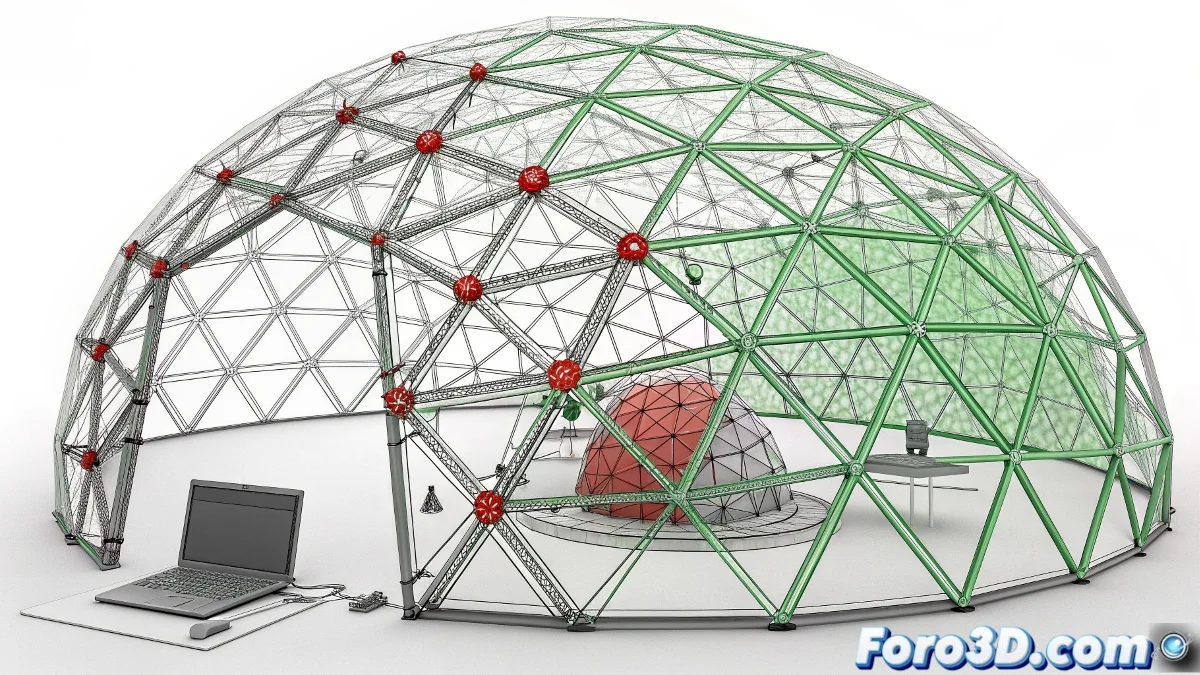
To validate our models, we implemented a low-cost monitoring system using Arduino and Raspberry Pi sensors that measure vibrations, displacements, and tilt changes at strategic points of the IMAX. This data is continuously compared with our model predictions, allowing us to adjust and improve the accuracy of our simulations. The feedback between model and reality creates an increasingly precise and reliable system.
Homemade vibration sensors detect natural resonance frequencies that could amplify under certain conditions, while DIY inclinometers monitor slow deformations indicating incipient structural problems. All this data is visualized in real-time dashboards using open-source software, creating a fully accessible early warning system.
Data doesn't lie, but it needs 3D models to tell its full story
- Low-cost sensor monitoring: vibration, displacement, and tilt
- Model validation: continuous comparison between predictions and real measurements
- Resonance detection: identification of problematic natural frequencies
- Early warning system: real-time dashboards with open-source software
Communicating Risks to Authorities and the Public
One of the biggest challenges in preventive forensic engineering is communicating technical findings in a comprehensible way to decision-makers and the general public. We developed Blender visualizations that transform complex data into clear narratives, showing exactly what could fail, how it would fail, and what consequences it would have. For the IMAX, we created animations comparing current behavior with the ideal and evacuation scenario simulations based on different structural failure hypotheses.
We use Blender's Eevee engine for real-time rendering during presentations, allowing interactive exploration of different scenarios and immediate responses to specific questions. Exports to web format with Three.js enable anyone with a browser to examine the findings from any device, completely democratizing access to structural safety information.
Preventive Action Protocol
The analysis doesn't end with risk identification; we developed a specific preventive action protocol for the IMAX that includes immediate measures, continuous monitoring, and medium-term interventions. Recommendations are prioritized by criticality and cost, from low-cost temporary reinforcements to major structural modifications. Each recommendation includes detailed implementation instructions, cost estimates, and realistic timelines.
To ensure sustainability, we designed a predictive maintenance system based on our models that schedules inspections and maintenance according to actual condition rather than elapsed time. This optimizes resources while maximizing safety, creating a replicable model for other public infrastructures in similar situations.
- Immediate measures: temporary reinforcements and safe use protocols
- Continuous monitoring: permanent structural surveillance system
- Scheduled interventions: repairs and reinforcements by priority and resources
- Predictive maintenance: planning based on actual condition, not time
Impact and Replicability of the Method
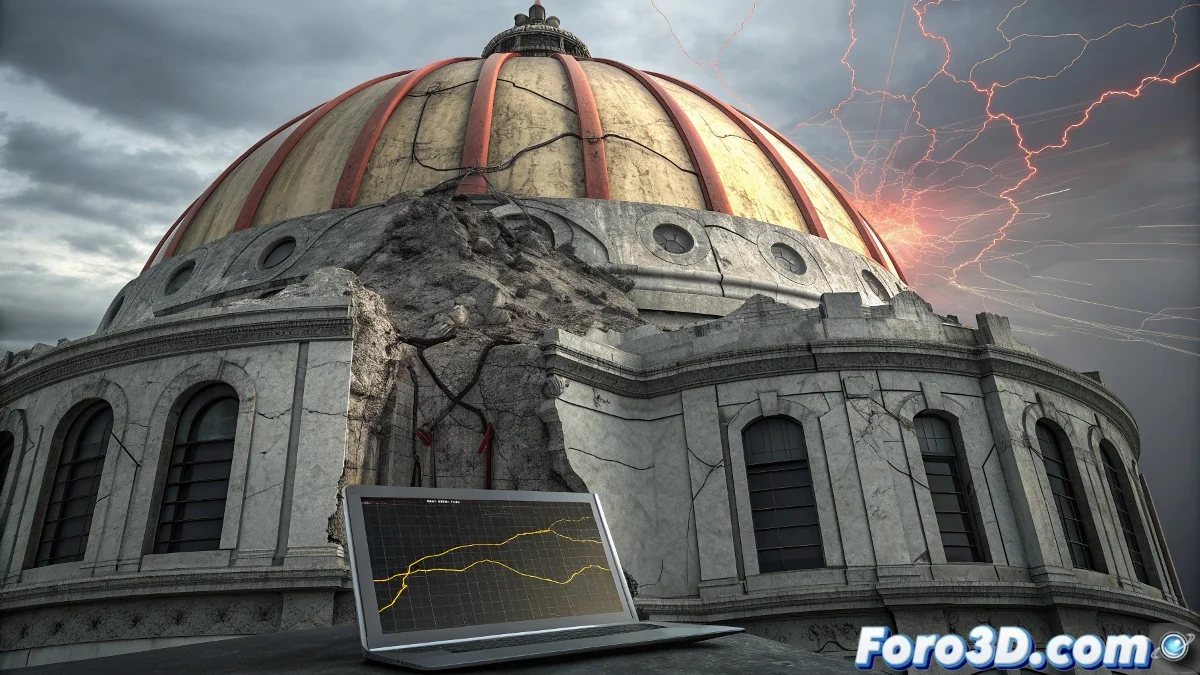
This preventive forensic engineering methodology using free software demonstrates that structural safety should not be a luxury accessible only to high-budget projects. The Madrid IMAX case serves as a replicable example for hundreds of public infrastructures in similar situations, from historic theaters to municipal sports centers, that could benefit from this type of preventive analysis.
Most significantly, it empowers local communities and professionals to take control of their infrastructure safety, reducing dependence on expensive consultancies and creating sustainable local technical capacity. Each completed analysis not only prevents a potential tragedy but also builds collective knowledge and community resilience capacity.
In the end, preventive forensic engineering with free software reminds us that the best structure is the one that remains standing because someone took the time to understand it in 3D 🏗️