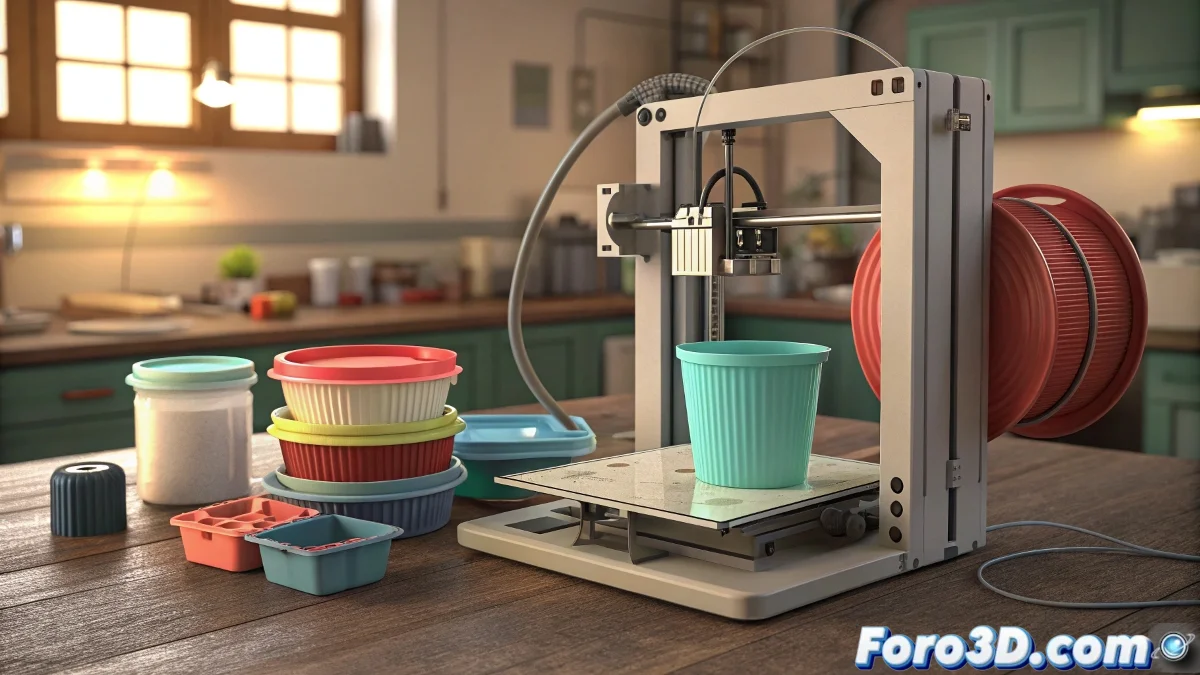
The Chameleon of Thermoplastics
PP Polypropylene emerges as one of the most versatile materials in the 3D printing landscape, offering a unique combination of properties that make it ideal for applications where other filaments fail. Known for its ubiquitous presence in food packaging and automotive components, this semi-crystalline thermoplastic brings its industrial reputation to the realm of additive manufacturing. Its excellent impact resistance, low density, and ability to create functional living hinges immediately distinguish it from other market materials.
What makes polypropylene special is its exceptional fatigue resistance to flexing. Unlike more rigid materials that may break after repeated flex cycles, PP can be bent thousands of times without failing, a property it masterfully exploits in the famous living hinges. This characteristic, combined with its inherent chemical resistance to acids, bases, and solvents, makes it the preferred choice for applications requiring durability in challenging environments.
Outstanding Technical Properties
- Excellent impact resistance even at low temperatures
- Low density that produces the lightest possible parts
- Superior chemical resistance to most filaments
- Ability to create fully functional living hinges
The Art of Mastering a Slippery Material
Printing with polypropylene requires overcoming its notorious bed adhesion difficulty. This material exhibits significant shrinkage during cooling and poor adhesion to most conventional surfaces. Experienced users employ specialized techniques such as using a polypropylene bed made of the same material, high-adhesion masking tape, or specialized surfaces like BuildTak. Bed temperature between 80°C and 100°C is crucial, along with an enclosed chamber to control the thermal gradient.
PP challenges and rewards with capabilities that few materials can match
The optimal printing setup involves nozzle temperatures between 220°C and 240°C and moderate speeds of 30-50 mm/s. Cooling must be used with caution, as PP requires maintaining a certain temperature between layers to promote good layer-to-layer adhesion. A unique feature is its tendency to produce perfect bridges thanks to its controlled shrinkage during cooling, making it exceptional for geometries with large spans without supports.
Applications Where Polypropylene Shines
- Packaging and containers with integrated hinges
- Automotive components and wear parts
- Medical devices and lab equipment requiring sterilization
- Toys and consumer products needing durability
The versatility of PP polypropylene has found applications in diverse sectors such as medical, automotive, and consumer goods. Its ability to produce lightweight yet incredibly resistant parts, combined with its excellent chemical resistance, positions it as the material of choice for applications where performance in adverse conditions is priority. Although it presents significant technical challenges, the unique capabilities it offers more than justify the learning curve required to master it. 🎯
Working with polypropylene is like trying to tame a slippery cat: it seems impossible at first, but once you understand its nature, it rewards you with flexibilities that other materials can't even dream of. 🐱
You can see this product and similar ones in the: store