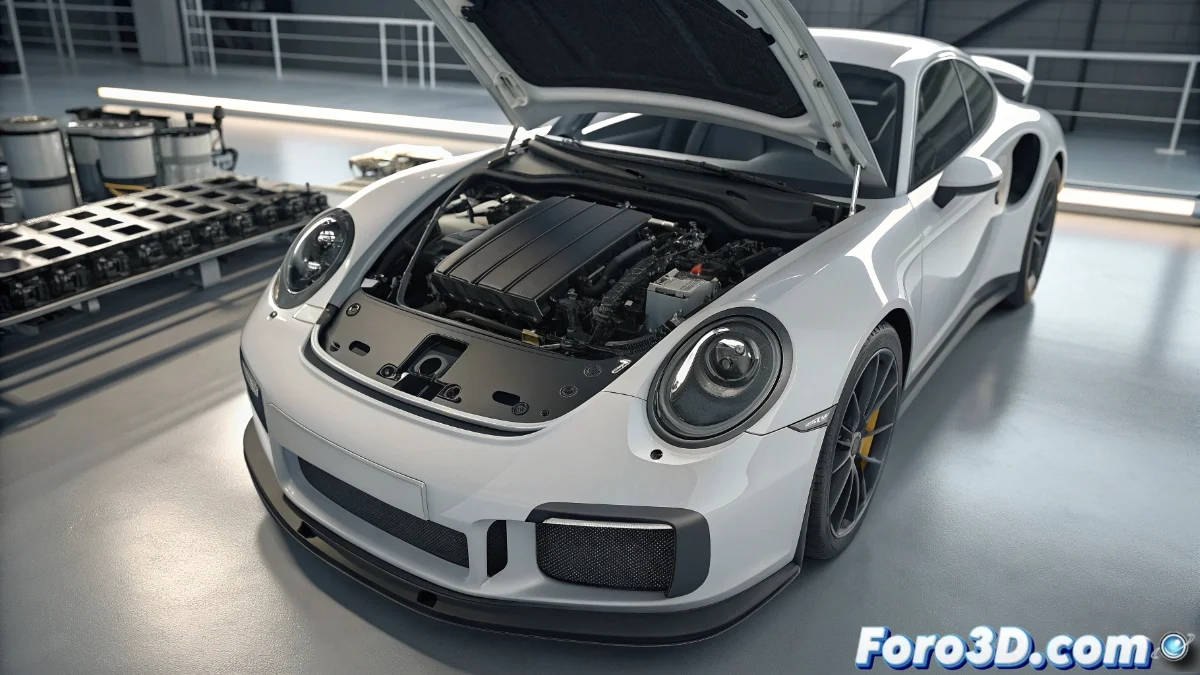
Porsche Revolutionizes Its Production with 3D Printing Technology
Additive manufacturing has become a fundamental pillar within Porsche's industrial strategy, being implemented both in its most exclusive sports cars and in the production of components for historic vehicles. This dual approach demonstrates the brand's commitment to preserving automotive heritage and cutting-edge technological innovation 🚗💨.
Innovative Applications in the Porsche 911 GT2 RS
The iconic Porsche 911 GT2 RS incorporates elements manufactured using 3D printing that significantly improve its performance. Among these components are the engine battery mount, optimized to reduce weight while maintaining structural rigidity, and the experimental pistons designed to withstand extreme pressure and temperature conditions 🔥.
Key components manufactured with 3D printing:- Engine battery mount with 40% weight reduction
- Experimental pistons with optimized internal geometry
- Structural elements with designs impossible to produce traditionally
"3D printing allows us to create solutions that were previously technically unfeasible, benefiting both our most advanced vehicles and the classics that deserve to stay on the road" - Porsche Development Engineer
Strategic Advantages of Additive Manufacturing
3D printing technology offers unique advantages that Porsche has strategically leveraged. It enables the creation of complex internal geometries that optimize the strength-to-weight ratio, while also solving the problem of parts shortages for older vehicles through on-demand production 📊.
Main benefits of implementation:- Production of discontinued parts without the need to maintain costly inventories
- Ability to create organic and topologically optimized designs
- Reduction in development and prototyping times
Impact on the Porsche Ecosystem
This technological revolution equally benefits owners of classic Porsches who can keep their vehicles in perfect condition, and performance enthusiasts who enjoy lighter and more efficient components. The same technology that seemed limited to domestic applications is now redefining automotive manufacturing at all levels 🏁.