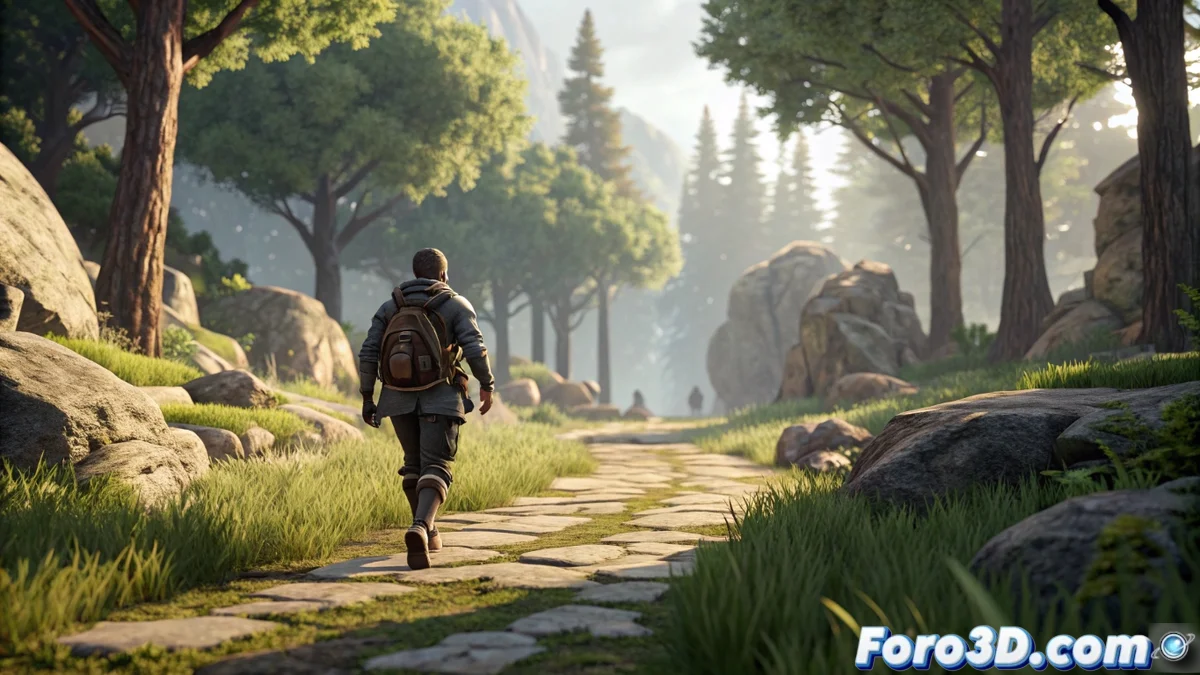
Pop-in and How It Affects Immersion in 3D Graphics
In real time, pop-in is that instant when environment elements, like a tree or a shadow, materialize suddenly in front of the viewer. This technical phenomenon occurs because the graphics engine manages resources dynamically, loading details only when the user gets closer. Although it is a practical solution for optimization, its abrupt nature can fracture the illusion of a continuous world and expose the limits of the simulation. 🌄
Why Does Pop-in Happen? Technical Causes
The origin is not unique, but a combination of systems that seek to balance visual fidelity and performance. The main culprit is level of detail (LOD) systems, which exchange complex models for simplified versions based on distance. The draw distance defines the radius where objects are rendered, and if it is too short, things "appear". Additionally, texture streaming may not load in time, and dynamic shadows often calculate their full resolution only in a close range. All of this converges in that sudden visual change.
Key mechanisms that cause it:- LOD systems: Abrupt transitions between high and low polygonal complexity models.
- Rendering limits: A tight draw distance makes objects emerge from nowhere.
- Asset streaming: When bandwidth or video memory fails to deliver textures on time.
It is the magical moment when a bush decides to be born before your eyes, kindly reminding you that everything is an ingenious trick.
Strategies to Reduce Its Visibility
Mitigating this effect is crucial to maintain immersion. Developers employ several tactics to smooth transitions and hide system limits. Adjusting the LOD level change distances to be more progressive is fundamental. Techniques like dithering or alpha fades help disguise changes. Increasing hardware resources, such as video memory, allows for smoother texture streaming.
Technical and artistic solutions:- Gradual transitions: Smooth the exchange between LODs and increase activation distances.
- Occlusion techniques: Use fog, dense vegetation, or scene composition to hide rendering limits.
- Advanced technologies: Implement systems like Nanite or virtual geometry, which eliminate discrete LODs but require powerful hardware.
Conclusion: A Necessary Balance
Pop-in is a direct consequence of the challenge to render complex worlds in real time. While optimization techniques like LOD are indispensable, their implementation defines the user experience. The future lies in smarter graphics engines and artistic design that works with, and not against, these technical limitations. Mastering this balance is key to building believable digital worlds. 🎮