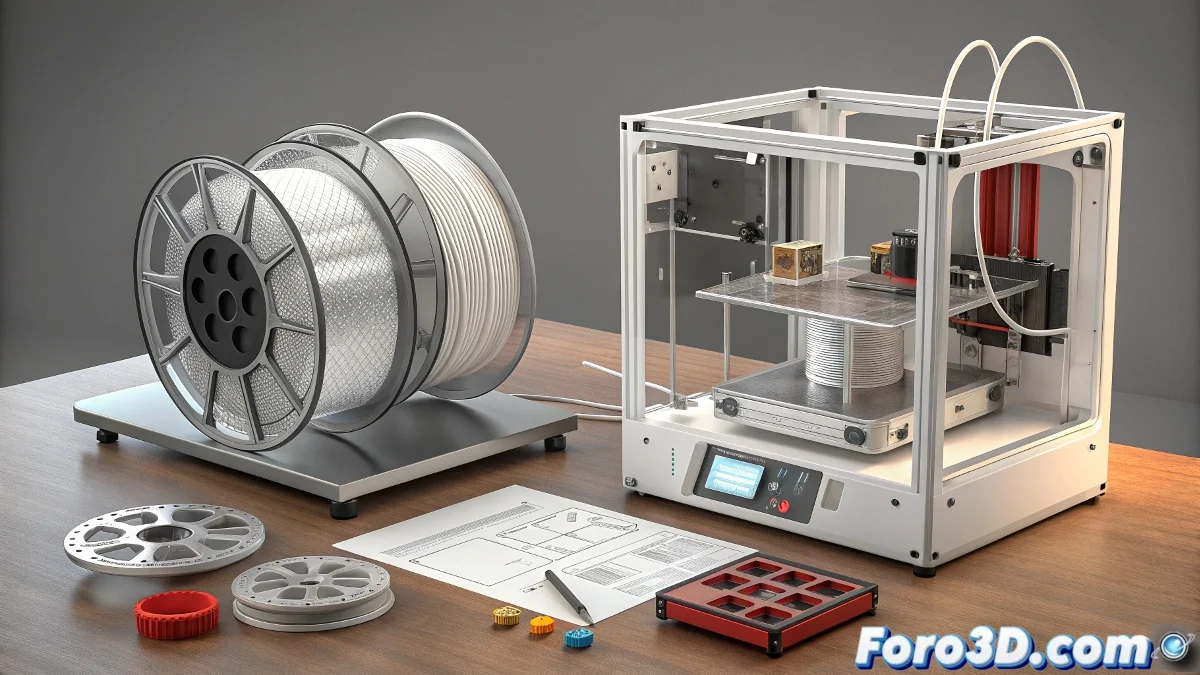
The Titan of Thermoplastics
Polycarbonate stands out as the reference material when demands exceed the conventional. With impact resistance that rivals metals and a deflection temperature that challenges other filaments, this engineering grade thermoplastic represents the pinnacle of professional 3D printing. Its ability to withstand temperatures above 110°C without deforming makes it the obligatory choice for applications where heat is the main enemy.
What distinguishes Polycarbonate is its unique combination of mechanical and thermal properties. While other materials soften or break under stress, PC maintains its structural integrity in conditions that would cause most thermoplastics to fail. Its natural transparency and flame resistance add additional qualities that expand its field of application from industrial components to medical devices and aerospace.
Exceptional Properties of Polycarbonate
- Extremely high impact resistance, even at low temperatures
- Heat deflection temperature above 110°C under load
- Natural optical transparency with possibility of mirror polishing
- Excellent dimensional stability and creep resistance
The Technical Challenge of Printing Polycarbonate
Mastering Polycarbonate requires specialized equipment and impeccable technique. Printing temperatures range between 270°C and 310°C, demanding hotends capable of operating consistently in this range without degrading the material. The heated bed must maintain between 100°C and 120°C, and an enclosed chamber is absolutely essential to prevent thermal stress cracking during cooling.
Polycarbonate rewards the investment in equipment and knowledge with unparalleled capabilities
Moisture management is critical for success with this material. Polycarbonate avidly absorbs ambient moisture, which generates bubbles, strings, and molecular degradation during printing. Professional users employ active dry boxes during printing and specialized dryers before each use. The reward for this meticulousness is a material with mechanical properties comparable to injection-molded polycarbonate.
Applications Where Polycarbonate is Indispensable
- Automotive components that withstand engine temperatures
- Medical devices requiring autoclave sterilization
- Industrial tools and fixtures for manufacturing processes
- Electronic enclosures for high-power equipment
Polycarbonate's ability to be cemented, machined, and thermoformed opens advanced post-processing possibilities. Its natural transparency allows creating parts with optical clarity that can be polished to achieve a glass-like finish. For applications where performance takes precedence over ease of use, Polycarbonate remains the undisputed king of professional 3D printing materials. 🔥
Working with Polycarbonate is like taming a lion: it requires respect, proper equipment, and a lot of patience, but once controlled, there is no better guardian for your most demanding projects. 🦁
You can see this product and similar ones in the: store