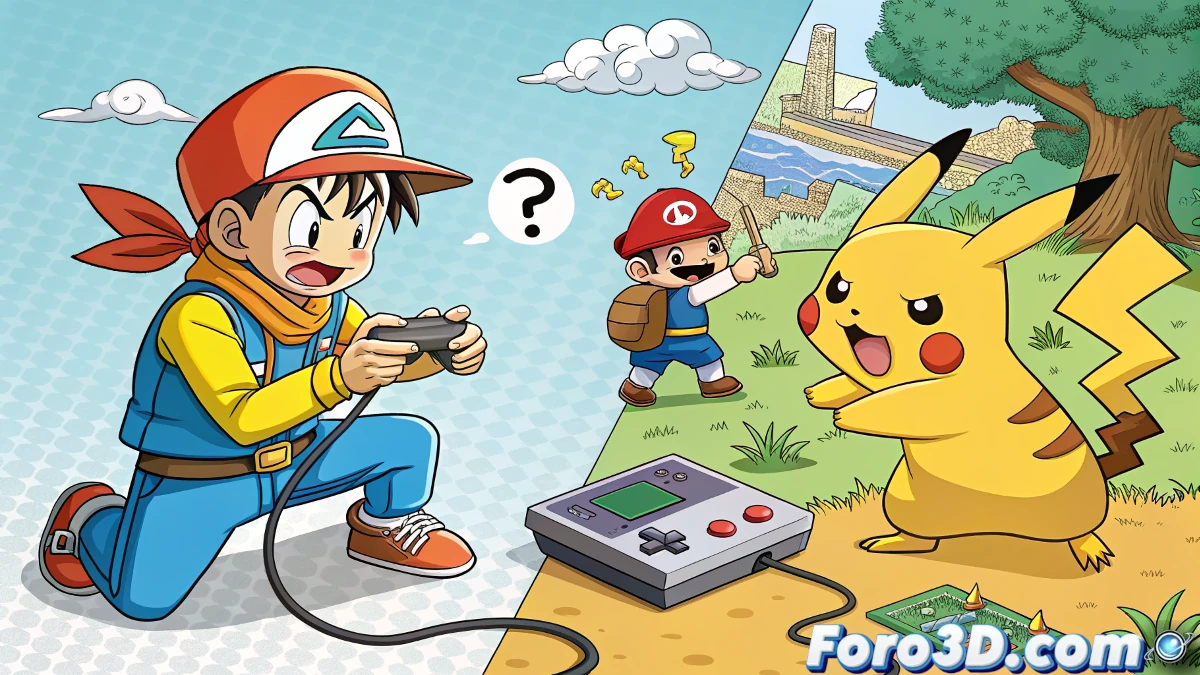
Pokémon Has Brought the Trade That Changed Video Games
Since its launch in the 90s, the Pokémon franchise has captivated entire generations with its creatures, stories, and unique mechanics. Recently, during the Pokémon Presents event, exciting new features were announced such as Pokémon Champions and Pokémon Legends: Z-A, along with updates for the Pokémon Trading Card Game. However, there is a fundamental aspect that many take for granted: the trading system, an idea that did not come out of nowhere, but was inspired by another iconic video game saga.
The Unexpected Origin of Trading
It's hard to imagine a Pokémon world without the ability to trade creatures. This system, present since the first games, Pokémon Red and Blue, has become a cornerstone of the experience. What many don't know is that this idea was not originally created by The Pokémon Company, but arose from the frustration of its creator, Satoshi Tajiri, while playing Dragon Quest II.
"The frustration of not being able to trade items in Dragon Quest II inspired me to create a trading system in Pokémon." — Satoshi Tajiri.
The Frustration That Gave Birth to a Revolution
Tajiri recalled how, while playing Dragon Quest II on the NES, he tried to get a Magic Hat from his friend and Pokémon character designer, Ken Sugimori. This extremely rare item was only dropped by certain enemies, like the Tyrannodactyl. The difficulty in obtaining it, combined with the enemy's massive attacks, generated frustration in Tajiri that stayed with him for years. That experience inspired him to create a trading system in Pokémon, where players could help each other.
- Inspiration from Dragon Quest: Tajiri's frustration at not being able to trade items.
- Player Collaboration: A system that encourages mutual help.
- Evolution of Trading: From link cables to global connectivity.
From a Link Cable to an Interconnected World
Initially, Tajiri considered developing Pokémon for the Famicom (the Japanese NES), but it was the Game Boy and its link function via the Link Cable that convinced him to choose this console. This system allowed players to trade Pokémon and items with friends, something revolutionary for the time. Over time, trading has evolved from using cables to global connectivity thanks to wireless internet, allowing players from all over the world to interact and complete their collections.
A Legacy That Continues to Grow
Today, Pokémon is a global phenomenon that has left an indelible mark on popular culture. The trading system not only revolutionized the way games are played, but also fostered collaboration and connection between players. Whether trading creatures in the video games or cards in the Pokémon Trading Card Game, this mechanic remains a fundamental pillar of the Pokémon experience.
With each new generation of games and updates, the franchise demonstrates that its legacy is far from disappearing. Pokémon is not just a series of video games; it is a global community that continues to grow and evolve, keeping alive the magic that began with a simple trade.