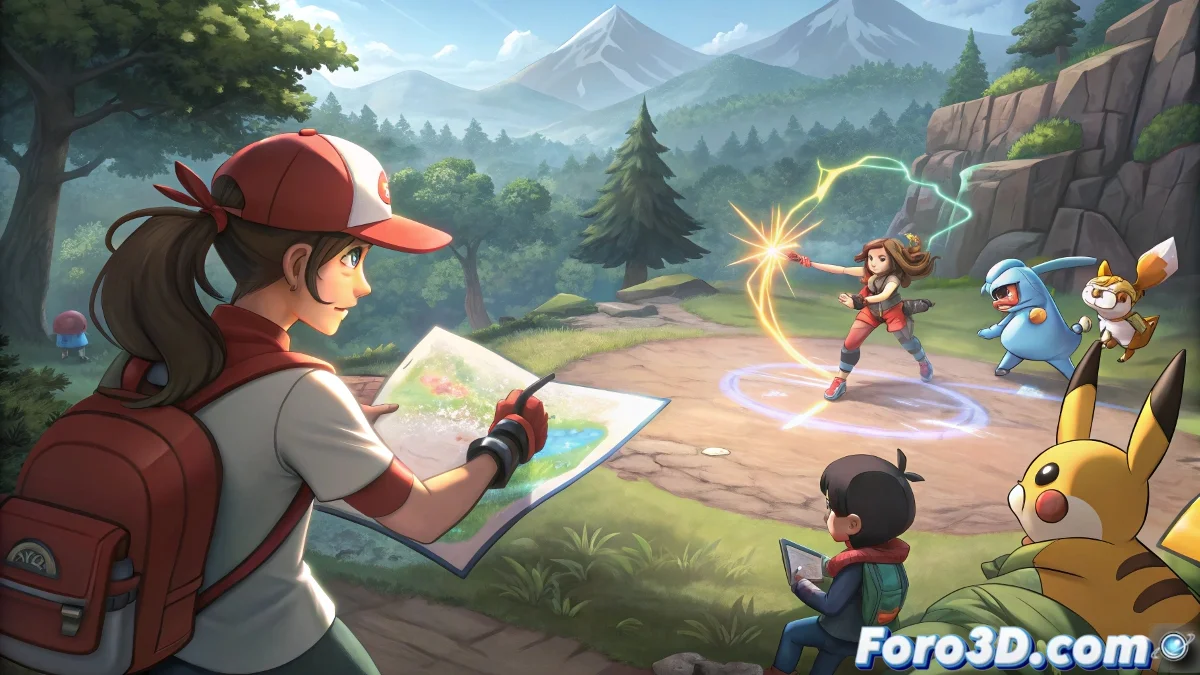
When Video Games Understand That Equality Is Also Caught with Pokeballs
The Pokemon franchise demonstrates once again that it listens to its community with the announcement of Legends Z-A. The game recovers and expands female empowerment features that had been removed in previous installments, responding to years of requests from fans seeking greater representation and customization for female characters. Nintendo seems to have understood that capturing fantastic creatures and fighting for equality can be complementary goals.
What began as basic customization mechanics evolves into a comprehensive system that allows female players to express their identity in more authentic ways. From diverse wardrobe options to narratives that challenge gender stereotypes, the game builds on the foundations established by previous installments but takes them to new levels of sophistication and inclusion. The community celebrates this step forward. 🎮
The true power in video games is not only measured in attack points, but in the ability to represent all players with dignity
Features That Make the Difference
The empowerment focus in Legends Z-A manifests through multiple dimensions of game design, integrating female representation organically into the gaming experience.
- Expanded customization that transcends traditional gender binaries
- Complex female characters with diverse roles in the main narrative
- Game mechanics that do not penalize feminine aesthetic choices
- Female leadership representation in positions of power within the Pokemon world
The developers have worked with inclusive consultation groups to ensure that representations are authentic and avoid falling into harmful stereotypes. The result is a Pokemon world that feels more alive and representative.
The Historical Context of Representation in Pokemon
This evolution does not occur in a vacuum but responds to a decades-long trajectory within the franchise. From the first installments to Legends Z-A, female representation has followed a path with ups and downs.
- Early generations with mostly decorative female characters
- Progressive introduction of female rivals and gym leaders
- Periods of regression in customization and representation
- Recovery and expansion in recent installments following community feedback
The fan community has been instrumental in this process, maintaining constant conversations about representation through forums, social media, and direct communication with developers.
Impact Beyond the Screen
These design decisions have repercussions that transcend the realm of entertainment. For many young female players, seeing positive and diverse representations in their favorite games influences their self-image and aspirations.
The gaming industry as a whole watches how mainstream franchises like Pokemon integrate inclusion principles, setting new standards for triple-A game development. The message is clear: diversity is not only morally right, but commercially smart. ✨
And if Nintendo executives ever doubted this direction, they probably now understand that female empowerment is as effective for sales as a Pikachu using Thunderbolt... but with better type coverage 😉