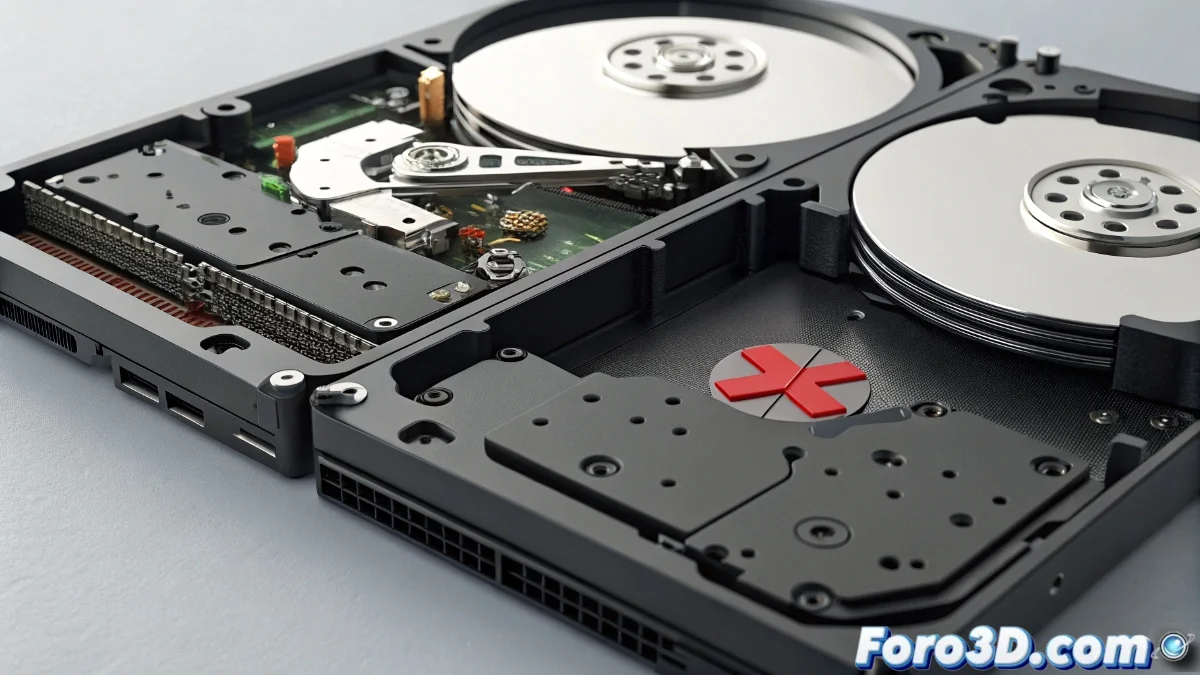
Storage Limitations in PlayStation 3 and 4: A Persistent Problem 🎮
The PlayStation 3 and PlayStation 4 consoles present significant challenges in their storage systems due to the use of hard drives with exclusive format and firmware that limits compatibility with third-party components. This technical approach makes it difficult for users to perform basic replacements when drives fail or to install alternative software, which can render the consoles completely unusable in cases of storage failure or capacity saturation. The architecture includes data encryption, inaccessible partitions, and firmware restrictions that block unauthorized modifications, creating absolute dependence on Sony's original components to preserve system functionality. 🕹️
Evolution in Recent Models
The situation has seen partial improvements in more modern console generations, where late revisions of the PlayStation 4 and the PlayStation 5 allow direct swapping of hard drives or SSDs without compromising system compatibility. These versions incorporate firmware updates that support a wider variety of storage units and simplify user maintenance procedures. However, this flexibility does not extend to early PS3 models or initial PS4 versions, which retain the original restrictions and force owners to purchase official components at high prices or face functional obsolescence of their equipment.
Main Differences Between Generations:- Older Models: Proprietary format that blocks the use of standard drives
- Recent Revisions: Expanded compatibility with SSDs and third-party drives
- Firmware: Updates that enable greater flexibility in new models
It is paradoxical how a system designed to prevent modifications ends up permanently altering the utility of your console when you need it most.
Impact on Hardware Durability
Technical limitations continue to affect the lifespan of numerous older consoles, where proprietary storage and closed firmware establish insurmountable barriers to repairs or upgrades. Owners of these models are forced to rely exclusively on original parts or authorized technical services, increasing maintenance costs and accelerating the retirement of equipment that could continue operating with standard components. This circumstance reflects a product planning approach that prioritizes control over sustainability, leaving many users with functionally obsolete hardware due to avoidable design details.
Main Consequences:- Increase in maintenance and repair costs
- Artificial reduction of hardware lifespan
- Exclusive dependence on official components and services
Final Reflections
The storage dilemma in PlayStation consoles highlights the tension between manufacturer control and user autonomy. While newer generations show advances toward greater flexibility, older models remain trapped in cycles of premature obsolescence due to design decisions that could have been avoided. Users thus face the dilemma of maintaining equipment with expensive components or giving up hardware that, at its core, remains functional. 🔧