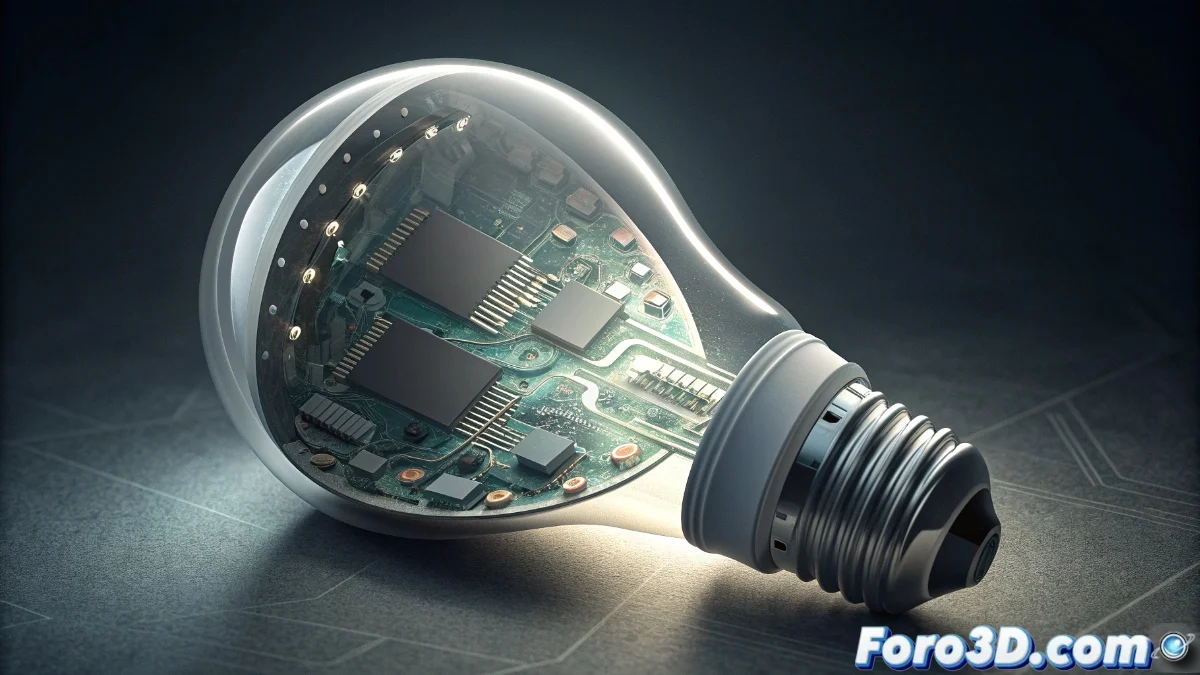
Planned Obsolescence in Smart LED Bulbs
Smart LED bulbs promise us a revolution in lighting with decades of lifespan, but the reality hides a fundamental problem: while the light-emitting diodes can remain operational for years, the internal electronic components usually fail much earlier, creating a scenario of premature obsolescence that affects millions of users. 💡
The Technological Paradox: Durable LEDs vs Fragile Electronics
LED diodes are extraordinarily resilient semiconductor components capable of exceeding 50,000 hours of continuous use, but the control circuitry that accompanies them in smart versions incorporates elements like electrolytic capacitors, switching power supplies, and processing chips that deteriorate progressively with each on/off cycle. These components are frequently manufactured with low-quality materials to reduce production costs, accelerating their degradation and severely limiting the lifespan of the entire device.
Critical Failure Points in Internal Electronics:- Capacitors that lose capacity due to thermal fluctuations
- Power supplies vulnerable to voltage spikes
- Control chips overloaded by constant updates
We buy smart devices to have more control over our environment, but we end up depending on corporate decisions that turn our advanced lighting into a mere reminder of what it could have been.
The Ephemeral Cloud: When Intelligence Fades Away
The service-based business model represents another front of vulnerability for these devices. Many connected bulbs rely entirely on cloud infrastructures maintained by their manufacturers for basic functions like remote control, scheduling, or color adjustments. When a company decides to discontinue support or simply ceases operations, mobile apps lose communication with the devices, rendering premium features useless for which users paid significantly more.
Functions That Disappear with Cloud Support:- Control via mobile apps and voice assistants
- Automatic scheduling and custom scenes
- Integration with other smart home ecosystem devices
The Future of Smart Lighting
This situation raises serious reflections on technological sustainability and consumer rights. Users find themselves trapped with physically functional but technologically obsolete devices, without affordable repair options or migration to independent local systems. The lack of standardization and proprietary protocols turn what should be a long-term investment into a disposable product, contradicting the principles of energy efficiency and waste reduction that LED technology is supposed to uphold. 🤔