Planned Obsolescence in Consumer Drones
Current commercial drones are victims of deliberate planning that shortens their functionality from the initial design. This industrial practice generates an accelerated consumption cycle that impacts users economically and the planet ecologically 🌍.
Artificial Limitations in Critical Components
Specialized batteries incorporate energy management systems that restrict their real capacity through artificially limited charge cycles. Many manufacturers implement progressive degradation mechanisms that decrease performance over time, while proprietary designs make independent replacement extremely difficult.
Main problems with batteries:- Maximum number of cycles far below the real technical potential
- Closed designs that prevent replacement by users
- Lack of availability of official spare parts after a short time
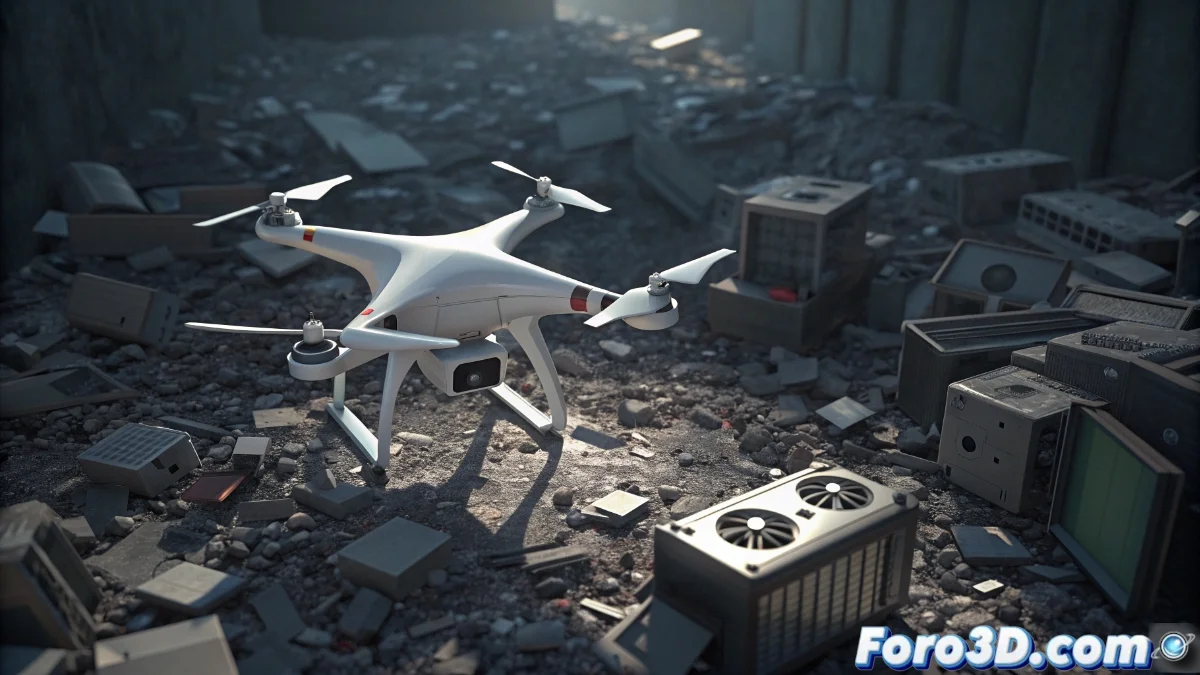
Drones, created to reach free heights, end up trapped in a programmed descent cycle toward electronic waste
Programmed Abandonment through Updates
Firmware support focuses exclusively on newly launched models, leaving previous devices without security fixes or performance improvements. Some updates even contain code that deliberately reduces capabilities in older versions to make new releases more attractive.
Consequences of software abandonment:- Functional devices become obsolete due to lack of support
- Updates that decrease performance in previous models
- Users forced to replace equipment without real technical need
Environmental and Economic Impact
This business strategy generates a constant flow of electronic waste that could be avoided, while consumers face recurring expenses for unnecessary replacements. The paradox is evident: technology designed to rise freely ends up condemned to a forced landing in landfills 🚁.