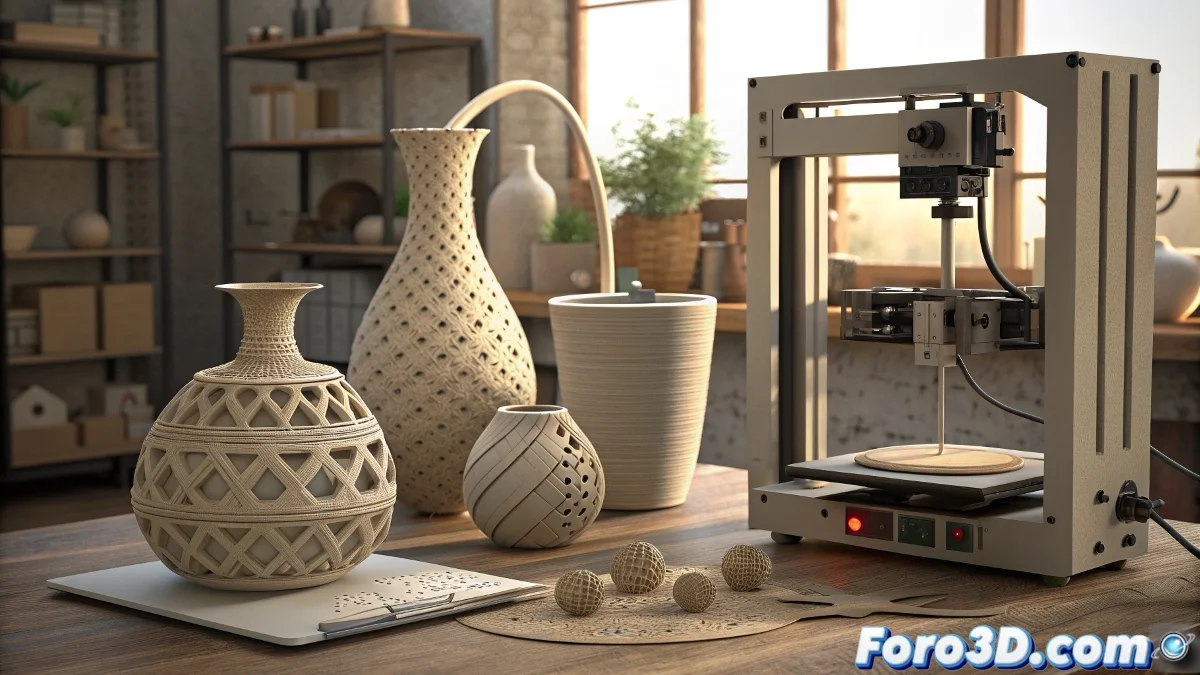
Pottery Meets the Digital Age
PLA with ceramic particles represents an extraordinary fusion between the millennia-old tradition of ceramics and the innovation of digital manufacturing, creating pieces that deceive the eye and touch with their similarity to authentic porcelain. This composite material incorporates microparticles of ceramic into a PLA matrix, resulting in objects that not only look like glazed ceramics but also possess that initial coolness to the touch and substantial weight so characteristic of high-quality ceramic pieces. The illusion is so convincing that many pieces require close inspection to distinguish them from traditional ceramics.
The uniqueness of this material lies in its ability to replicate the sensory properties of ceramics without the need for kilns or artisanal processes. The ceramic particles evenly distributed in the filament create an exceptionally smooth surface that diffuses light similarly to ceramic glaze, while the density of the composite material provides that sensation of solidity and permanence associated with high-end ceramic objects.
Aesthetic and Sensory Properties
- Ultra-smooth surface finish that minimizes layer lines
- Pure white color reminiscent of high-quality porcelain
- Significant weight that simulates the density of real ceramics
- Matte texture that can be polished to an enamel-like shine
The Challenge of Printing with Mineral Elegance
Working with ceramic PLA requires preparation for its notably abrasive nature. The incorporated mineral particles are considerably harder than the base PLA, making it essential to use hardened steel or tungsten carbide nozzles from the very first use. The ideal printing temperature ranges between 205°C and 225°C, with moderate speeds of 35-55 mm/s that allow for consistent extrusion of the composite material. Cooling at 60-80% usually produces the best results for decorative pieces.
Ceramic PLA democratizes the creation of objects that seem to come straight from a traditional potter's workshop
The true potential of this material unfolds during the specialized finishing process. Pieces can be progressively sanded with fine-grit water papers up to 2000 to achieve a finish similar to ceramic glazing. Some creators apply thin layers of UV resin or ceramic varnish to simulate the characteristic shine of glazed porcelain, while others prefer to maintain the matte appearance that evokes rustic ceramics or natural stoneware.
Applications Where Ceramic Elegance is Key
- Custom tableware and unique tea sets
- High-end sculptures and decorative figures
- Lighting elements and decorative lamps
- Jewelry and accessories with a mineral appearance
The ability of ceramic PLA to emulate the nobility and warmth of artisanal objects has captivated designers seeking to combine digital customization with the timeless aesthetics of traditional ceramics. From studios producing limited editions of decorative objects to restaurants desiring exclusive tableware, this material offers a perfect bridge between technological innovation and manufacturing tradition. The sense of quality and authenticity conveyed by the finished pieces explains why it has become the preferred material for applications where the perception of artisanal value is fundamental. 🫖
Printing with ceramic PLA is like being a 21st-century potter: you create pieces that seem hand-thrown and fired in an ancestral kiln, but with digital precision and without the risk of cracking during drying. 🎨
You can see this product and similar ones in the : store