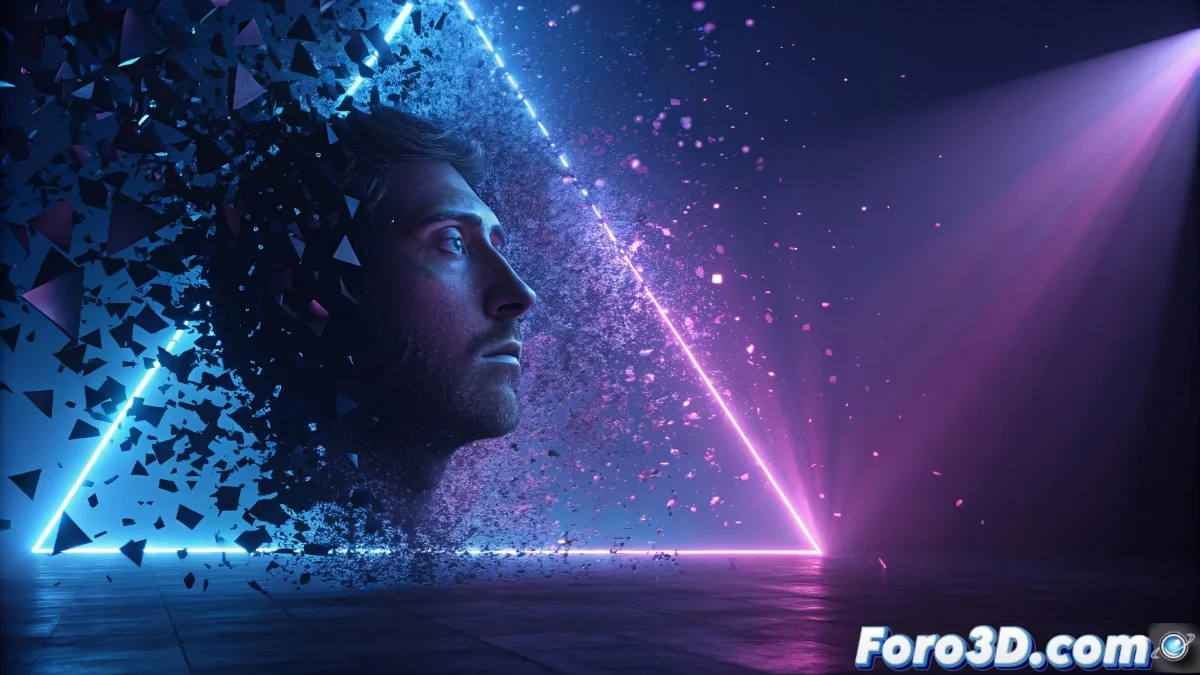
Pixel Shattering: Advanced Controlled Glitch Art Techniques
Pixel shattering constitutes a sophisticated evolution within contemporary glitch art methodologies, where we disintegrate image regions into pixelated cellular structures through digital processing algorithms. This technical approach transforms conventional photographs into visually fractured compositions, maintaining millimetric control over fragmentation density and dispersion vectors 🎨.
Pixelated Deconstruction Methodologies
We implement the process using adaptive selection masks that delimit specific zones for effect application. We configure essential parameters such as cell dimensions, breakage limits, and dispersion directions to orchestrate visual decomposition. Depth layers facilitate establishing hierarchies where certain areas preserve definition while others completely disintegrate into independent pixelated particles.
Essential Technical Components:- Dynamic masks for application zone selection
- Cell size control and breakage thresholds
- Directional dispersion vectors for controlled decomposition
True art emerges when you accidentally apply the effect to the entire layer and your project turns into an unsolvable puzzle, proving that perfect destruction can surpass controlled creation.
Integration into Production Workflows
We incorporate these methodologies within established creative pipelines using composition nodes in After Effects, Nuke, and Fusion. We develop custom shaders that generate controlled random variations, avoiding repetitive patterns in pixelated destruction. We export the resulting sequences in formats that preserve alpha channels for implementation in motion graphics projects or immersive audiovisual installations 💥.
Implementation Tools:- Processing for rapid prototyping and experimentation
- Houdini for complex effects and simulations
- TouchDesigner for real-time applications
The Balance Between Control and Chaos
The artistic essence of pixel shattering lies in the delicate balance between technical precision and elements of controlled randomness. Digital artists leverage these techniques to simulate dimensional ruptures and create visual narratives where methodical destruction becomes the primary means of expression, demonstrating that organized chaos can generate compositions of striking visual beauty ✨.