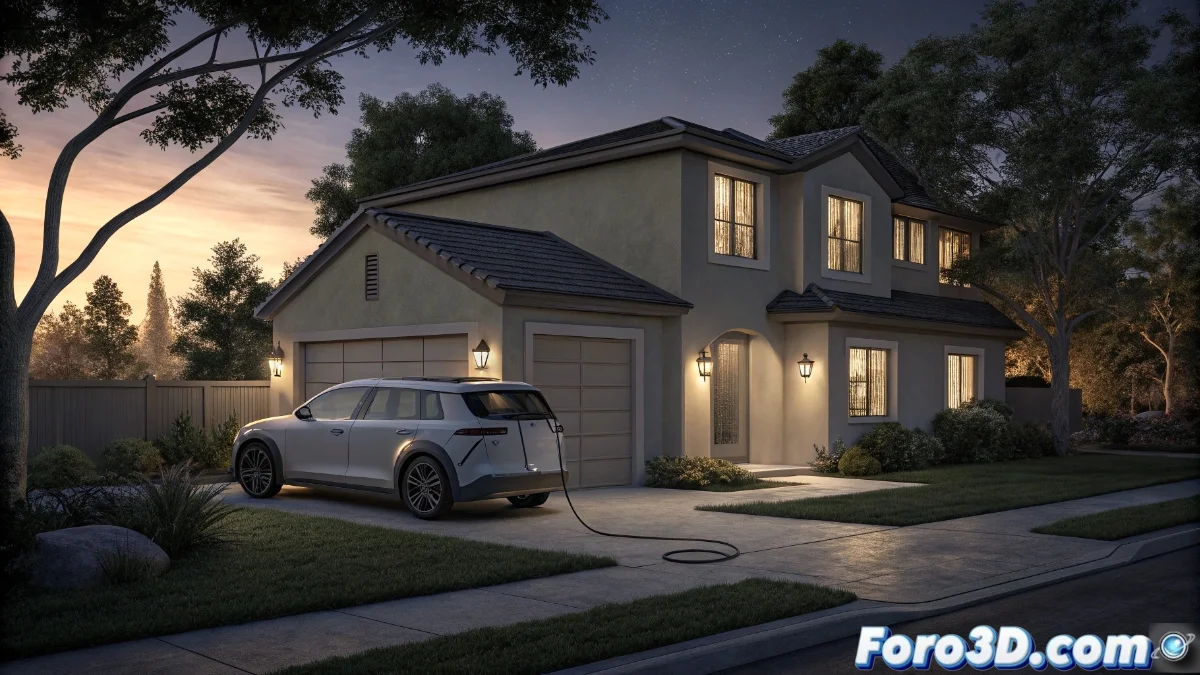
Pioneering V2H System with CCS Standard Revolutionizes Energy Management in California Homes
In the California locality of Menifee, an innovative project is underway where six newly constructed homes implement vehicle-to-home technology using the CCS standard for fast charging, commonly used in charging stations in Europe and North America. Each residence features a Kia EV9 connected to a Wallbox Quasar 2 bidirectional charger, allowing the vehicle's 100 kWh battery to supply electricity to essential circuits during service outages or periods of high tariffs. ⚡
Operating Mechanism of the V2H System with CCS Technology
The V2H system operates through the integration of the Kia EV9, whose high-capacity battery pack connects to the Wallbox Quasar 2 charger, specifically designed for bidirectional charging. This setup enables the energy stored in the vehicle to flow to the home installation, powering critical circuits such as lighting, refrigeration, and electronic devices during power outages. Compatibility with the CCS standard facilitates an efficient transition between vehicle charging and discharge to the home, optimizing energy use in real time. 🔄
Key Components of the System:- Kia EV9 with 100 kWh battery as a mobile energy storage unit
- Wallbox Quasar 2 as a bidirectional charger that manages energy flow
- CCS Standard that ensures interoperability with existing infrastructure
This project represents the first residential vehicle-to-home system in the United States that employs the CCS standard, opening new possibilities for home energy management.
Transformation in Residential Energy Management
This innovative approach not only provides a backup solution during blackouts but also allows residents to leverage their vehicles' energy during high electricity demand periods when prices are higher. By using a widely adopted standard like CCS, the system promotes interoperability and could accelerate the implementation of V2H technologies in other regions, contributing to a more resilient and sustainable electrical grid. The results of this pilot test could significantly influence future regulations and electric vehicle infrastructure developments in the United States. 🏠
Main Benefits of the Implementation:- Energy Autonomy during interruptions in conventional power supply
- Cost Reduction by using vehicle energy during peak hours with high tariffs
- Standardized Integration that facilitates replicability in other locations
Future Perspectives and Considerations
The choice of a Kia EV9 over a U.S. vehicle for this pioneering project raises interesting reflections on the electric automotive market. Residents can now rely on their cars as an energy source during power outages, although this introduces new considerations regarding battery capacity management. Developers emphasize that this technology not only represents an evolution in electric mobility but also a significant step toward decentralized energy systems that are more efficient. 🚗💡