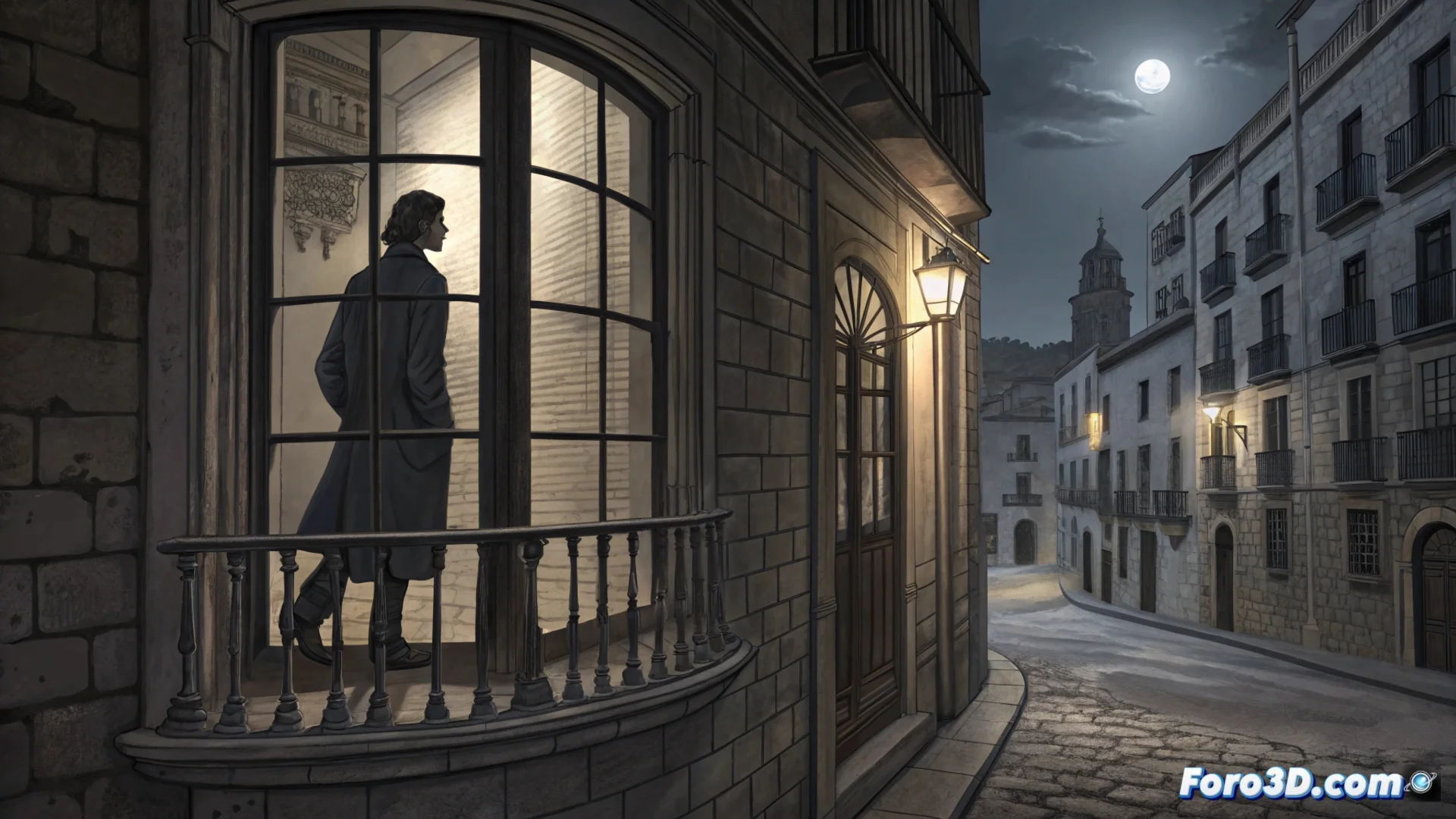
Pilate's Balcony: Between Legend and History in Seville
In the heart of Seville, the House of Pilate houses an architectural element that inspires numerous narratives. It is a Renaissance balcony that many people directly associate with the figure of Pontius Pilate. This connection, although lacking solid historical basis, is the central pillar of its popular fame and attracts curious visitors. 🏛️
The Spectral Proof of the Impure Soul
Oral tradition adds a layer of supernatural mystery to this architectural frame. It tells that if someone burdened with a mortal sin or possessing an unclean soul stares fixedly at the balcony when the clock strikes midnight, a disturbing phenomenon will occur. A dark shadow will materialize reflected in the window glass. Whoever dares to do this will not only perceive that apparition but will also feel an intense chill that seems to freeze the skin instantly. 😨
Key Elements of the Legend:- Condition: The observer must have a grave sin or an impure soul.
- Moment: The test only works at midnight sharp.
- Phenomenon: The appearance of a dark shadow reflected in the glass.
The legend warns of a supernatural test that separates the pure from the impure in front of the balcony.
Debunking the Myth: The Historical Reality
From an objective perspective, the House of Pilate is actually a palace that fuses Gothic-Mudejar and Renaissance styles. Its construction dates between the 15th and 16th centuries, many centuries after the time when the historical Pontius Pilate lived. The name of the place and the legends surrounding it probably arose to link Seville with the accounts of Christ's Passion, thus granting the city an aura of greater relevance within that religious narrative. The balcony thus functions more as a powerful symbol than as a verifiable historical testimony. 📜
Historical Facts that Contrast with the Myth:- Architectural Style: Gothic-Mudejar and Renaissance blend, not Roman.
- Construction Date: 15th and 16th centuries, much later than Pontius Pilate.
- Origin of the Name: Likely strategy to link Seville with Christian history.
A Symbol that Endures
The Pilate's Balcony transcends its architectural function to become a cultural icon. While history clearly separates myth from reality, the legend persists, fueled by oral tradition and fascination with the supernatural. This element demonstrates how an object can accumulate layers of meaning, serving both as a tourist attraction and inspiration for stories that explore the boundary between the believable and the fantastic. The palace, with its legendary balcony, remains a silent witness to how cities weave their identity between the threads of history and fable. 🔍