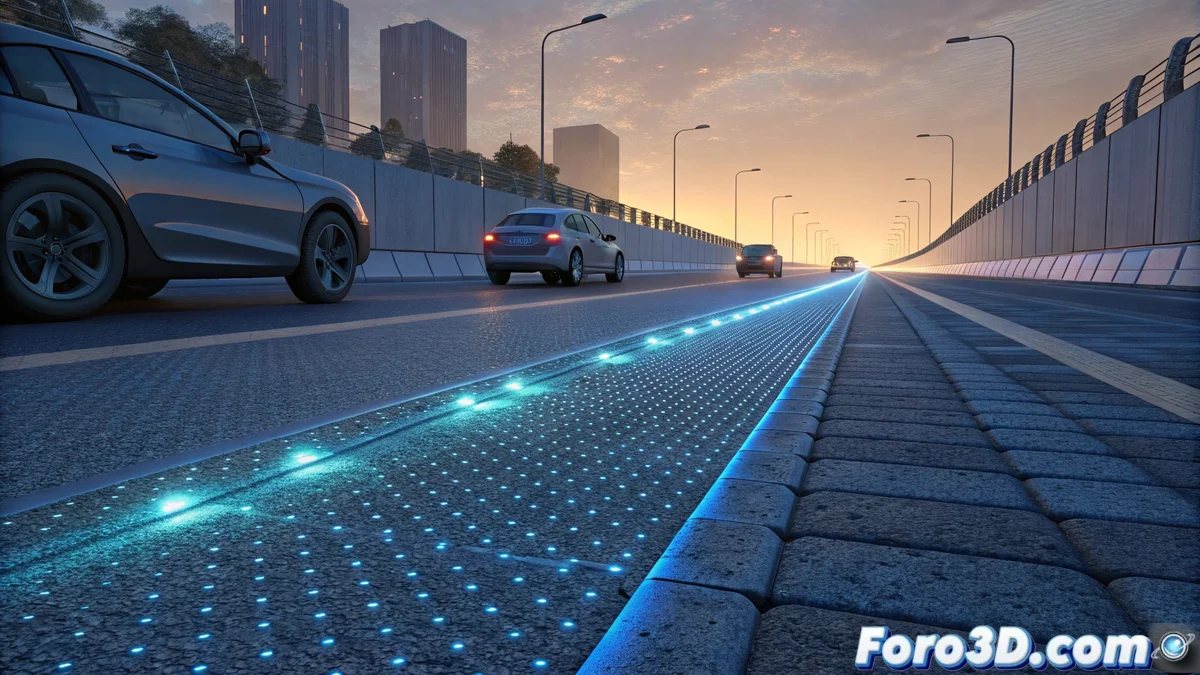
Piezoelectric Asphalt: Roads that Generate Energy
Road infrastructure innovation advances with a concept that transforms roads into sources of renewable energy. It involves integrating piezoelectric materials under conventional pavement, which respond to mechanical pressure from traffic by producing electricity. This idea seeks to capture the energy dissipated by vehicles while rolling and convert it into a useful resource. 🛣️⚡
The Mechanism that Captures Pressure
The system is based on the property of certain ceramic or polymeric materials to generate an electrical voltage when deformed. Installed in modules under the tread layer, these elements sense every compression produced by the passage of a wheel. The deformation, although minimal, releases a discrete electrical charge. The constant flow of vehicles allows thousands of these microevents to be summed, accumulating an amount of energy that can be rectified, stored in batteries, or connected to the electrical grid.
Key Components of the Process:- Piezoelectric Modules: Strategically placed under the asphalt to capture mechanical stress.
- Power Conditioning System: Converts the generated alternating current into stable direct current.
- Energy Storage Unit: Generally batteries, which store electricity for use when needed.
The scale of traffic on highways or busy intersections is what makes this system viable for meeting local energy demands.
Practical Uses and System Viability
The electricity obtained has direct applications on the road itself and its surroundings. It can power streetlights, traffic lights, surveillance cameras, and sensors integrated into the road. In pilot tests, this energy has also been used for electric vehicle charging points or to supply nearby buildings, such as gas stations or rest areas. Although a single car's contribution is small, the total traffic volume allows for significant power generation.
Potential Applications:- Power Public Lighting: Reduce dependence on the main electrical grid for road illumination.
- Maintain Signals and Sensors: Provide autonomous energy to intelligent transportation systems.
- Charge Electric Vehicles: Enable charging points at bus stops or specific lanes.
Challenges on the Real Road
The main challenge is not just generating electricity, but ensuring that the infrastructure withstands extreme road conditions. The technology must endure the constant weight of heavy trucks, thermal variations, humidity, and general wear. Its true trial by fire will be to demonstrate durability and profitability outside the controlled laboratory environment, under the continuous stress of real traffic and weather exposure. The future of this innovation depends on overcoming these practical obstacles. 🔧