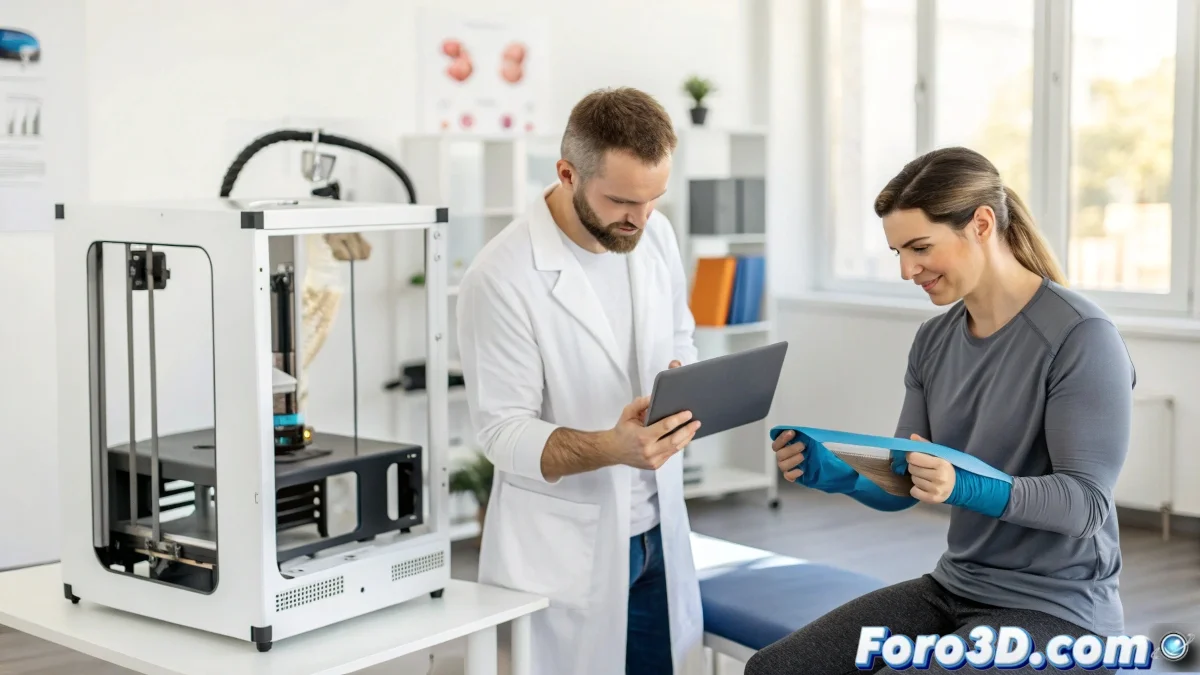
Physiotherapists 3.0: When Therapies Are Printed
In that clinic where the creaking of joints competes with the sound of the radio, a new ally has arrived: the 3D printer. Don't expect it to print a robot masseuse (yet), but it does provide customized solutions that will make the patient forget their pains... or at least curse less during rehabilitation. That said, it still can't print that infinite patience required for some treatments.
"The best complement for a physiotherapist: strong hands, anatomical knowledge... and a 3D printer for when the medical catalog says 'that doesn't exist'"
Tailor-Made Therapies
Every body is a world unto itself, but orthoses and therapeutic aids usually come in standard sizes. 3D printing allows for the creation of devices that fit like a glove to the specific needs of each patient. From splints to joint supports, rehabilitation can now be as unique as the client's fingerprint.
- Customized devices for complex injuries
- Adapters for therapy tools
- Movement guides for controlled exercises
- Replacement parts for discontinued equipment
Innovation That Feels Good
Beyond functionality, 3D printing enables solutions that enhance the patient experience. Anatomical molds for perfect bandages, ergonomic supports for exercises, even aids for occupational therapy. The only limitation is imagination (and patience for calibrating the printer for the umpteenth time). That said, be careful about promising "any design," because then they start asking for superhero-shaped splints and you end up designing capes at midnight.
What No Physiotherapy Manual Mentions But 3D Solves
Between sessions, there are hundreds of small miracles that a printer can make real:
- Custom electrode supports
- Guides for more precise dry needling
- Adapters for ultrasound equipment
- Organizers for the chaos of elastic bands
Rehabilitation with a Touch of the Future
In the end, 3D printing doesn't come to replace the physiotherapist's knowledge, but to provide more tools for their art. Because when it comes to restoring mobility to a patient, it doesn't matter if the solution comes from a catalog or an STL file. What's important is that people can move their bodies without pain again, even if it now includes a touch of smart plastic in their rehabilitation. And who knows, maybe soon they'll even be able to print that perfect massage... though that would be cheating. 💆♂️😉
So now you know: the next time you see a 3D printer in a physiotherapy clinic, it's not that they've opened a prototyping workshop. It's simply the natural evolution of a profession where well-being and innovation have always gone hand in hand.