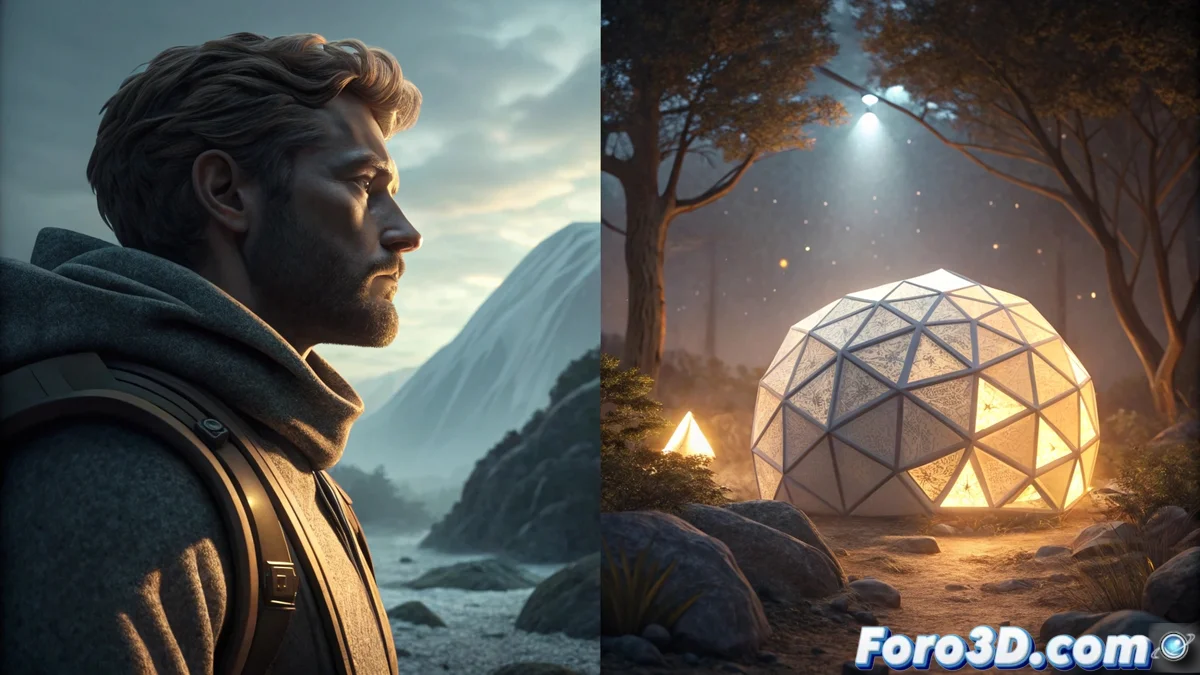
Physical Lighting in Modo and Cinema 4D for Realistic Renders
Achieving a render that looks real largely depends on how light is simulated. Both Foundry Modo and Maxon Cinema 4D integrate physical render engines that seek to replicate the behavior of light in the physical world. These systems allow precise configuration of attributes such as color, intensity, and temperature of light sources, and respond coherently to camera adjustments like exposure. The fidelity in calculating effects like shadows, reflections, and refractions is what separates a good image from an excellent one. 🔦
Foundry Modo's Native Physical Render Engine
Modo employs a physical render engine integrated natively into its environment. This system unifies the handling of different types of lighting, such as area lights, HDRI maps, and emissive materials. It offers detailed control to balance processing time and final quality, through parameters like samples per pixel and ray tracing depth.
Key features of Modo's approach:- Direct lighting interface and grouped parameters that make it easy to adjust the scene without changing work context.
- Unified handling of various light sources for total visual coherence.
- Granular control over render quality to optimize the workflow between speed and detail.
The precision in simulating how light travels defines the final credibility of the generated image.
Cinema 4D's Integrated Physical Renderer
Cinema 4D has included its Physical Renderer as the standard engine for years. It is based on a predictable physical model to calculate light interaction. It stands out for its deep integration with the software's native lights and its robust handling of global illumination. Artists can define light intensity using real-world units, such as lumens or candelas.
Highlights of Cinema 4D's system:- Respect for physical properties like light attenuation based on distance (inverse square law).
- Works cohesively with area lights, target lights, and other native sources.
- Allows managing light intensity with physical measurement units for greater realism.
Choice Based on Workflow
Often, deciding between using Modo or Cinema 4D for physical lighting comes down to familiarity with the interface and personal workflow. Both engines are capable of achieving visually very similar and high-quality results when their parameters are properly configured. The final choice usually depends on which environment the artist feels most productive in to guide the light and achieve their vision. 🎨