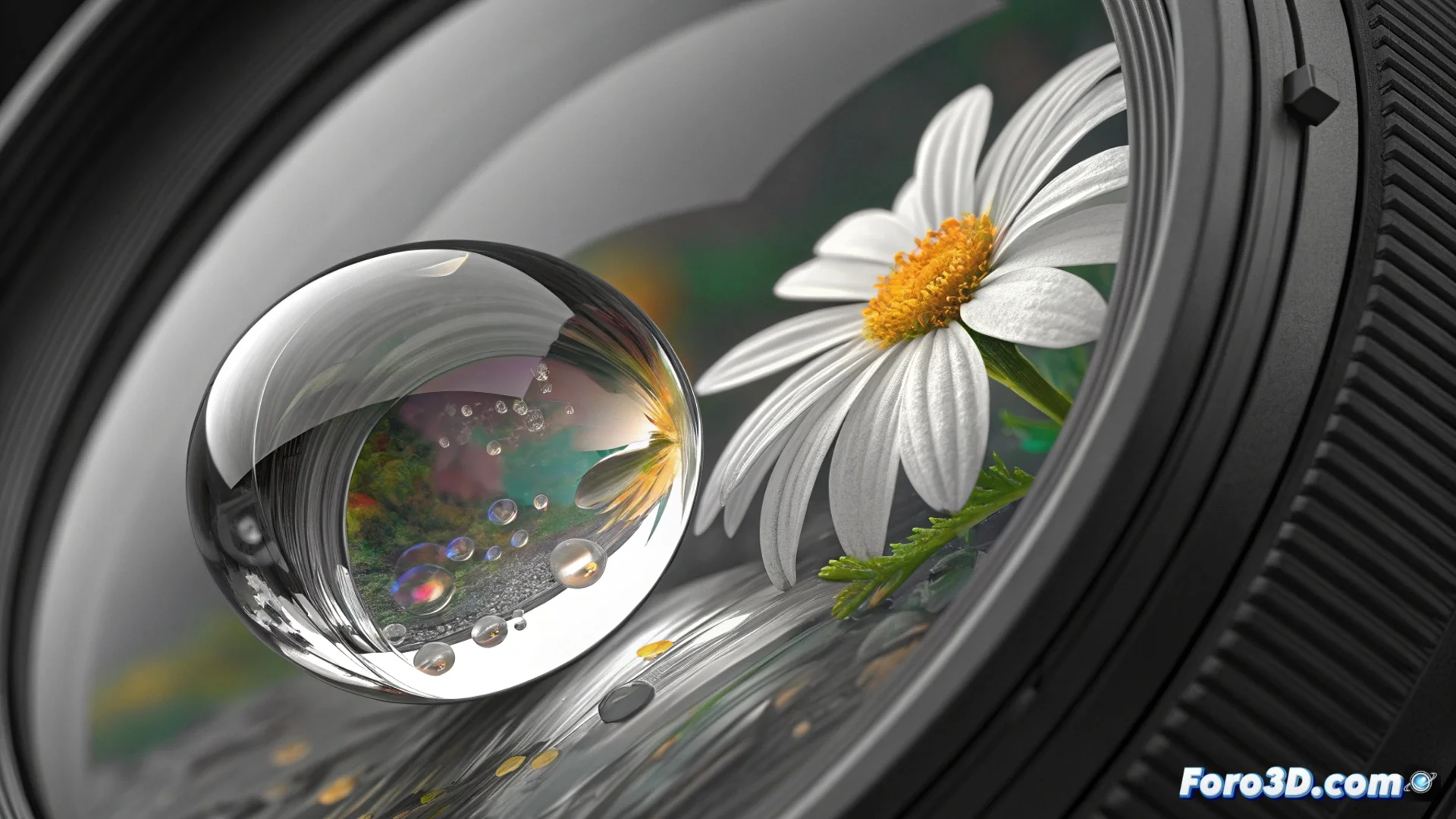
Photographing with a Water Contact Lens
This low-cost photography technique transforms a simple drop of water into a magnifying lens. By placing it on the front of the lens, the drop acts as an optical element that distorts and curves the light, generating a characteristic miniature fisheye effect. It's ideal for exploring abstract close-ups and impossible compositions without investing in specialized hardware 🌀.
Prepare the materials and place the drop
To start, you need a camera with a lens, distilled water, and a clean method to deposit the drop, such as a dropper or the tip of a toothpick. The first critical step is to thoroughly clean the surface of the filter or lens with a microfiber cloth. Then, deposit a single drop exactly in the center of the glass. The volume of water defines the final result: a large drop produces extreme curvature, while a small one offers more subtle distortion.
Key elements for the setup:- Distilled water: Avoids stains and mineral residues that ruin the image.
- Precision in placement: The drop must be centered for uniform distortion.
- Controlled size: Experiment with different volumes to vary the effect intensity.
The water drop is a living and ephemeral lens; every shot you take will be absolutely unrepeatable.
Set up the camera and compose the image
When using this liquid contact lens, the depth of field is greatly reduced. It's essential to use manual focus and seek the point of maximum sharpness, which is usually located right behind the center of the drop. A medium aperture, like f/5.6, helps balance light intake and some detail. To compose, bring the camera close to small details like textures, insects, or plant parts, which the drop will amplify in a curious way.
Practical tips for the session:- Lateral lighting: Accentuates reflections and distortions within the water drop itself.
- Work quickly: The drop can evaporate or move, so prepare the scene in advance.
- Patience: If the drop falls, simply dry the lens and start over; it's part of the process.
Embrace chance and experiment
The charm of this technique lies in its unpredictability and artisanal nature. Don't seek technical perfection, but creative and organic results. The drop may tremble, evaporate, or fall, but from those "accidents" often come the most interesting images. It's a method that invites play, trial, and acceptance that liquid optics has its own rules 🎲.