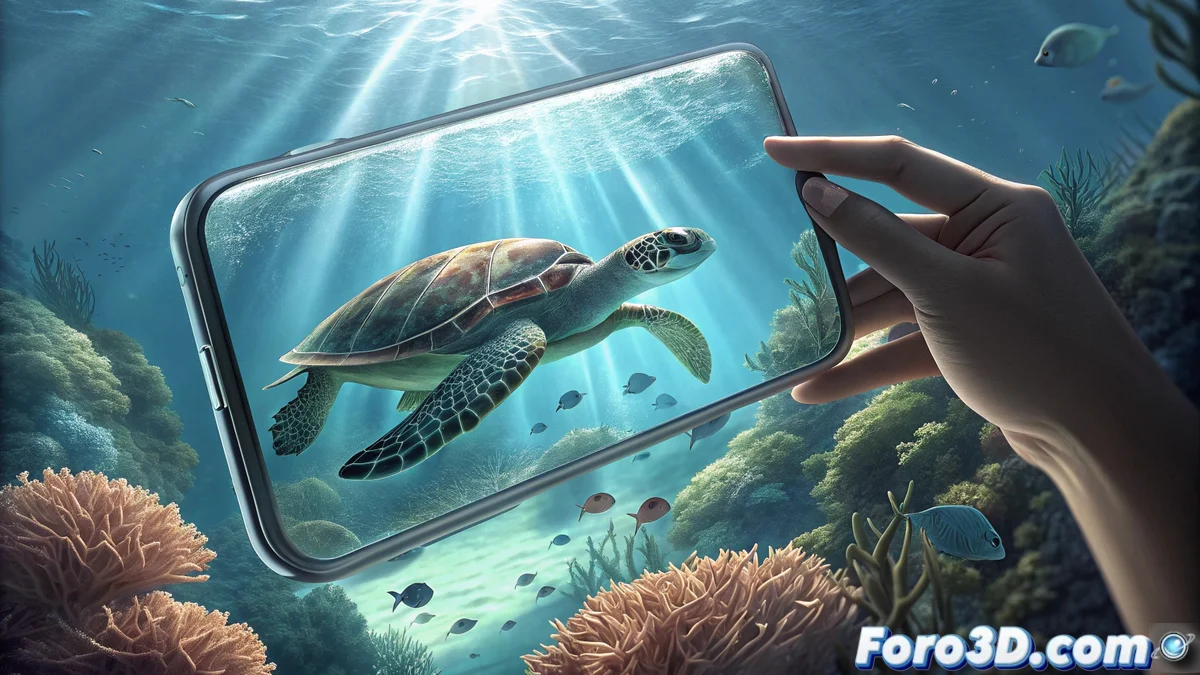
Underwater Photography with a Mobile Phone and a Waterproof Case
Capturing the marine world with a smartphone is an accessible technique that relies on a waterproof case and understanding how the aquatic medium alters light. The touchscreen allows intuitive camera operation, although factors like water turbidity can affect visibility. Planning the composition with environmental elements is essential for obtaining sharp and attractive images. 🌊
The Behavior of Light and Color in the Underwater Medium
Water acts as a filter that selectively absorbs colors. Red and orange tones disappear a few meters deep, generating a blue or green dominant in photographs. To counteract this effect, you can set the manual white balance on your phone or correct the image in post-production. Reducing the distance between the lens and the subject minimizes the amount of water and suspended particles, helping colors to reproduce more faithfully.
Key Strategies for Managing Color:- Use the manual or professional mode of the camera app to adjust white balance and compensate for the bluish dominant.
- Get close to the main subject to reduce loss of saturation and contrast caused by water.
- Consider using artificial light, such as flashes or waterproof flashlights, to restore red colors at depth.
A small defect in the case seal can turn your phone into an expensive underwater paperweight. Pre-verification is essential.
Practical Techniques for Composing and Controlling the Shot
Achieving stability is crucial to not scare away marine fauna and achieve precise focus. Shooting in burst mode increases the probability of capturing the decisive moment. It is recommended to activate the manual or Pro mode of the phone's camera to manage parameters like shutter speed and ISO sensitivity, allowing you to freeze water or animal movement and precisely control exposure.
Tips for Optimizing Control:- Hold the equipment firmly and move it smoothly and slowly to avoid creating turbulence that scares away fish.
- Adjust a high shutter speed (like 1/500s or more) to freeze the fast movement of marine life.
- Keep the ISO as low as possible to avoid introducing digital noise in the image, compensating with aperture or speed.
Final Considerations for a Successful Session
Planning and the right equipment make the difference. Before diving, meticulously verify that the waterproof case is perfectly closed and sealed. Adapting the composition to available elements, such as rocks, corals, or schools of fish, adds interest and narrative to your photographs. Combining technical knowledge about light with practical camera control will allow you to explore and document the fascinating underwater world with your mobile device. 📸