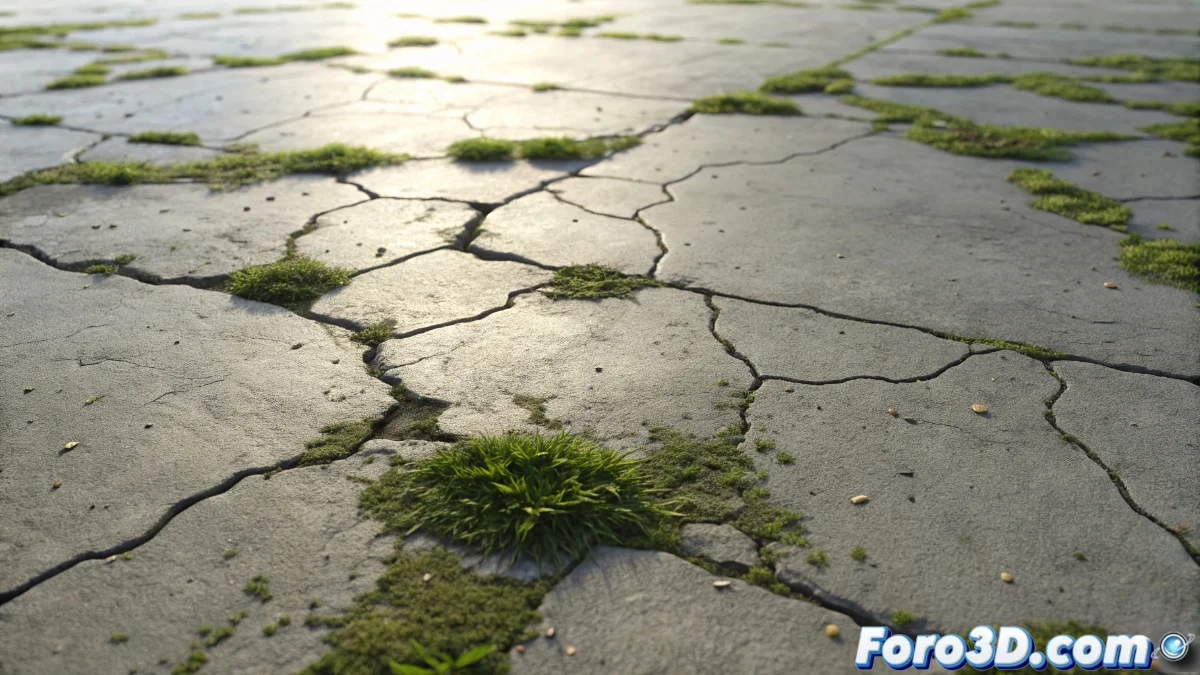
Photogrammetry and Procedural Materials: The Perfect Fusion for Dynamic Realism
Photogrammetry provides incredibly detailed textures captured directly from real objects, but it has limitations in flexibility compared to procedural materials. By combining both methodologies, we achieve the ideal balance: photographic realism combined with absolute control over dynamic parameters. This synergy allows modifying aspects such as deterioration, wetness, or dirt accumulation in real time, something unattainable with purely photogrammetric assets 🎯.
Step-by-Step Integration Workflow
The process begins by importing the essential maps generated through photogrammetry: albedo, normals, and roughness. Subsequently, in engines like Unreal Engine, Unity, or Blender, we connect these textures to a material shader system where we incorporate procedural layers. We can use, for example, algorithmically generated masks to apply corrosion in defined areas, or alter roughness through noise patterns that simulate natural erosion. The fundamental strategy is to use photogrammetric maps as the foundation and enhance them with controllable layers 🛠️.
Key Stages of the Process:- Importation of base textures from photogrammetric scanning
- Connection to material nodes in the selected graphics engine
- Implementation of procedural masks for specific effects
The real magic happens when photogrammetry's precision meets the flexibility of procedural techniques
Advanced Blending Techniques
To achieve professional-quality results, we implement sophisticated methods like height-based blending and curvature maps, which facilitate organic transitions between different materials. Blend nodes in shader graphs or material editors are essential for these operations. Equally important is preserving lighting coherence by calibrating reflectivity and metalness values so that procedural elements blend imperceptibly with the photogrammetric base. Some specialists even create masks from ultra-high-resolution 3D models to direct blends with extreme precision 📊.
Professional Blending Methods:- Use of curvature maps for realistic transitions
- Precise adjustment of reflectivity and metalness parameters
- Generation of masks from high-resolution 3D models
Practical Considerations and Client Communication
It is crucial to prepare to explain to clients why their perfectly scanned object now features procedural moss that varies according to the time of day, when they originally requested a simple texture. This evolution in technical capabilities requires clear communication about the advantages of dynamic control and how it enriches the final visual experience. The strategic combination of these technologies not only improves realism but also greatly expands creative and technical possibilities in digital production 🚀.