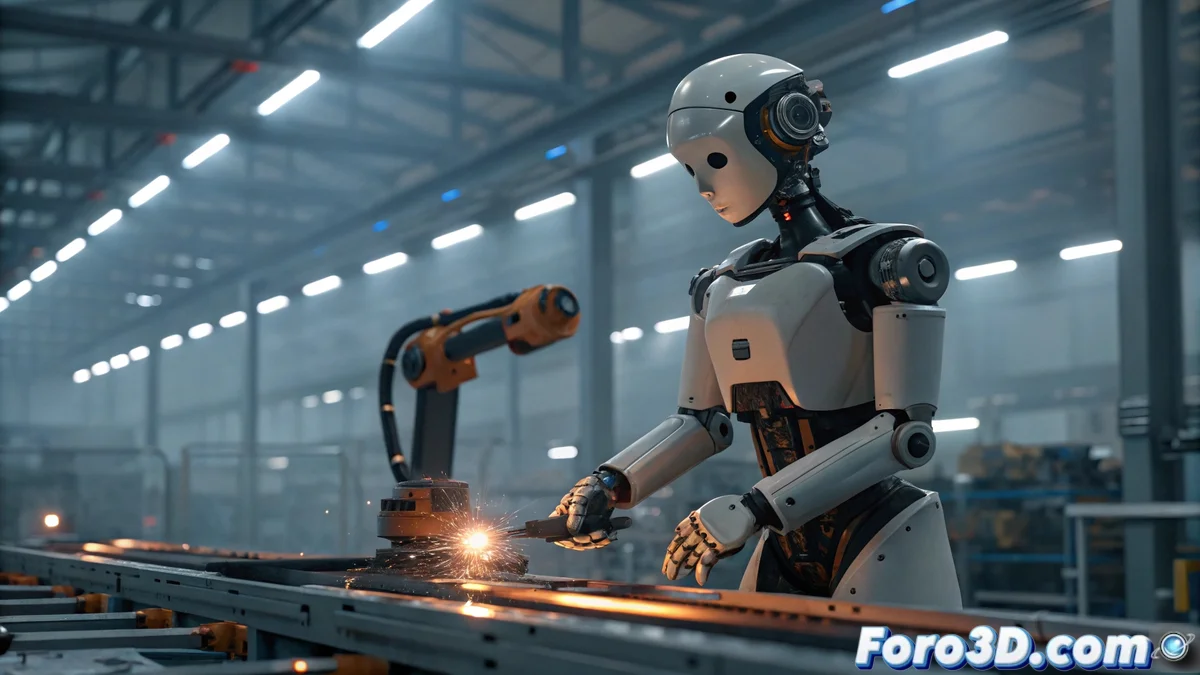
Phoenix: The Humanoid Robot Revolutionizing Industrial Automation
The company Sanctuary AI has introduced Phoenix, a general-purpose humanoid robotic system that is redefining automation standards through cutting-edge cognitive artificial intelligence. This innovative android operates with complete autonomy across multiple industrial sectors, executing complex operations that traditionally required direct human intervention 🤖.
Biomechanical Precision and Tactile Capabilities
Phoenix's most standout feature lies in its high-fidelity robotic limbs, particularly its hands that incorporate advanced haptic technology replicating human dexterity with surprising naturalness. This technical sophistication allows it to interact with delicate elements, handle specialized equipment, and perform intricate movements that previously constituted the exclusive domain of human operators.
Main Technical Features:- Tactile sensor system providing real-time feedback on force and position
- Motorized joints that mimic the fluidity of natural human movement
- Immediate adaptation capability to different tools and industrial components
The integration of haptic perception and fine motor control represents a fundamental advancement in industrial robotics
Practical Implementation and Operational Adaptability
Specifically designed to take on repetitive, risky, or physically demanding tasks, Phoenix finds application in manufacturing, logistics, warehouse management, and specialized operations. Its AI architecture incorporates accelerated learning algorithms that facilitate the acquisition of new skills in record time, continuously adjusting to diverse production flows.
Operational Advantages:- Significant reduction in implementation and training times
- Smooth transition between different functions within the same work ecosystem
- Minimization of risks in hazardous industrial environments
Transformative Impact on the Labor Landscape
While the debate on job displacement by automation persists, Phoenix paradoxically takes on those monotonous tasks that humans often find tedious. This technological evolution not only optimizes industrial processes but also redefines the relationship between human and artificial capabilities, raising fascinating questions about the future of work and human-robot collaboration 🔄.