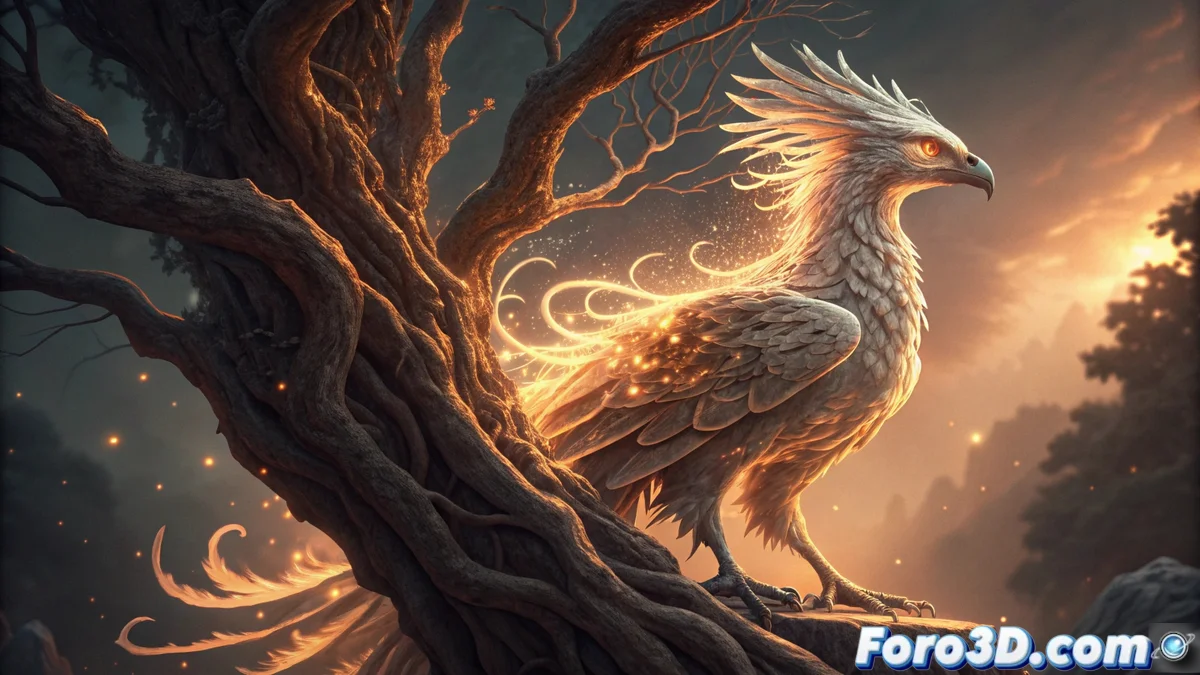
Osamu Tezuka's Phoenix: A Graphic and Philosophical Journey
The series Hi no Tori, known in Spanish as Phoenix, represents the creative pinnacle of Osamu Tezuka. This monumental work is structured in twelve volumes that present autonomous narratives, spanning from the dawn of humanity to interstellar civilizations. The connecting thread is the perpetual quest to transcend mortal condition, a desire that pursues the characters through time under the watchful gaze of the mythical Phoenix bird 🦅.
The Narrative Structure that Defies Time
Each volume functions as an independent entity, with unique characters and conflicts for its historical or futuristic era. However, all orbit around a common thematic core: the longing for eternal life and the catastrophic or enlightening consequences that pursuing this dream entails. Tezuka does not just tell stories; he weaves a tapestry about the human condition and its struggle against the final destiny.
Highlighted Narrative Arcs:- Dawn and Future: These books frame the series, exploring the extremes of the timeline, from prehistory to a distant future where humanity has evolved in unexpected ways.
- Yamato, Space, and Resurrection: These volumes delve into specific eras like ancient Japan or the space age, showing how the desire for power and eternity repeats cyclically.
- The presence of the Phoenix: Acts as an immutable witness and catalyst, whose blood promises immortality, unleashing the passions and ambitions that Tezuka examines with philosophical scrutiny.
Tezuka does not offer easy answers, only magnificently drawn questions.
Evolution and Mastery of Graphic Stroke
In Phoenix, Tezuka unleashes the entirety of his graphic capacity and experiments without limits. While maintaining his characteristic dynamic and expressive stroke, he pushes page composition to audacious limits. He introduces visual sequences that border on abstraction to communicate complex concepts like reincarnation or the flow of time. This stylistic evolution makes the series a living compendium of his growth as an author.
Artistic Features in Phoenix:- Bold Compositions: Frequently breaks with the traditional manga structure, using full pages to create visual and emotional impact.
- Abstract Sequences: Employs non-figurative images to represent metaphysical ideas, a resource uncommon in manga of its time.
- Visible Evolution: The artwork changes and refines over the decade in which the work was published, showing Tezuka's own artistic journey.
An Enduring Reflection on Existence
Reading Phoenix invites one to pose fundamental questions. Do we really want to live forever? The work shows, time and again, the paradoxes and sufferings that come with trying to cheat death. From power-obsessed leaders to scientists who want to conquer biology, the series examines how this universal impulse shapes history. The always elusive conclusion underscores that the search, and not the possession, defines what it means to be human. The work remains a beacon of creative ambition and depth in the world of comics 🎨.