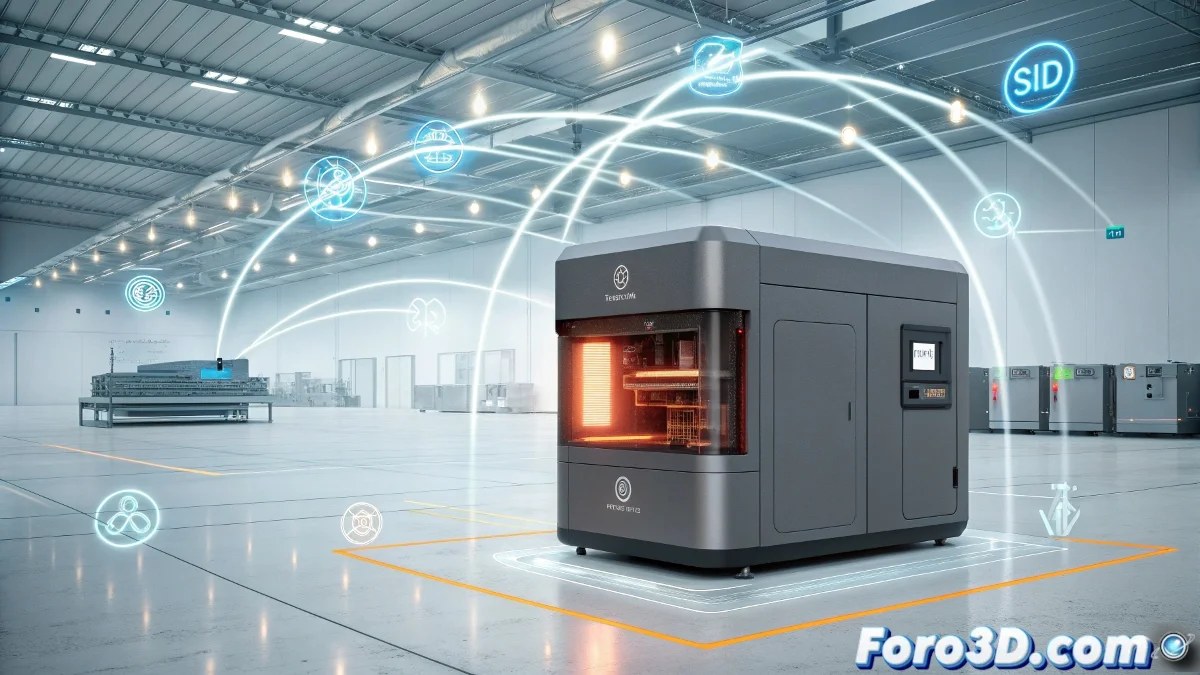
Towards the Automatic 3D Printing Factory
The additive manufacturing industry takes a crucial step towards total automation with the announcement of the strategic integration between Phasio and Dyndrite. 🤝 This collaboration is specifically aimed at optimizing the workflow for HP Multi Jet Fusion printers, a technology widely used in medium and high-series production. The goal is clear: eliminate manual bottlenecks and create a continuous digital pipeline from the CAD file to the final printed part, with minimal human intervention.
A Perfectly Meshed Workflow
The synergy between both platforms is complementary. Dyndrite provides its powerful file preparation engine, capable of handling complex geometries and performing automatic and optimized nesting of parts. 🚀 For its part, Phasio handles print management, providing real-time control of machines, job tracking, and material management. Together, they form an ecosystem that drastically reduces the time between design and production.
This integration turns industrial 3D printing from a craft process into an automated one.
Tangible Benefits for Industrial Production
For companies using HP Multi Jet Fusion, the advantages are immediate. The reduction in errors is significant, as manual steps prone to failures are eliminated. ⏱️ Setup times are shortened from hours to minutes, allowing a more agile response to demand. Additionally, the platform ensures repeatability of jobs, a critical factor in industrial environments where each part must be identical to the previous one.
- Automatic preparation: Optimized nesting, orientation, and supports by software.
- Centralized management: Control of multiple printers from a single interface.
- Standards compliance: Consistent printing parameters for each material.
The Future of Additive Manufacturing
This integration is not just an incremental improvement; it represents the direction the industry is taking. 💡 Additive manufacturing is maturing towards a model of continuous digital production, where software autonomously manages resources and printing logistics. This is essential for 3D printing to be massively adopted in production lines that compete with traditional manufacturing methods in speed and cost.
It seems that the missing link between design and the final part was not faster hardware, but smarter software. 😉 A lesson the industry is learning quickly.