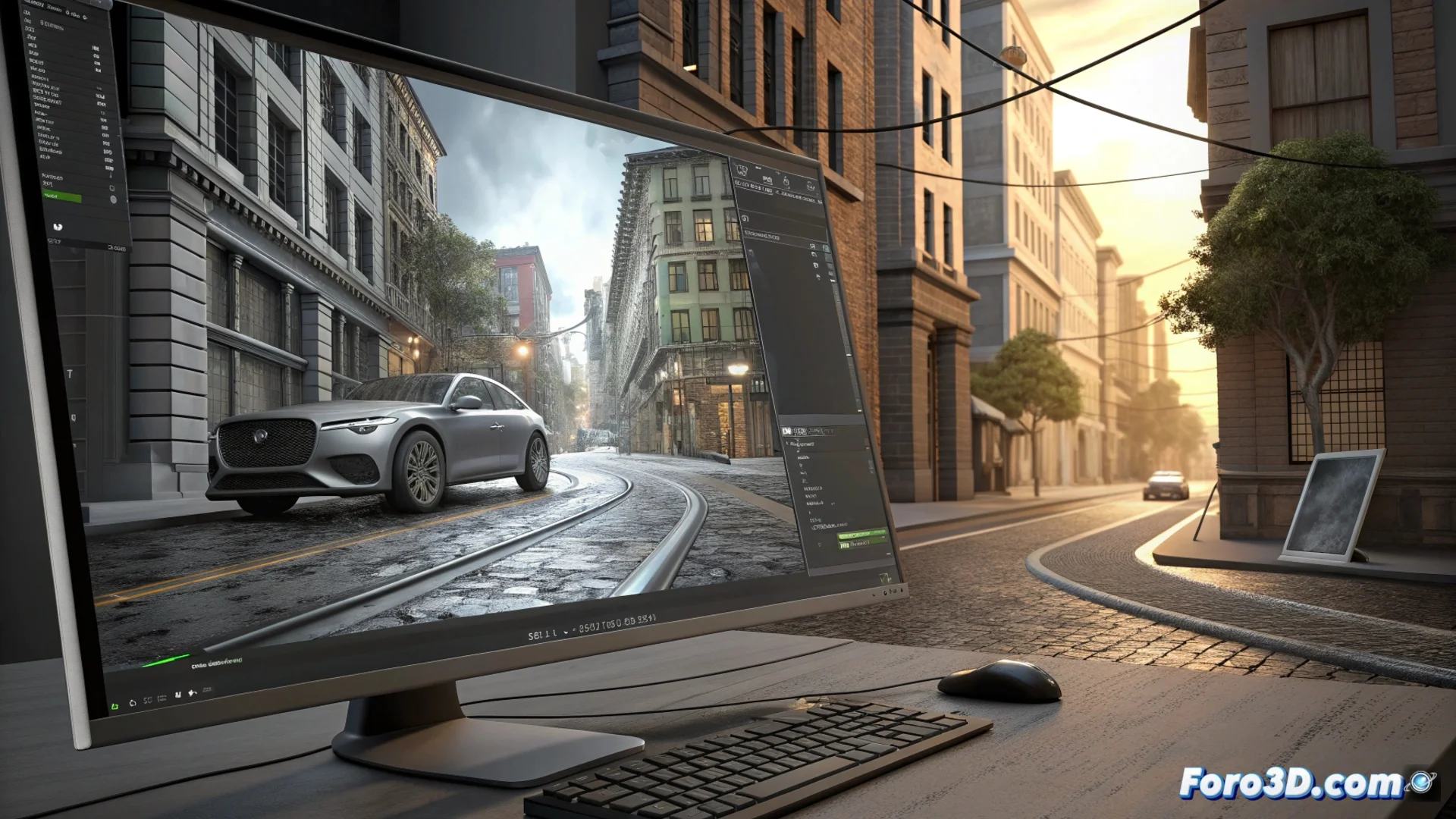
PFTrack Camera Solver: Solving Camera Movement for VFX
In visual effects production, aligning digital objects with filmed footage is a key challenge. PFTrack's Camera Solver module addresses this by automatically analyzing a video sequence to calculate camera movement. This process, called matchmoving or tracking, extracts the 3D trajectory and lens parameters, vital data for 3D elements to be perceived as part of the original scene. 🎬
How does the automatic process work?
The software identifies and tracks points with texture and contrast across frames. Using this data, it mathematically reconstructs the camera's position, orientation, and displacement in three-dimensional space. At the same time, it deduces values like focal length or optical distortion. The result is a set of camera data that programs like Blender, Maya, or 3ds Max can import to synchronize their virtual scene with the real footage.
Key advantages of the Camera Solver:- Automates the complex trajectory calculation, which would otherwise require manual work.
- Generates precise 3D camera data ready for use in multiple applications.
- Saves significant time in VFX production pipelines.
Accurate camera resolution is the foundation for compelling visual composition. Without it, 3D elements would float or fail to follow the perspective.
Accuracy is fundamental
If the calculated trajectory contains errors, added digital objects will slip, float, or fail to match the scene's perspective, completely breaking the illusion of reality. PFTrack relies on footage having sufficient contrast and details to track. For shots with limited textures, like a white wall, the software may need manual adjustments. 🧩
Considerations for good tracking:- The footage must have contrast and discernible textures.
- Avoid shots with uniform surfaces and little variation.
- Prepare manual tools to correct or refine the automatic solution when necessary.
Integrating 3D graphics coherently
The ultimate goal of the Camera Solver module is to provide the technical bridge between the real and the virtual. By exporting the solved camera data, artists can animate and light their 3D models within the exact context of the original footage. This ensures that shadows, reflections, and movements of digital elements interact credibly with the filmed environment, culminating in a visually unified composition. ✅