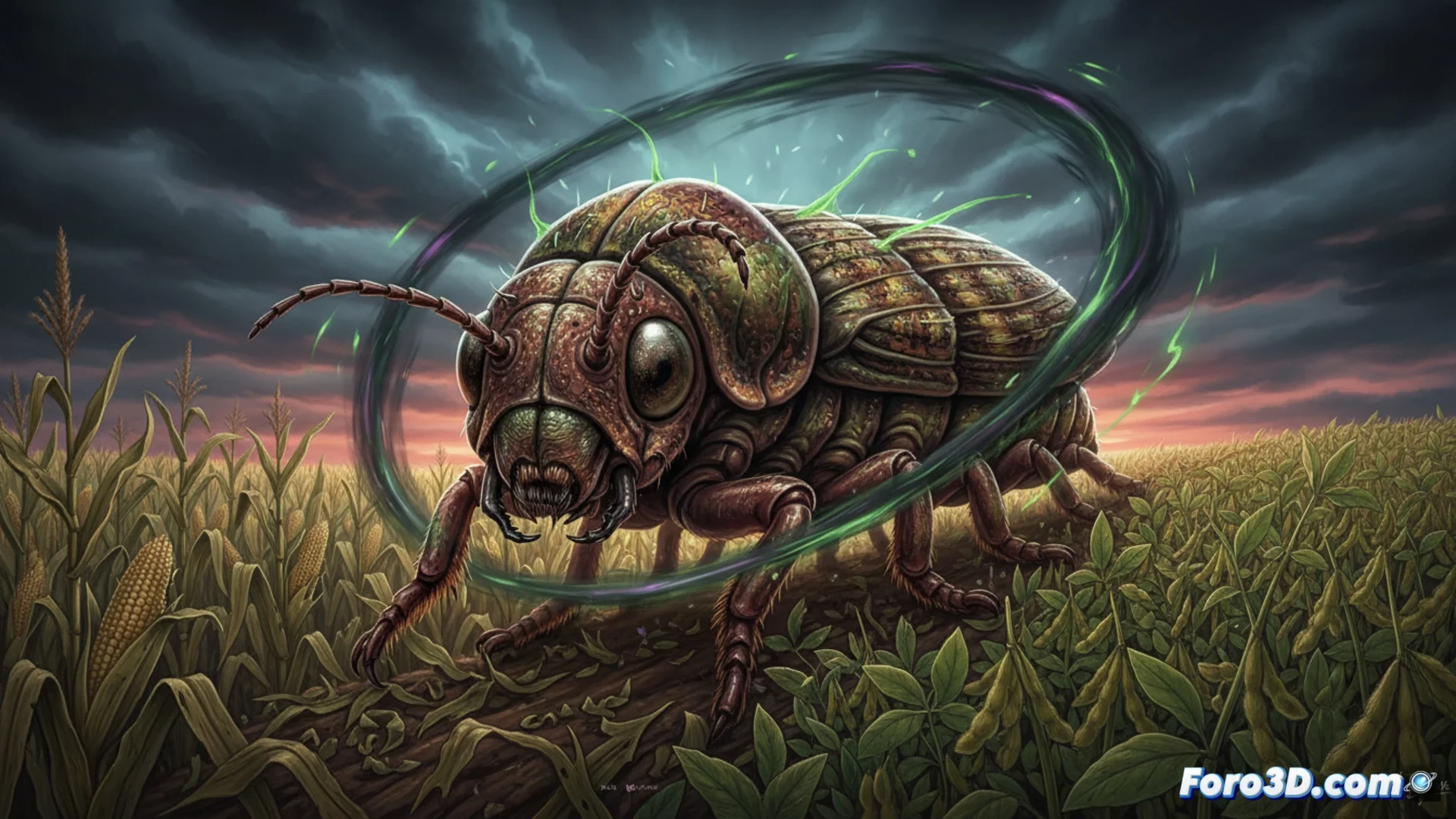
Pest Hybrids Evolve in Brazil and Threaten Crops
Global agriculture faces a new and complex biological threat. Recent research confirms that two of the most damaging caterpillars for crops are naturally crossbreeding in Brazil, producing offspring with combined characteristics. This phenomenon could trigger the emergence of superpests with greater adaptability and destructive capacity. 🐛⚠️
The Genetic Fusion of Two Crop Destroyers
The hybridization process involves Helicoverpa zea (corn earworm) and Chrysodeixis includens (soybean looper). The detected hybrid specimens are not a simple mixture; they are inheriting the most problematic traits from their parents. This occurs mainly in the Mato Grosso region, a global agricultural production hub, accelerating the potential for spread.
Combined Traits of the Hybrids:- Extreme Voracity: They acquire the insatiable appetite typical of the corn earworm, which devours crops rapidly.
- Chemical Tolerance: They incorporate the soybean looper's ability to withstand certain types of insecticides, reducing the effectiveness of conventional treatments.
- Broad Host Range: Potential to attack a wider variety of plants beyond corn and soybeans.
Nature seems to combine the worst of two worlds into a single package of plant destruction.
A Risk That Crosses Continental Borders
The danger is not limited to South America. The extensive network of international grain trade facilitates the transport of these insects or their eggs hidden in shipments. If they establish themselves in new geographic areas, the economic consequences would be severe.
Crops at Potential Risk:- Corn and Soybeans: The primary and most affected targets.
- Cotton and Tomato: Other key commercial crops that could suffer severe damage.
- Other Vegetables: The hybrid's expanding diet puts a wider range of foods at risk.
The Necessary Response: Surveillance and Adapted Strategies
Scientists emphasize the urgency of improving monitoring systems to detect the presence of these hybrids early. Additionally, it is crucial to develop and apply more robust and diverse integrated pest management approaches that do not rely solely on chemical insecticides. The global agricultural community must prepare for an evolved enemy that challenges current control methods. 🌍🔬