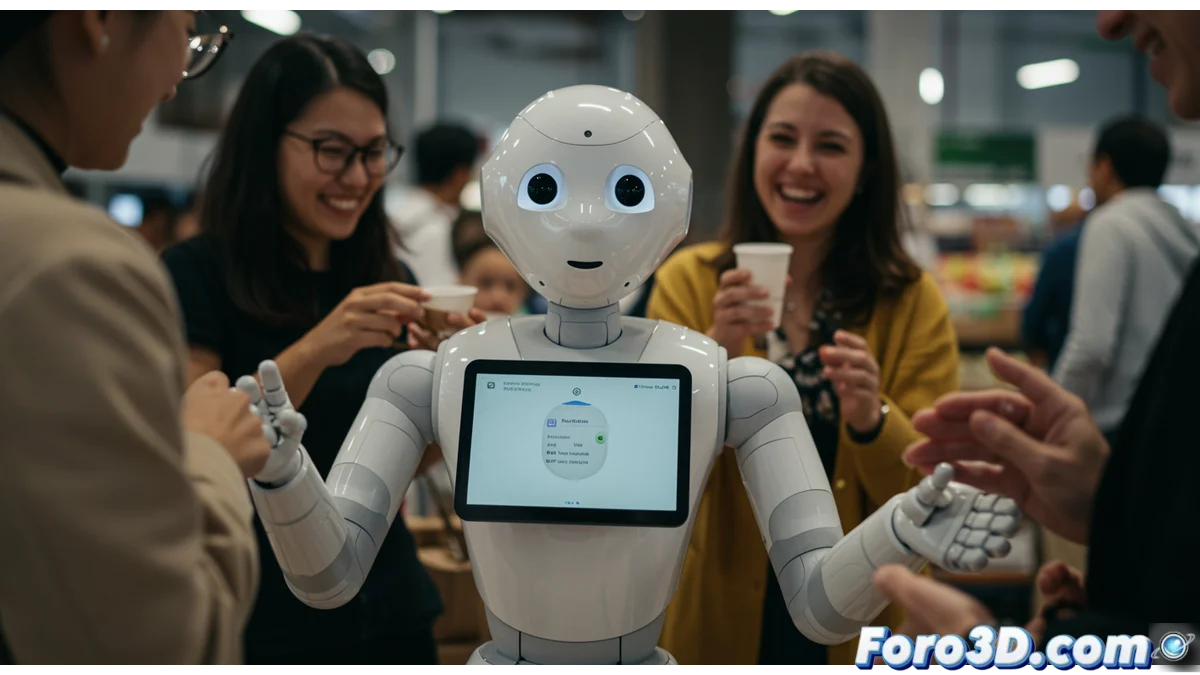
Pepper: the social robot that transforms human-machine interaction
Developed by SoftBank Robotics, Pepper is a semi-humanoid robot that is redefining the way people relate to technology. Equipped with an advanced computer vision system, it not only identifies faces but also interprets basic emotions, adjusting its responses to create more natural and empathetic interactions. Its design is optimized for contexts where affective communication is crucial. 🤖
Innovative applications in multiple sectors
In the commercial sector, Pepper functions as a customer assistant, offering detailed information about products and guiding visitors within establishments. Banks employ it as an intelligent receptionist, directing users to the appropriate services while collecting valuable data on their preferences. In education, it becomes an interactive learning tool, facilitating the development of social and technological skills through collaborative activities that stimulate logical thinking.
Main functions by sector:- Commerce: Personalized assistance and guided navigation in stores
- Banking: Automated reception and customer needs analysis
- Education: Promotion of collaboration and reasoning through programmed exercises
Pepper's ability to read human emotions marks a milestone in social robotics, although it still cannot replace spontaneous human comfort.
Technology that drives interactions
Pepper's operation integrates specialized hardware and software, including multiple sensors, cameras, and microphones that capture the environment in real time. Its facial and emotional recognition system analyzes expressions and gestures, while dialogue algorithms produce contextual responses. The development platform supports languages like Python and Choregraphe, allowing programmers to expand its capabilities according to the specific needs of each project.
Key technological components:- Sensors and cameras for continuous environmental perception
- Emotional and facial processing algorithms
- Flexible development environment with support for customizations
Reflections on the future of robotic interaction
Pepper represents a significant advance in social robotics, combining emotional detection with adaptive responses. However, as mentioned ironically, it still cannot offer tangible comforts like a chocolate or movie recommendations with a blanket. This underscores that, although technology advances, genuine human connection remains irreplaceable in many aspects. The future will likely see improvements in these capabilities, bringing interactions even closer to a truly empathetic level. 💡