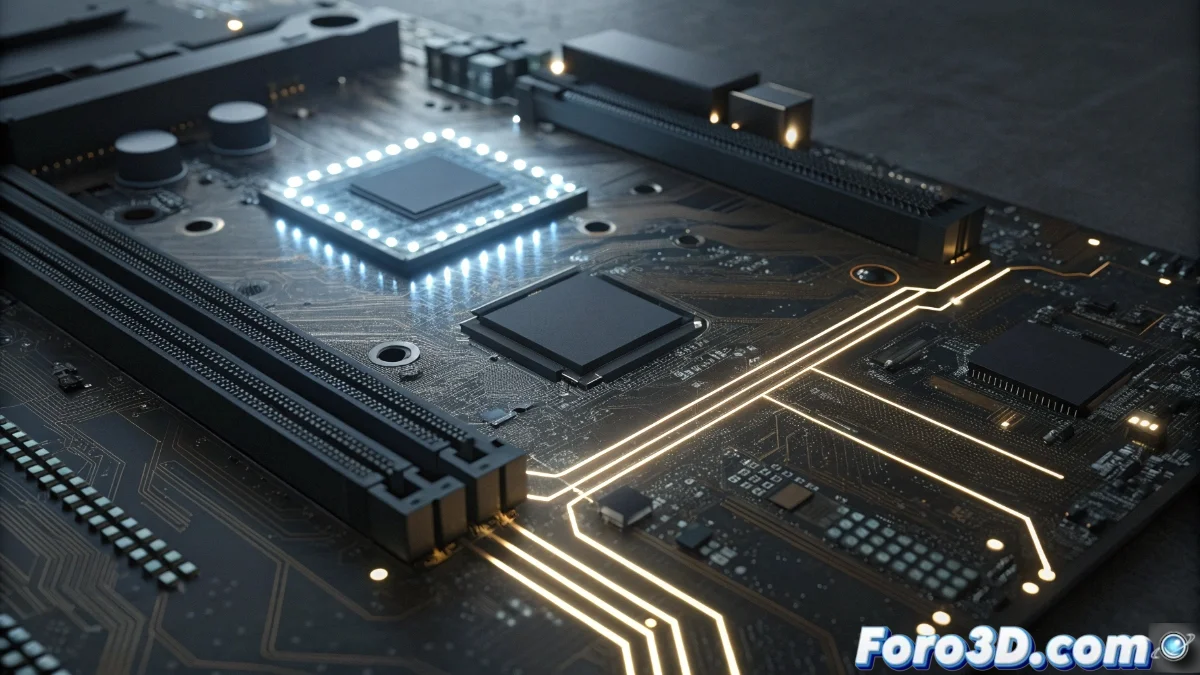
PCIe 5.0: The New Data Highway for PC Components
The fifth generation of the PCI Express standard represents a quantum leap in component interconnection, functioning as the data backbone between the motherboard and critical devices such as graphics cards, NVMe drives, and expansion cards. This technological evolution doubles the bandwidth per lane compared to PCIe 4.0, achieving impressive speeds of up to 32 GT/s per lane, which translates into exponentially faster and more efficient data transfers. 🚀
Smart Compatibility and Generational Differences
One of the most outstanding aspects of PCIe 5.0 is its backward compatibility with previous versions, allowing PCIe 4.0 or 3.0 devices to be connected to new slots without complications. However, this compatibility has important nuances in terms of performance, as devices specifically designed for PCIe 5.0 will not reach their maximum potential in older slots. The scalable architecture ensures that a single PCIe 5.0 lane equals the performance of two PCIe 4.0 lanes or four PCIe 3.0 lanes, optimizing physical space and energy efficiency.
Key advantages of compatibility:- Total flexibility for gradual upgrades without changing the entire platform
- Optimization of physical space by requiring fewer lanes for the same performance
- Cost reduction by reusing existing components
The evolution of PCIe demonstrates that innovation can coexist with compatibility, offering the best of both worlds for users and manufacturers.
Practical Applications that Transform the Experience
In practical terms, PCIe 5.0 revolutionizes the performance of SSD NVMe drives, which can exceed sequential read speeds of 12 GB/s, eliminating bottlenecks in professional applications and reducing loading times in next-generation video games. For graphics cards, although current models do not fully utilize this bandwidth, it lays the foundation for future generations with unprecedented data demands. In corporate environments and data centers, it facilitates the implementation of massive storage arrays and ultra-high-speed network cards, essential for artificial intelligence applications and big data processing.
Tangible benefits by sector:- Gaming: Instant loading of textures and complex levels
- Workstations: Accelerated rendering and simulation
- Data centers: Massive transfers without congestion
The Future is Already Here
The implementation of PCIe 5.0 marks a turning point in modern computing architecture, where bandwidth ceases to be a limitation to become a competitive advantage. Although it may seem excessive today for some everyday applications, its true value will manifest as peripheral components and computational demands evolve. The transition to this technology is not just an incremental improvement, but the foundation for the next decade of high-performance computing innovation. 💻