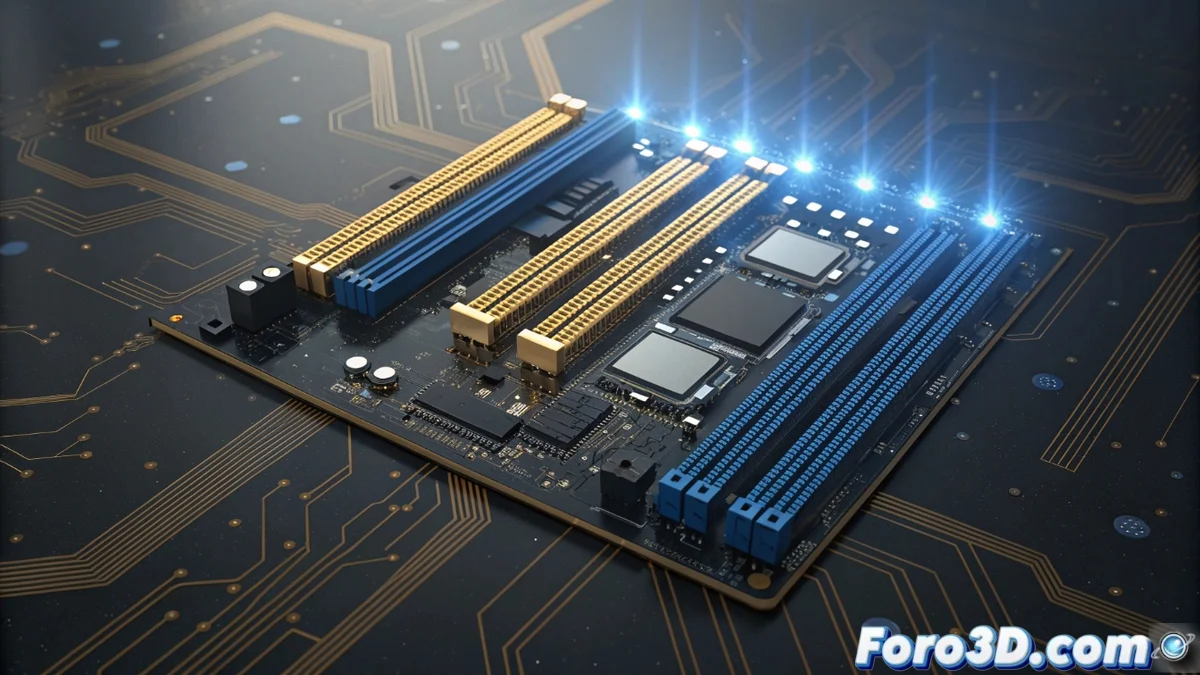
PCI Express 5.0: The New Era in High-Performance Connectivity
The fifth iteration of the PCI Express standard establishes a new paradigm in component interconnection, offering a quantum leap in transfer capabilities that redefines the limits of current computational performance 🚀.
Revolution in Available Bandwidth
This technological specification effectively doubles the data transmission capacity compared to PCIe 4.0, achieving impressive speeds of up to 32 gigatransfers per second on each individual lane. This evolution directly addresses the growing needs of devices that demand massive communication channels to operate without restrictions, particularly in gaming and professional environments where minimal latency is crucial ⚡.
Components that benefit the most:- Latest-generation graphics cards that leverage the higher throughput for texture streaming and rendering data
- NVMe solid-state drives that reach speeds exceeding 10 GB/s in sequential operations
- Professional systems that require intensive parallel processing and massive simultaneous transfers
The implementation of PCIe 5.0 radically transforms the user experience, reducing load times to minimal fractions and eliminating traditional bottlenecks
Technical Considerations for Implementation
Although it maintains backward compatibility with previous generations, full utilization requires specifically designed hardware. Motherboards with compatible chipsets along with modern processors form the fundamental base, while the increase in thermal dissipation requires improved cooling solutions 🔥.
Critical Implementation Aspects:- Need for more robust heat sinks and active cooling systems on PCIe 5.0 components
- Careful selection of power supplies capable of sustaining energy consumption peaks
- Verification of full compatibility between all ecosystem elements to avoid limitations
Tangible Impact on User Experience
Users who migrate to this technology will experience immediate perceptible improvements in massive data transfer scenarios and applications that leverage parallel processing. While your PCIe 5.0 SSD transfers entire game libraries in seconds, you might have time to make a coffee... if your coffee machine isn't equally advanced ☕.