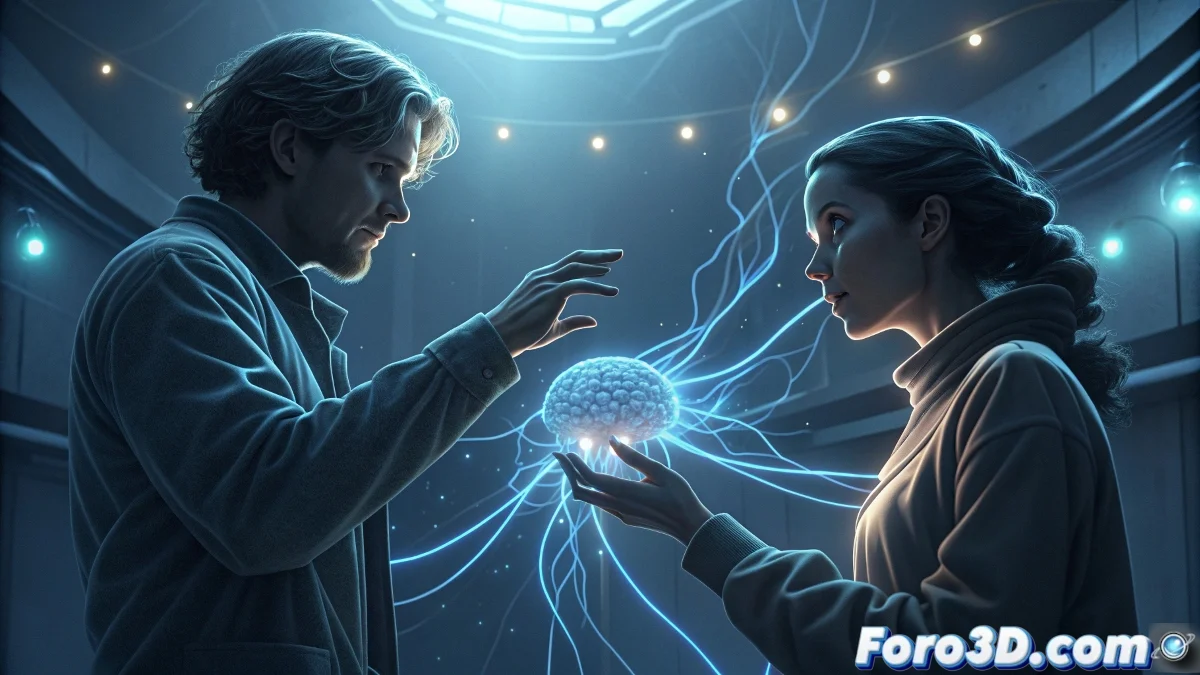
Paralyzed Man Can Feel Objects Through Another Person's Hand
A revolutionary breakthrough in neurotechnology allows for the first time a person with complete spinal cord paralysis to perceive textures and shapes through a direct connection with another person's hands. Using Unreal Engine, we will recreate this brain-computer interface system that redefines the limits of human perception. 🧠
Neuronal Interface System Setup in Unreal
We begin by preparing the neuronal simulation environment that shows how brain signals can be decoded and retransmitted between two individuals, creating an artificial sensory bridge.
Unreal Engine Project Preparation:- Set up particle system to represent neuronal impulses and EEG signals
- Create emissive materials to visualize real-time brain activity
- Establish blueprint to simulate bidirectional flow of sensory information
Brain-computer interface technology creates a digital bridge that overcomes spinal cord injuries, restoring tactile perception through interpersonal connection
Recreation of the Electrode and Sensor System
We model the technological infrastructure that makes this sensory transfer possible, showing both the components on the paralyzed person and on the person acting as the sensory intermediary.
Interface System Elements:- EEG cap with 64 electrodes for reading brain activity in the receiver
- Sensorized glove with tactile actuators on the sender's hand
- Processing system that translates brain signals into tactile stimuli
Visualization of Sensory Information Flow
The central sequence shows how tactile information travels between brains: from physical contact with the object to perception in the paralyzed person.
Visualized Transfer Process:- Sender touches an object and sensors capture texture, pressure, and temperature
- Digitized signals travel to the processing system and then to the receiver
- Electrical stimuli in the somatosensory cortex create the perception of touch
Representation of the Receiver's Subjective Experience
We use advanced visual effects to communicate how the paralyzed person experiences these sensations without their own physical movement, showing the reintegration of tactile perception.
Subjective Experience Elements:- Overlay of perceived textures over the view of the real object
- Representation of "tactile maps" that activate in personal space
- Visual indicators of intensity and quality of the perceived sensation
Real-Time Feedback and Calibration System
The bidirectional communication allows the receiver to express the quality of the perception and adjust system parameters to optimize the sensory experience.
Adjustment and Optimization Mechanisms:- Calibration interface that maps specific perceptions to precise stimuli
- Feedback system where the receiver can describe and refine sensations
- Automatic adjustment based on brain responses to different stimuli
Visual Impact of Sensory Reconnection
The climax moment shows the emotional reaction when the paralyzed person feels textures for the first time in years, using lighting, particles, and post-processing effects to communicate the transcendence of this medical breakthrough. Unreal Engine's ability to create immersive experiences allows us to convey not only the technical functioning, but the profound human impact of this transformative technology. ✨