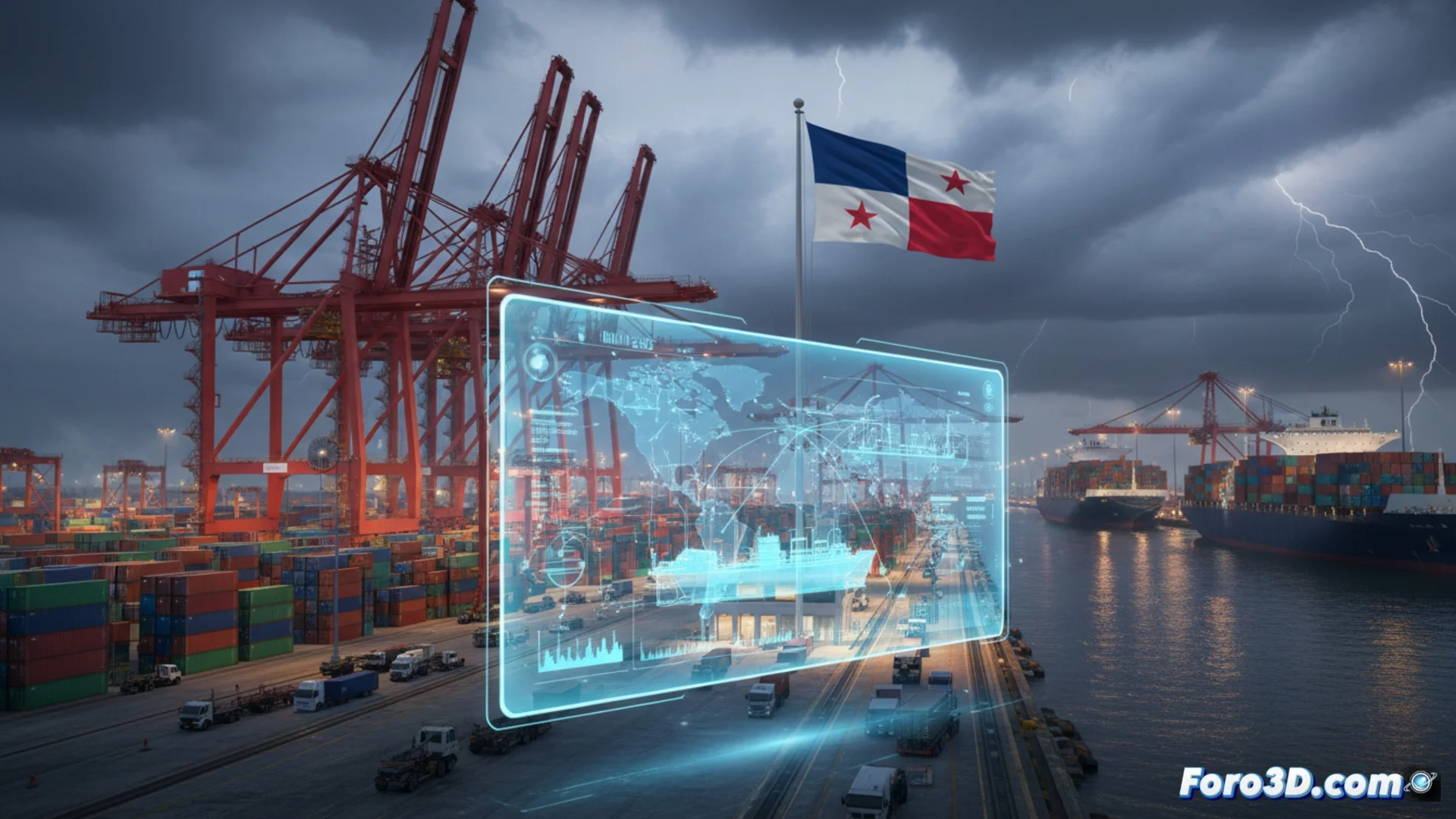
Panama's Supreme Court Annuls Port Concession to CK Hutchison
Panama's constitutional court has invalidated the agreement that allowed the Hong Kong corporation, CK Hutchison, to manage the Balboa and Cristóbal maritime terminals. This judicial verdict cancels a pact signed in 2021, which handed over control of these strategic facilities for a quarter of a century, with an option to extend. The legal basis is that regulations were violated by not conducting a mandatory public tender. The decision creates an immediate uncertainty about the future of two vital nodes for world trade 🌍.
China Reacts and Threatens to Protect Its Investments
The Chinese government responded to the ruling by stating that it will take all necessary measures to safeguard the interests of its companies. Meanwhile, CK Hutchison, which operates through its subsidiary Panama Ports Company, is analyzing the sentence and is relying on all its rights, including the option to appeal to international courts. This energetic stance configures a landscape of possible legal and diplomatic conflicts, within the framework of tensions over Chinese influence in key Latin American infrastructure and competition in global maritime routes ⚖️.
Immediate Consequences of the Annulment:- Uncertain management of the ports at the Panama Canal accesses.
- Possible initiation of international litigation by the affected company.
- An increase in diplomatic tension between Panama and China.
The Chinese government will adopt all necessary measures to protect the legitimate rights and interests of its companies.
3D Modeling Emerges as a Key Tool for Planning
This complex scenario underscores the practical utility of simulating critical infrastructure in three-dimensional environments. Experts can use these virtual models to design various logistical scenarios, calculate how operational changes or disputes affect the supply chain, and outline contingency plans. Simulating container movement, crane power, or accesses allows governments and firms to prepare for transitions or disruptions, making port management stronger in the face of crises 🛠ï¸?
Applications of 3D Modeling in This Context:- Visualize and quantify the impact of an abrupt operator change.
- Optimize workflows to minimize disruptions.
- Clearly and visually communicate complex scenarios to stakeholders.
The Power of Visualization Against Legal Complexity
The paradox is evident: while jurists debate contractual clauses, a detailed 3D model of the port could accurately show the logistical disorder that a sudden transition would cause. This capacity to offer a powerful visual argument surpasses, in many aspects, the persuasive force of traditional legal arguments. Simulation technology thus positions itself not only as a planning tool, but also as a powerful means to analyze and communicate risks in high-complexity geopolitical and economic scenarios 📊.