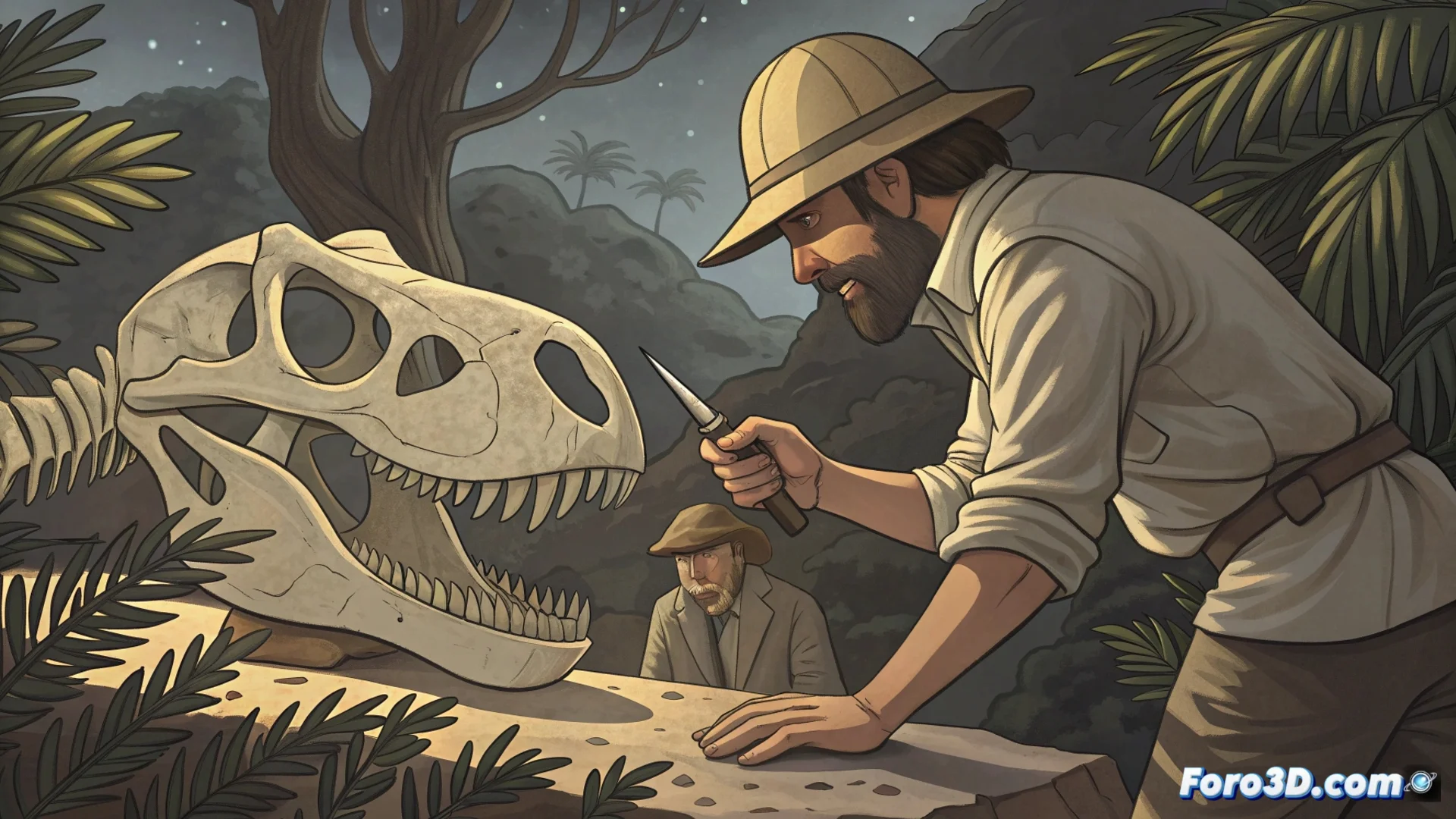
Paleontology Corrects a Historical Error by Reclassifying an Iconic Fossil
Science sometimes must rectify. A prehistoric animal, famous for its enormous wide beak, had been misidentified for decades as a hadrosaurid, the classic duck-billed dinosaur. A recent study dismantles this classification and reveals a much more primitive and surprising identity. 🦕
A Century of Wrong Identity
The fragmentary remains, unearthed in New Mexico in 1916, always showed a beak suggesting a herbivorous diet. This feature led the original scientists to group it with hadrosaurids. However, current techniques allow comparing the anatomy with unprecedented detail. The examination of the scapula and other bones has been key to uncovering the truth.
Key Findings from the New Analysis:- The bone structure of the shoulder and other parts does not match that of a typical hadrosaurid.
- It presents anatomical features characteristic of nodosaurids, a type of armored ankylosaur.
- The fossil, now officially named Ahshislepelta wimani, belongs to a lineage that went extinct much earlier than the true duck-billed dinosaurs.
Not all that look like ducks are ducks; some turn out to be armored tanks that lost the instruction manual millions of years ago.
Implications of the Discovery
This change is not just a footnote. It repositions the animal at a different point in the evolutionary tree and alters what was understood about the diversity and distribution of these groups in the Cretaceous. The case of Ahshislepelta demonstrates that museum collections are archives full of secrets to be deciphered.
Why It Is Crucial to Re-evaluate Ancient Findings:- Modern techniques offer more powerful diagnostic tools than those available a century ago.
- It allows correcting the fossil record and obtaining a more accurate picture of the history of life.
- It underscores the need to maintain a critical attitude toward established classifications, as new evidence can always emerge.
A Lesson for Science
The next time you contemplate a fossil with a large beak, remember that appearances deceive. This episode serves as a powerful reminder that scientific knowledge is dynamic. Reviewing the known with fresh eyes and new technology is fundamental to progress, even if it means rewriting a chapter that seemed closed. 🔍