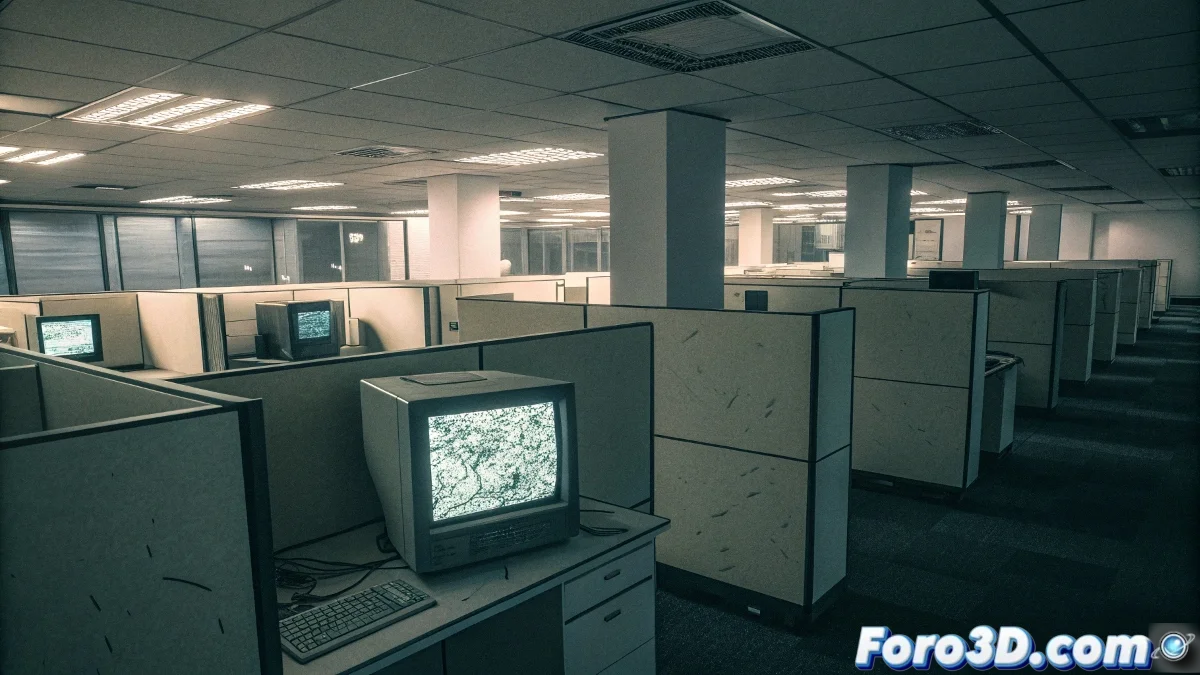
PAGER: the horror game with 1-bit 3D graphics that proves terror doesn't need realism
PAGER emerges as an extraordinary example of how horror games can achieve a deeply unsettling atmosphere without relying on conventional 3D graphical realism. This unconventional title uses 1-bit 3D graphics to immerse the player in a surreal and alienating 90s office environment, demonstrating that the essence of effective terror lies in atmospheric design and psychological tension rather than visual fidelity. 🕹️
The 1-bit 3D aesthetic: limitation as creative advantage
The visual approach of PAGER represents a bold artistic decision that transforms technical limitations into expressive strengths. The 1-bit 3D graphics create a distinctive aesthetic that enhances the sense of alienation and surrealism in the office environment.
Features of the 1-bit 3D aesthetic:- Restricted color palette to two colors that intensifies the oppressive atmosphere
- Simplified 3D geometry that suggests shapes rather than fully defining them
- Shadows and silhouettes that leave space for the player's imagination
- Minimalist textures that create a sense of unsettling abstraction
- User interfaces that emulate obsolete 90s technology
- Smooth transitions between scenes that maintain visual coherence
The most effective horror often occurs in the spaces that the mind must fill itself. 1-bit graphics force the imagination to actively participate in creating fear.
The setting: 90s office as a terror landscape
The 90s office environment in PAGER functions as a perfect microcosm for psychological horror. This seemingly mundane setting transforms into a surreal and alienating space where the familiar becomes eerily strange.
Setting elements that enhance terror:- Generic corporate architecture that progressively distorts
- Obsolete technology like tube monitors and pagers that acquire sinister meanings
- Labyrinthine spaces that defy conventional architectural logic
- Absence of human characters that intensifies the sense of isolation
- Office ambient sounds that transform into danger signals
- Corporate documents and emails that reveal disturbing narratives
Game mechanics and ambient terror
The mechanics of PAGER are intimately linked to its unique visual aesthetic, creating a cohesive experience where gameplay reinforces the atmosphere of terror rather than distracting from it. The game demonstrates how visual limitations can inspire innovation in game design. 🔧
Mechanics integrated with the aesthetic:- Navigation systems that emulate obsolete software interfaces
- Puzzles that require interpreting minimalist visual information
- Positional audio that guides the player in visually restricted environments
- Pager mechanics that diegetically justify the 1-bit aesthetic
- Non-linear progression that explores the office space as a psychological labyrinth
- Scripted events that leverage visual limitations for surprises
Influences and context of unconventional horror
PAGER fits into a growing tradition of independent horror games that challenge triple-A genre conventions. Its approach recalls titles that have shown that technical and artistic innovation can be more effective than multi-million-dollar budgets.
Predecessors and influential contexts:- Legacy of games like LSD: Dream Emulator in surrealism exploration
- Influence of architectural horror from games like NaissanceE
- Tradition of games with restricted color palettes like Return of the Obra Dinn
- Exploration of technological nostalgia in horror like in Paratopic
- Use of mundane environments for psychological terror like in The Static Speaks My Name
- Experimentation with diegetic interfaces that characterizes modern indie horror
Impact on the perception of horror in video games
The success of PAGER is challenging preconceived notions about what constitutes an effective horror game. By prioritizing atmosphere and aesthetic coherence over graphical realism, it is inspiring developers to reconsider their approaches to the genre.
Lessons for horror development:- Fear is psychological and can be enhanced by creative restrictions
- Aesthetic coherence generates more effective immersion than graphical detail
- Mundane environments can be more unsettling than explicit supernatural settings
- Technical innovation can arise from working within specific limitations
- Nostalgia can be an effective vehicle for terror when subverted
- Horror doesn't require graphical violence to be intense and memorable
Reception and cultural significance
The response to PAGER has stood out for recognizing its innovation within the horror genre. Players and critics alike have praised its unique approach and its ability to generate tension through unconventional means.
Most valued aspects by the community:- Originality in combining retro aesthetics with modern gameplay
- Consistently unsettling atmosphere achieved with minimal resources
- Sound design that creatively compensates for visual limitations
- Environmental narrative discovered through exploration and observation
- Optimized duration that respects the player's emotional impact
- Ability to evoke existential anxiety through corporate metaphors
Conclusion: the future of horror beyond graphical realism
PAGER represents a significant milestone in the evolution of horror in video games, conclusively demonstrating that the power of terror lies not in visual fidelity but in the mastery of atmospheric design and the understanding of fear psychology. By embracing technical limitations as creative opportunities, this game not only offers a memorable experience but inspires a new generation of developers to explore unconventional approaches to the genre. In an industry obsessed with graphical realism, PAGER serves as a vital reminder that the most unsettling experiences often arise from restricted but focused imagination, not unlimited processing power. 🖤