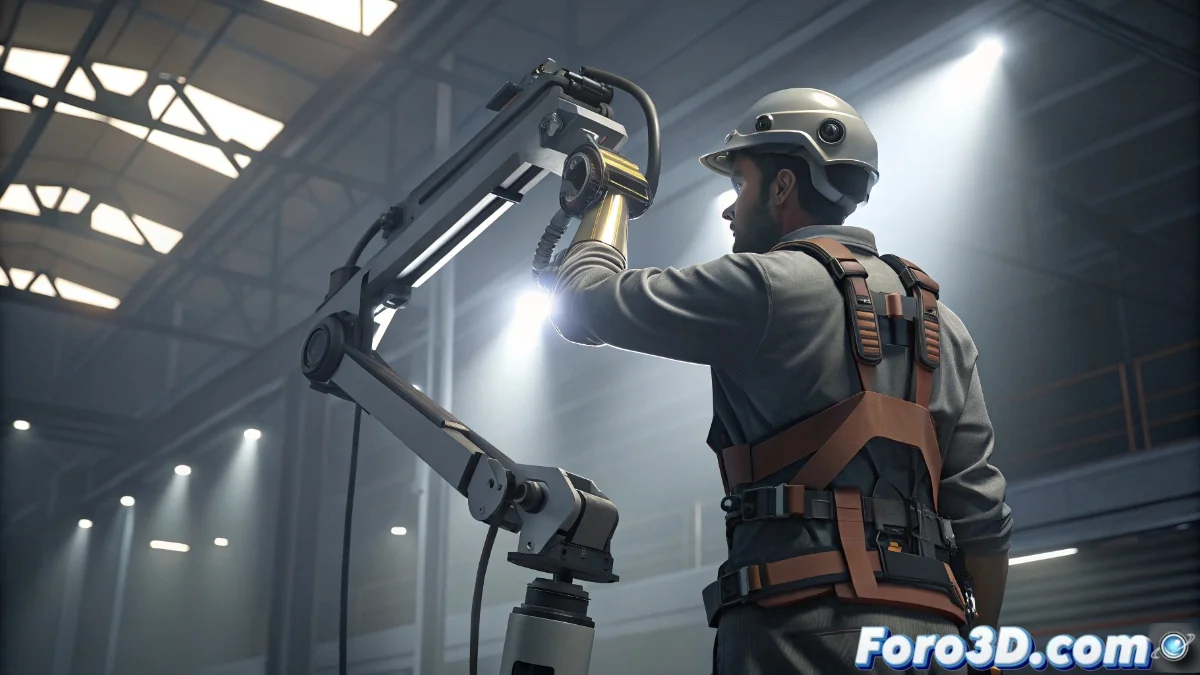
Paexo Shoulder: the passive exoskeleton revolutionizing work at height
Developed by the renowned company Ottobock, the Paexo Shoulder represents a significant advancement in work assistance technology. This mechanical support device is specifically designed for jobs that require keeping the arms elevated, offering an innovative solution to a common problem in numerous industries 🦾.
Innovative mechanism and design
The most outstanding feature of the Paexo Shoulder is its completely passive operation, meaning it operates without the need for electrical power or batteries. It uses an intelligent system of springs and joints that actively counteracts gravitational force, allowing natural movements while significantly reducing muscle effort. The construction materials include ultralight aluminum alloys and high-strength polymers, ensuring durability without compromising comfort.
Main technical features:- Custom adjustment system that adapts to different body morphologies
- Uniform weight distribution to minimize pressure points
- Precision joints that allow full range of motion
The implementation of passive exoskeletons like the Paexo Shoulder marks a before and after in the prevention of work-related injuries associated with work at height
Practical applications and proven benefits
This specialized exoskeleton finds its greatest utility in sectors such as construction, automotive manufacturing, and logistics distribution centers. Workers performing activities like ceiling installation, overhead welding, or placing merchandise on high shelves experience a notable reduction in accumulated fatigue. Studies show that its continued use decreases the incidence of conditions such as shoulder tendinitis and rotator cuff tears.
Documented advantages:- Up to 40% reduction in muscle load during elevated tasks
- Significant improvement in posture and body alignment
- Increase in productivity and job satisfaction
Impact on the modern work environment
Companies that have integrated the Paexo Shoulder report a decrease in absenteeism and optimization of production processes. Although its appearance may evoke science fiction imagery, its practical implementation demonstrates that assistive technology has arrived to fundamentally transform how we address ergonomic challenges in the workplace. Undoubtedly, it represents a strategic investment in occupational health and operational efficiency that redefines industrial safety standards 💪.