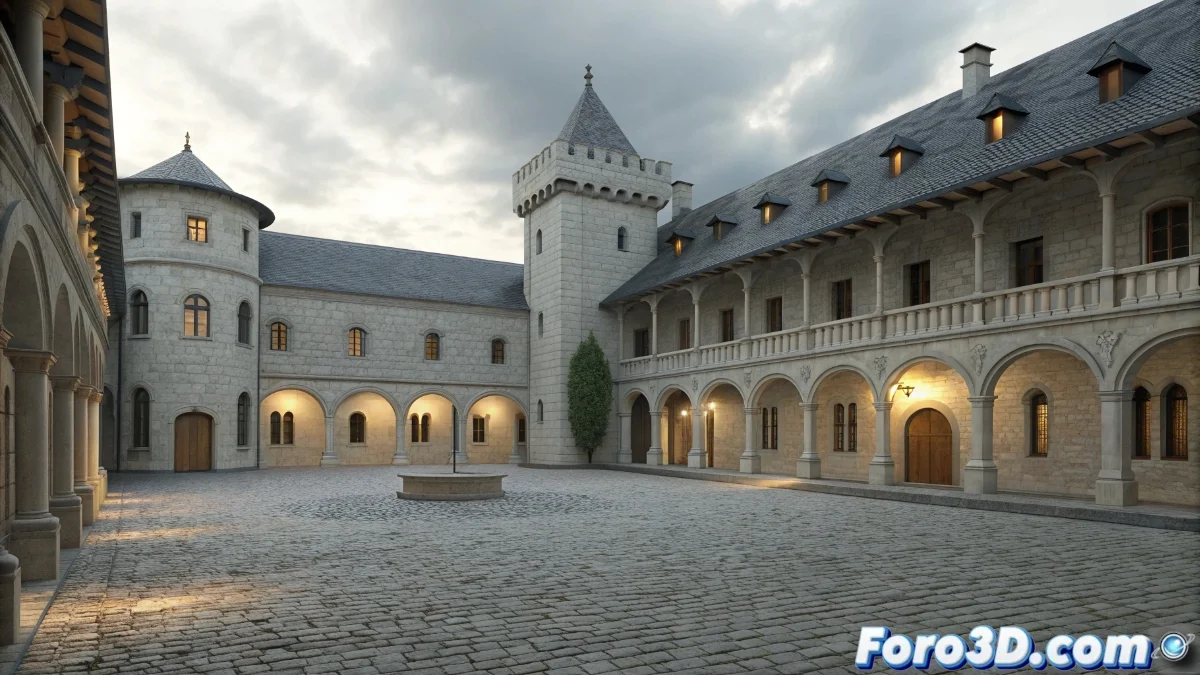
Overcast rendering: the diffuse lighting technique for digital artists
Overcast rendering represents a revolutionary approach in the world of 3D rendering, specialized in generating completely uniform lighting that neutralizes abrupt shadows and extreme luminous contrasts. This methodology creates a neutral visual canvas that serves as an ideal base for subsequent creative processes of digital painting and advanced compositing 🌈.
Technical setup for artificial overcast skies
To implement this technique, a HDRI-based lighting system of completely overcast skies or diffuse light domes is required. The secret lies in disabling all directional light sources such as the sun and setting a moderate light intensity that bathes the scene homogeneously from all possible angles. Contemporary rendering engines like Blender's Cycles, Arnold Render, and V-Ray include specialized light scattering parameters that further soften transitions between illuminated areas and shadowed zones.
Key elements for optimal setup:- Use of completely overcast sky HDRIs for 360° ambient lighting
- Total deactivation of directional lights and intense point spotlights
- Adjustment of light scattering parameters in the rendering engine
It's like handing a blank sheet of paper to a painter, but that paper already has all the three-dimensional geometry drawn with millimeter precision; it just needs someone to decide where to place the sun, which probably doesn't even exist in that alternate reality.
Applications in visual production pipelines
This rendering method demonstrates invaluable value in production pipelines where maximum flexibility during post-production is needed. By providing a base image without definitive lighting decisions, compositing and matte painting artists can integrate diverse elements, adjust atmospheres, and direct visual attention through subsequently applied lighting without restrictions imposed by predefined shadows.
Advantages in post-production stages:- Conflict-free integration of additional elements in compositing
- Total capacity to direct visual attention through subsequent lighting
- Facilitation of texture reprojection processes and advanced chromatic adjustments
The perfect digital canvas for artistic creation
The characteristic lighting neutrality of overcast rendering transforms the creative process, functioning as the ideal substrate where artists can develop their vision without the limitations of pre-established lighting. This technique unleashes creative potential by offering a technically perfect base where lighting direction and artistic shadows become purely creative decisions rather than technical restrictions 🎨.