Main Applications
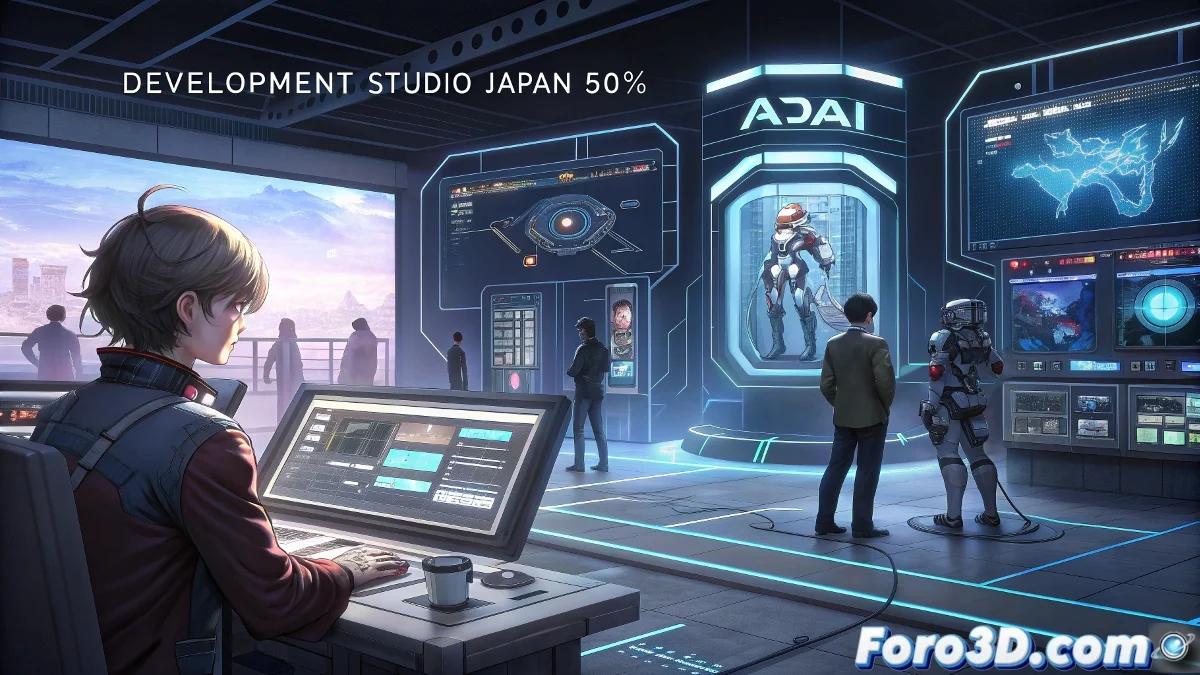
The artificial intelligence revolution has found a particularly fertile home in Japanese development studios. 🎮 According to a recent report, over half of video game creators in the Land of the Rising Sun use generative AI tools as an integral part of their creative processes. These technologies are primarily used to generate preliminary visual concepts for characters, environments, and assets, which are later refined by human artists. In the narrative realm, artificial intelligence systems support the creation of dialogue, side-quest structures, and story arcs, allowing for the exploration of multiple creative variants without compromising production deadlines.
Impact on the Japanese Industry
Japan, the birthplace of some of the most influential franchises in video game history, is adopting AI as a strategic tool to maintain its competitiveness in the global market. Far from representing a threat to human creators, this technology functions as a collaborator that amplifies the team's creative capabilities. This approach allows developers to focus on qualitative and innovative aspects while delegating tasks that consumed significant time and economic resources to AI. The result is an optimization of the workflow that preserves the creative essence characteristic of Japanese development.
The technology supports the creation of dialogue, side quests, and script structures
Challenges and Perspectives
Despite widespread adoption, the integration of generative AI is not without significant debates. Issues concerning creative originality, ethical implications, and copyright of artificially generated content are central to industry discussions. The future seems to be heading towards a deeper and more sophisticated collaboration between artificial intelligence and human talent, where this symbiosis could define the next generation of interactive experiences. The challenge lies in establishing frameworks that allow leveraging the advantages of AI while preserving human authorship and creative vision.
Specific Technical Implementations
The concrete applications of generative AI span multiple disciplines within video game development. Each area benefits in a particular way according to its specific needs.
- Concept Art: Generation of initial sketches and conceptual variations for characters and environments
- Narrative Design: Creation of branching quest structures and contextual dialogue
- Procedural Audio: Generation of adaptive soundtracks and contextual sound effects
- Game Balancing: Analysis of player data to adjust difficulty and progression
Competitive Advantages for Japanese Studios
The early adoption of these technologies provides significant advantages in an increasingly competitive global market. The benefits go beyond mere operational efficiency.
- Acceleration in project pre-production and conceptualization phases
- Ability to explore greater creative variations within the same deadlines
- Optimization of specialized human resources for higher value-added tasks
- Possibility of maintaining distinctive artistic styles with less manual effort
Ethical and Authorship Considerations
The integration of generative AI raises fundamental questions that the Japanese industry is beginning to address systematically.
- Definition of attribution standards for artificially generated content
- Establishment of ethical boundaries in the use of training data
- Preservation of the distinctive creative identity of studios and artists
- Development of best practices for human-AI collaboration in creative projects
While algorithms become more creative, Japanese developers demonstrate that the true art lies in knowing what to ask the machine. 🤖 Because, let's be honest, what would be more concerning than a final boss whose attack pattern was optimized by an AI that has never played video games?