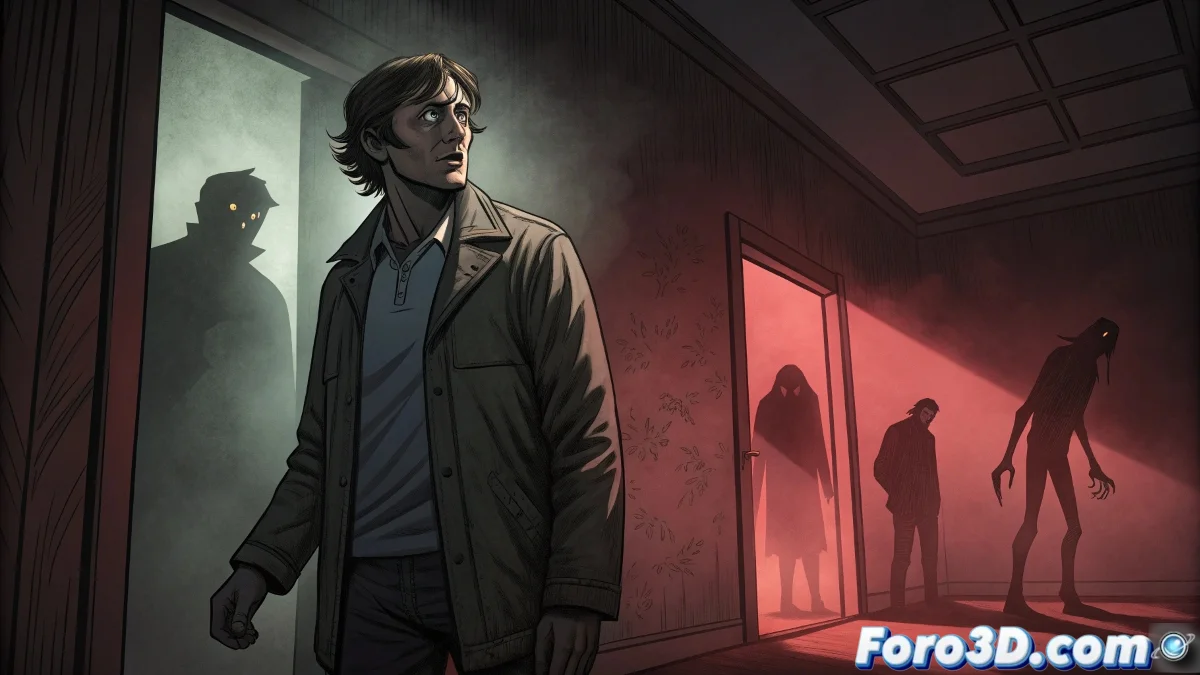
Outcast: Robert Kirkman's Psychological Horror That Redefines Demonic Possessions
The masterpiece of supernatural horror created by Robert Kirkman transports us to a universe where dark forces operate with a disturbing and systematic logic. Unlike conventional approaches to the genre, Outcast builds its narrative on the foundations of psychological trauma and spiritual corruption that spreads like an epidemic 🕯️
A Protagonist Tormented Beyond the Conventional
Kyle Barnes represents the antithesis of the traditional exorcist: he is an emotionally devastated character whose connection to the demonic begins in his childhood and marks every aspect of his existence. The series meticulously explores how the protagonist's traumatic past intertwines with the possession cases he investigates, creating a journey of self-discovery as terrifying as the entities he faces.
Distinctive Elements of the Narrative Approach:- Deep characterization that prioritizes psychological development over jump scares
- Systematic exploration of demonic mythology with established rules
- Expressive art by Paul Azaceta that conveys anguish through dark palettes
In Outcast, demons are not mere forces of chaos, but entities with specific agendas that operate under defined parameters
The Spiritual Epidemic as a Social Metaphor
The narrative transcends individual horror to show how demonic corruption infects entire communities, reflecting contemporary social issues. Kirkman weaves a web of dark connections where each individual possession represents only a link in a much larger and organized chain.
Layers of the Expansion of Evil:- Spiritual contagion that affects family and community relationships
- Distorted belief systems that facilitate demonic penetration
- Hidden infrastructure that sustains the operations of dark entities
Legacy and Impact on the Graphic Horror Genre
Outcast establishes a new paradigm in possession stories by combining supernatural elements with a deep human exploration. The work demonstrates that true horror does not reside in external demons, but in human spiritual fragility and our capacity to succumb to the darkness that surrounds us 🌑