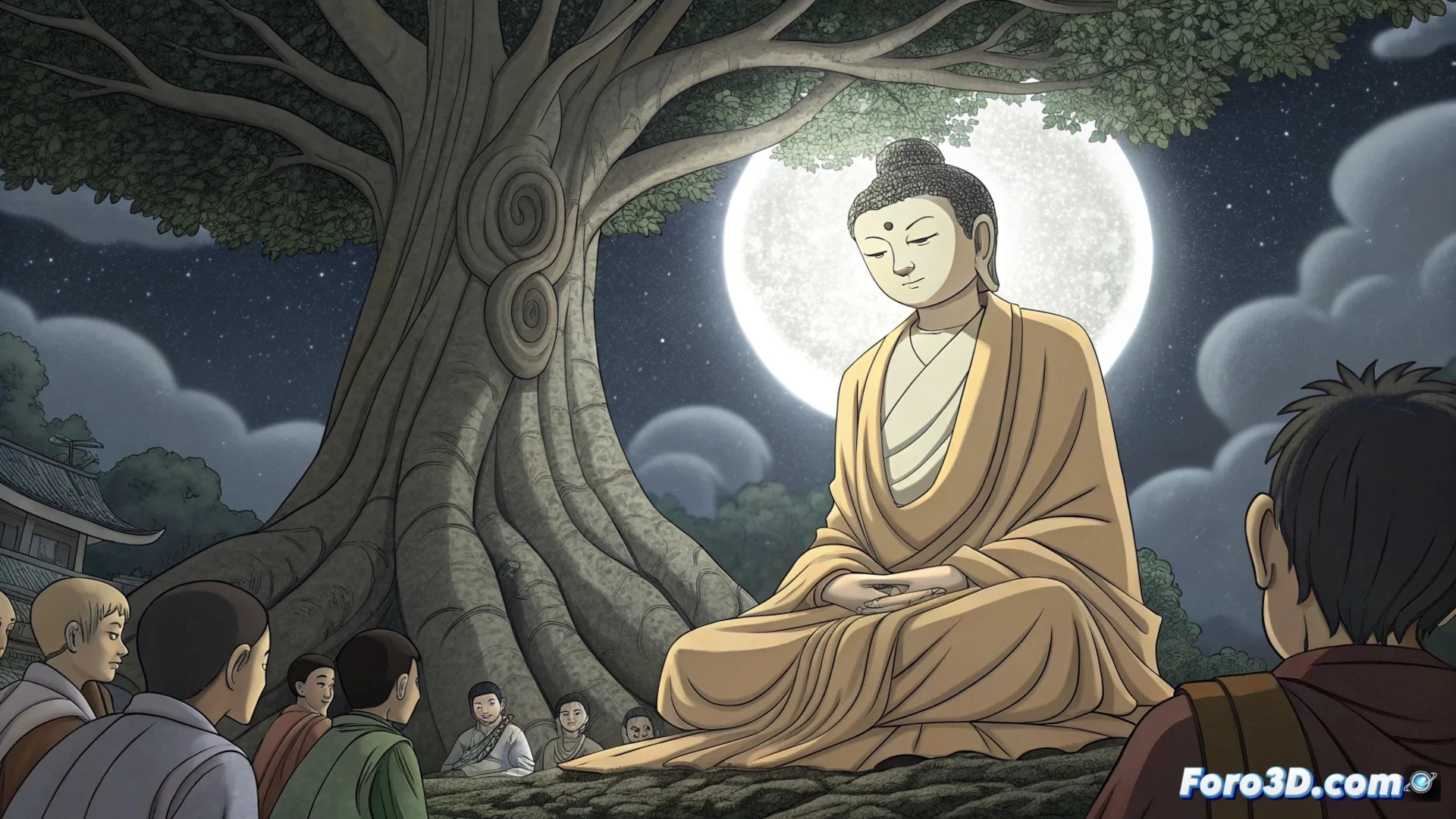
Osamu Tezuka Adapts Buddha's Life into an Epic Comic
The master of manga, Osamu Tezuka, undertakes the task of telling the story of Siddhartha Gautama in his monumental work Buddha. Far from being a rigorous chronicle, Tezuka builds an accessible and profound narrative, where the spiritual quest intertwines with invented characters and a tone that oscillates between comedic and dramatic. This unique approach allows humanizing the founder of Buddhism and speaking about suffering, life, and death in a universal way. 🎭
A Visual Style in Service of a Complex Story
Tezuka's distinctive cartoon style, dynamic and with a clear cinematic sense, is the perfect vehicle for this philosophical plot. The author demonstrates exceptional skill in handling shifts in tone, alternating between a visual joke and a deep reflection on pain on the same page. This narrative fluidity is a hallmark of his genius and positions Buddha, alongside Phoenix, as one of his most representative and ambitious creations. ✍️
Key Features of the Graphic Narrative:- Visual Dynamism: The drawing conveys movement and emotion, guiding the reader through an intense spiritual journey.
- Tonal Contrast: The blend of comedy and drama does not detract from the seriousness of the message, but makes it more approachable and understandable.
- Artistic Legacy: This work solidifies Tezuka's title as the God of Manga, showcasing the versatility of the medium to address any topic.
Tezuka manages to balance respect for Buddhist tradition with absolute creative freedom, creating a unique narrative universe.
Structure that Fuses History and Creativity
The plot follows Siddhartha's spiritual path, from his renunciation of the palace to achieving enlightenment. However, Tezuka intersperses these historical events with subplots and fictional characters. These elements do not dilute the central message; on the contrary, they amplify it and allow exploring Buddhist teachings from multiple perspectives. The work builds an expansive narrative where reality and fiction cooperate to illuminate profound truths. 🌟
Pillars of the Narrative Structure:- Spiritual Hero's Journey: It narrates the transformation from prince to enlightened one, showing his doubts and discoveries.
- Integrated Fiction: The invented characters serve as a mirror for the reader to reflect on the themes presented.
- Message Amplification: Creative freedom makes the teachings on suffering and detachment resonate more strongly.
The Unmistakable Seal of a Genius
Buddha by Osamu Tezuka is more than a graphic biography; it is a total narrative experience. Through his personal approach and masterful use of the comic language, Tezuka makes a historical figure of mythical proportions feel close and human. The work invites contemplation of great existential questions without ever losing an accessible tone, demonstrating that manga can be as powerful a medium for exploring philosophy as any other. Its legacy endures as a testament to the power of sequential art to tell the greatest stories. 📖