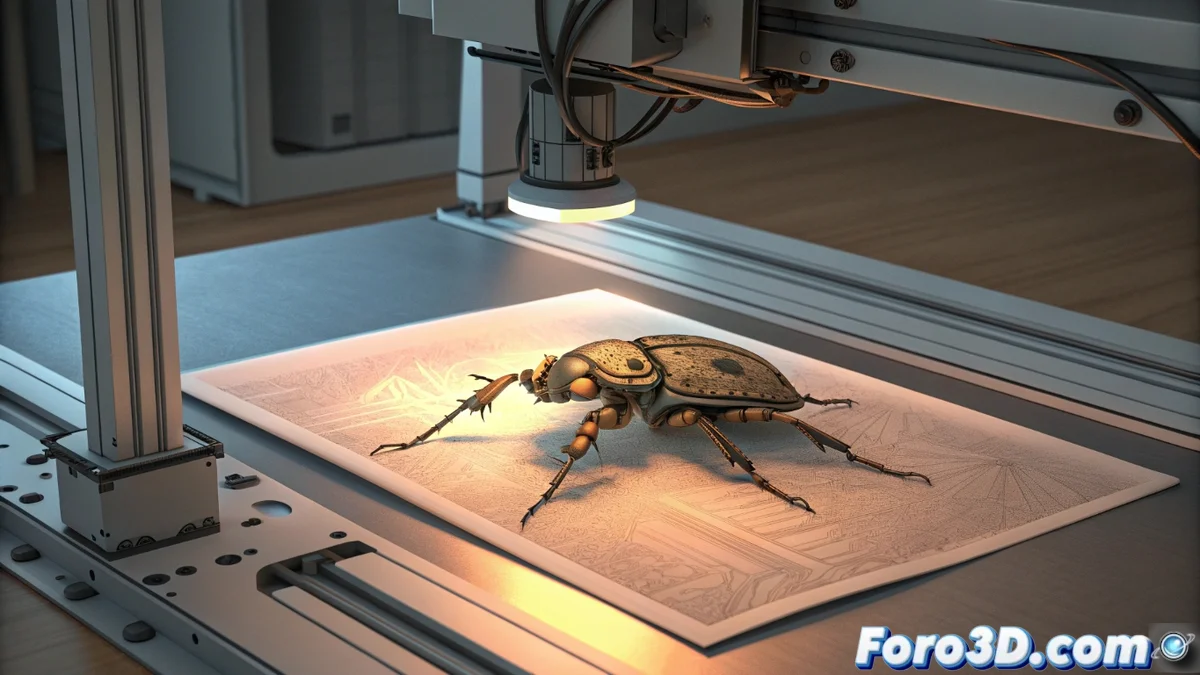
OrigaBot: the robot that folds itself like origami
Robotics takes a turn inspired by Japanese art with the OrigaBot. This device is born from a simple flat sheet that, upon receiving a heat stimulus, transforms itself into a functional and mobile machine. This radically different approach promises to simplify how to design, produce, and deploy robotic systems 🌀.
The mechanism behind self-transformation
The process requires no manual assembly. The sheet integrates flexible circuits and hinges made of a smart polymer. When heated, these materials with shape memory contract at precise points, folding the entire structure according to a predefined pattern. After adopting its 3D shape, the incorporated actuators allow it to move autonomously.
Key components of the system:- Base sheet: Flat support manufactured with rapid techniques like laser cutting, keeping costs low.
- Heat-reactive hinges: Special polymers that act as artificial muscles to generate the folds.
- Flexible electronics: Printed circuits that survive the folding process and provide functionality to the robot.
This methodology could be used to create swarms of simple robots or devices to operate in hard-to-reach environments, where their initial flat shape is a logistical advantage.
Implications and future of reconfigurable robotics
This concept goes beyond mere novelty. OrigaBot explores how to manufacture robots that are easy to store and transport in a flat and inactive state, to activate only when needed. This is crucial for missions in confined spaces, deliveries, or environmental monitoring.
Advantages and potential applications:- Simplified logistics: Store and transport robots stacked like sheets of paper.
- Soft and adaptive robots: Structures that can change shape for different tasks.
- Accessible manufacturing: Produce complex robots without the need for traditional assembly lines.
Challenges and a note of humor
Despite the advancement, researchers point out technical challenges. Precisely controlling the folding process to avoid unwanted deformations is key. In a lighter tone, the team jokes about the biggest challenge: preventing the sheet, when heated, from trying to fold into a paper airplane and flying out the window 🪁. This anecdote underscores the elegance and simplicity of the physical principle that makes OrigaBot work, marking a promising path for the next generation of autonomous machines.