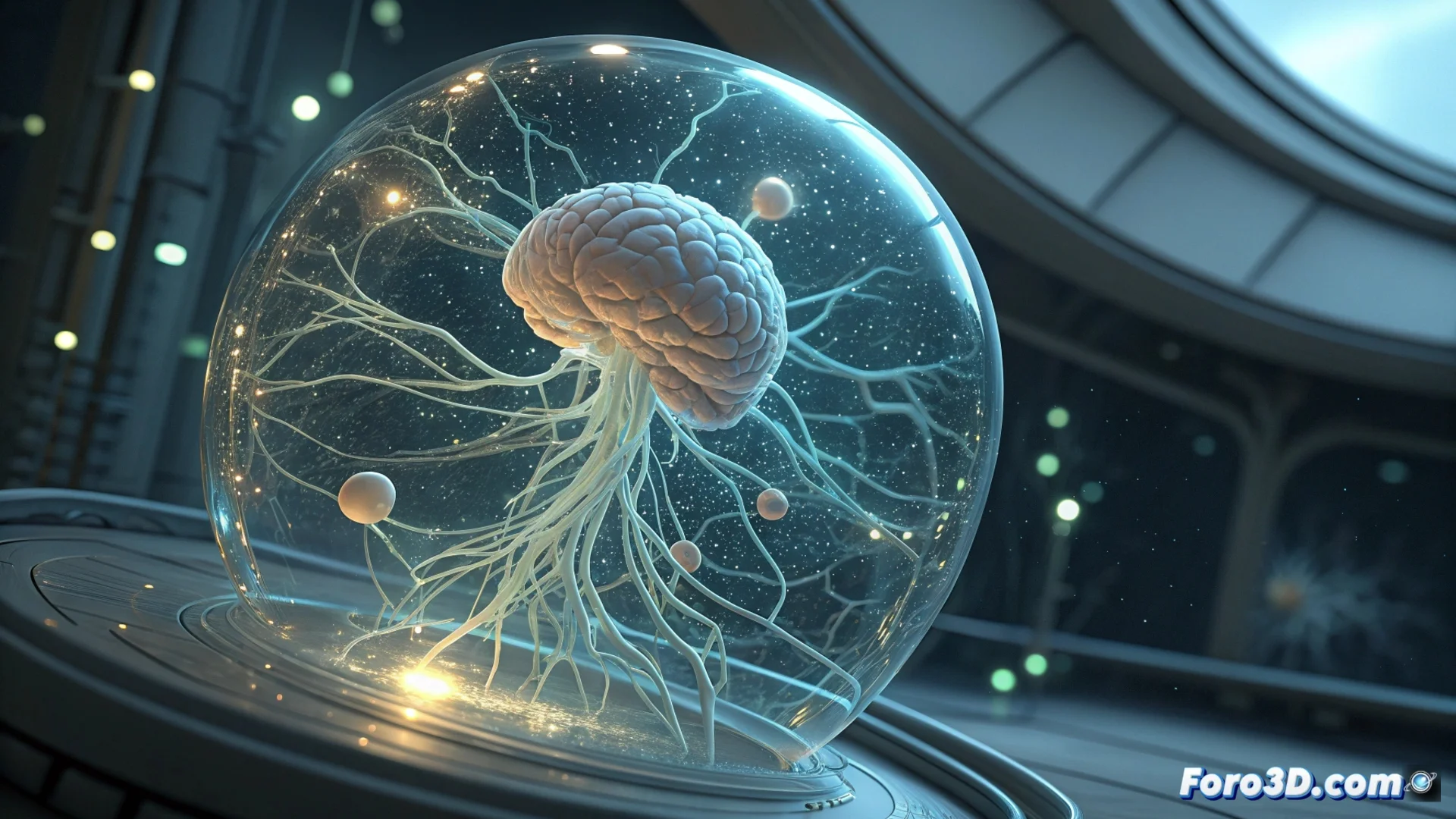
Organoid Intelligence: Computing with Cultured Brain Tissue
A new technological paradigm is emerging in laboratories: organoid intelligence (OI). This field explores how to use human cultured brain tissue to perform computational tasks. They are not complete brains, but organoids that replicate basic functions and can learn from electrical stimuli. Scientists seek to decipher how these biological networks process information, aspiring to create systems that mimic the efficiency and learning capacity of the human brain 🧠.
How Mini Computational Brains Are Manufactured
The foundation of this technology is brain organoids. Researchers cultivate them from human pluripotent stem cells, which have the potential to become any type of cell. In a controlled environment, these cells self-organize to form 3D structures that mimic regions of an early developing brain. Within these cultures, active neurons emerge that establish connections with each other, creating rudimentary but functional neural networks.
The key process for computing:- Cultivation: Start from stem cells and guide their differentiation toward neural tissue in bioreactors.
- Network Formation: Neurons develop synapses and begin to show spontaneous electrical activity.
- Interface: Connect the organoid to a microelectrode array. This allows sending signals to the tissue and recording its responses, creating a hybrid circuit.
Perhaps the greatest ethical challenge is not that these mini brains learn to solve problems, but that they develop consciousness and start wondering why they are kept in a Petri dish.
Potential and Promises of a New Type of Computer
The main appeal of OI lies in a radically different data processing model from silicon. Biological brains are exceptionally efficient at recognizing patterns or learning from few examples. If the organoids' computing capacity can be directed and stabilized, specialized systems with transformative applications could emerge.
Possible Future Applications:- Modeling Diseases: Use customized organoids to simulate and study neurological disorders like Alzheimer's or Parkinson's.
- Controlling Prosthetics: Develop more intuitive and natural brain-machine interfaces to operate robotic limbs.
- Processing Sensory Data: Create hybrid systems that can interpret images or sounds with the brain's energy efficiency.
Obstacles on the Path: Technical and Ethical
Despite its potential, the field faces formidable challenges. Technically, it is complex to keep the tissue viable long-term and achieve stable and predictable neural networks. The ethical challenge is even deeper. Using human cultured neural material raises questions about the moral status of these tissues and the limits of experimentation. The scientific community is actively debating how to proceed responsibly, ensuring that technological advancement does not exceed established ethical frameworks. The future of computing could be biological, but its path is full of questions to answer 🤔.