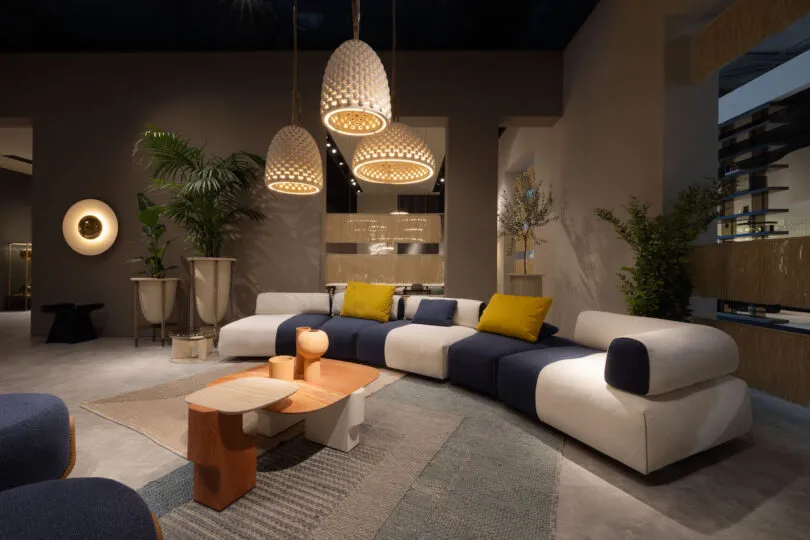
Haibu lamps, created by designer Vittorio Paradiso for Paolo Castelli, are a great example of how 3D printing has transformed the world of ceramics. These unique lamps, designed for both indoor and outdoor use, are inspired by the natural structure of a honeycomb. They are manufactured using a 3D clay printing process, which combines the precision of technology with the natural beauty of the design.
The Manufacturing Process of Haibu Lamps
Each Haibu lamp is created through 3D printing, where a printer lays down layers of clay with incredible precision. As a result, the lamps have perfectly uniform shapes. However, once the printing process is complete, gravity comes into play, causing the clay to deform slightly under its own weight. This creates small irregularities, openings, and patterns that give each lamp a unique touch.
The Unique Touch of Imperfections
These imperfections are not defects; instead, they make the lamps even more attractive, combining smooth surfaces with natural textures. The blend of organic and technological elements results in a piece with a unique and original aesthetic.
The Impact of Light on the Design
The most impressive thing happens when the lamps are turned on. Light passes through those small openings, creating intricate shadows and a soft, warm glow. This gives each lamp a special character, combining the modern with the natural. The fusion of advanced technology with raw materials creates a functional and visually captivating design piece.
A Design That Combines the Modern and the Natural
The precision of 3D printing meets the organic in a perfect way, offering an aesthetic and functional solution. Haibu lamps not only illuminate spaces but also contribute a unique atmosphere, thanks to their carefully crafted design.
"These lamps not only illuminate but also tell a story through their design, combining the modern with nature."
This process reflects how advanced technology can be used to create artistic pieces that are not only useful but also offer an innovative vision of contemporary design.