Orbital Solar Farms Capture Energy Without Interruption
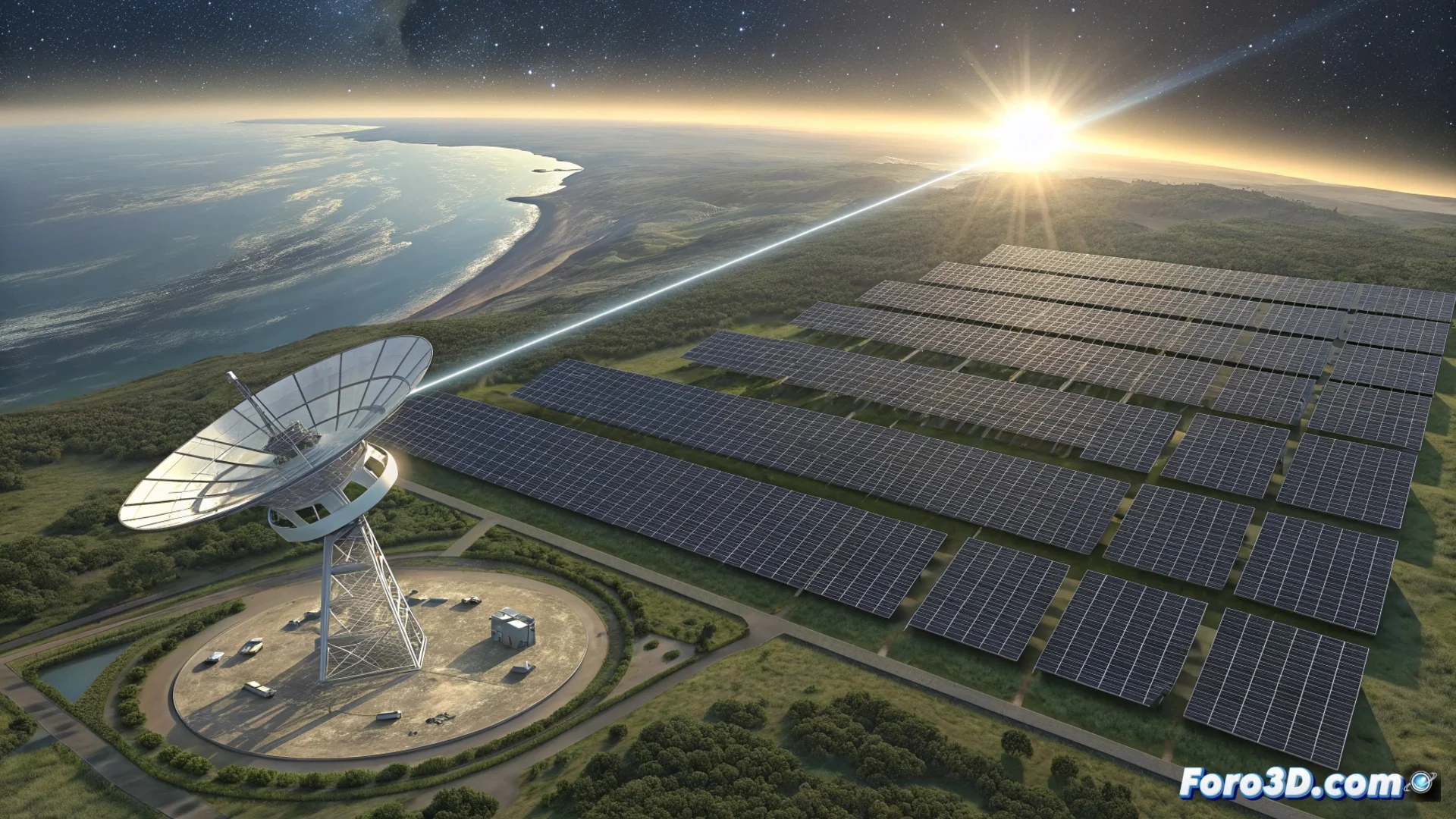
Imagine a source of energy that never turns off. Orbital solar farms are specialized satellites that orbit our planet to capture sunlight directly in the vacuum of space. There, without an atmosphere to attenuate the rays and without the day-night cycle, they can generate electricity continuously. This energy is transformed and sent to Earth wirelessly, promising a continuous baseload supply. 🛰️⚡
The Mechanism for Capturing and Sending Energy
The system operates on two main technological pillars. First, capture uses high-efficiency solar panels optimized for the space environment. Second, wireless power transmission, which converts electricity into a beam of microwaves or laser. This beam is directed with great precision to a ground receiving station called a rectenna, a large antenna that reconverts the waves into useful direct current for the electrical grid.
Key System Components:- Orbital Solar Panels: Designed to operate in vacuum and withstand radiation, with higher efficiency than terrestrial models.
- Directed Beam Transmitter: Technology that emits energy as microwaves or laser, requiring extremely precise aiming.
- Rectenna (Receiving Antenna): Large-scale ground infrastructure that captures the beam and transforms it back into electricity.
The idea promises constant baseload energy, but first we need to figure out how to pay the orbital assembly bill.
The Obstacles to Making This Concept a Reality
Building this infrastructure in space presents enormous challenges. The cost of launching and assembling massive structures in orbit is prohibitively high with current technology. Additionally, it is crucial to ensure safety: the energy beam must not interfere with airplanes, other satellites, or affect ecosystems. Finally, the overall efficiency of the entire process, from capturing photons to injecting electrons into the grid, must be high enough for the project to be economically viable.
Main Challenges to Overcome:- Construction Logistics and Cost: Transporting tons of material to space and assembling it robotically or with astronauts.
- Transmission Beam Safety: Developing control and emergency shutdown systems to avoid risks.
- End-to-End Efficiency: Optimizing every stage (capture, conversion, transmission, reception) to minimize losses.
The Balance Between Potential and Reality
Space solar farms represent a technological frontier with immense potential to provide clean and constant energy. However, their viability depends on overcoming practical barriers in engineering, economics, and public acceptance. The path to capturing solar energy in space and sending it to Earth requires significant advances in launch cost reduction, efficiency improvements, and demonstrating that the system is completely safe. The future of this energy could be, literally, above our heads. 🌍✨