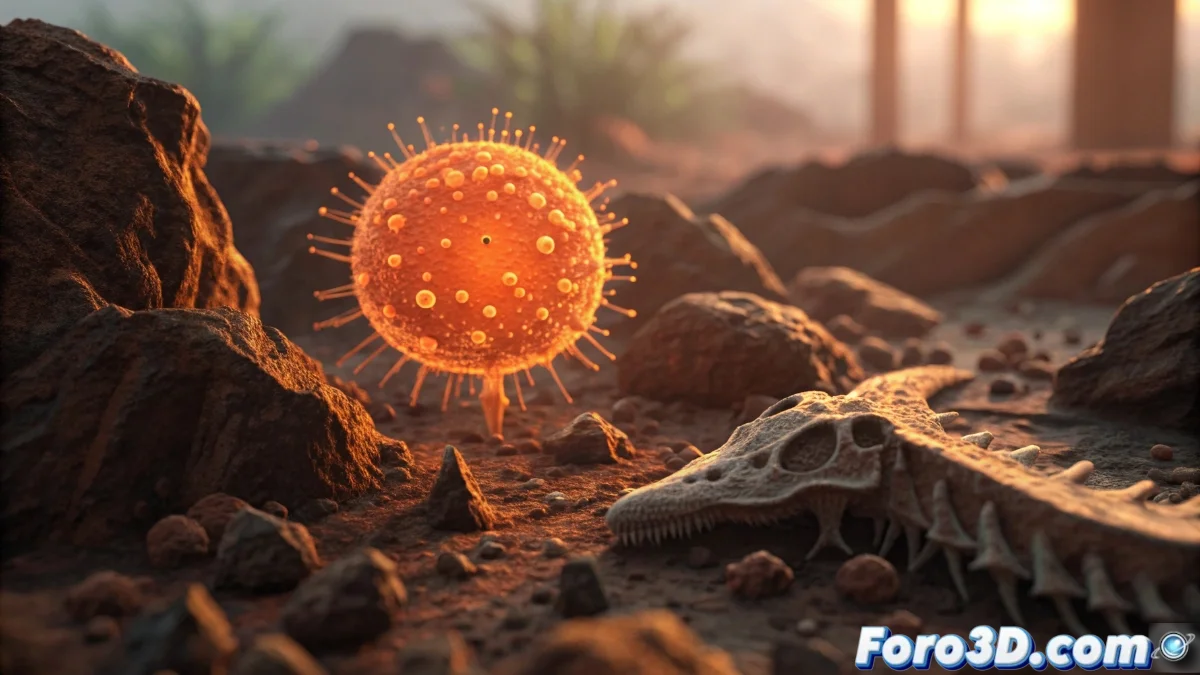
Orange Organism Reveals Secrets of Dinosaur Fossilization
The scientific community has unearthed a revolutionary discovery in the form of microscopic life that exhibits a vibrant orange color and thrives in extreme environmental conditions, recreating the scenarios where dinosaurs dominated the planet. This organism possesses exceptional biochemical mechanisms that could unveil the mysteries of organic material preservation over millennia 🦠
Impact on Paleontological Techniques
Researchers are excited about the transformative potential of this microorganism for locating fossil sites. Its characteristic pigments interact with terrestrial minerals in a manner analogous to the natural processes that protected dinosaur remains for millions of years. The meticulous analysis of its unique metabolism could lead to the development of innovative methodologies for identifying areas with a high probability of harboring exceptionally preserved fossils.
Practical Applications in Research:- Development of advanced paleontological prospecting techniques through the study of pigment-mineral interactions
- Acceleration of discoveries in underexplored geographic regions using specific biomarkers
- Creation of improved protocols for the preservation of soft tissues in archaeological contexts
This organism could be the missing piece in the fossilization puzzle, acting as a natural preservative in prehistoric ecosystems
Implications for Evolutionary Understanding
The extraordinary biochemical resistance of this form of life suggests that ancient ecosystems likely harbored similar microbial communities that functioned as natural biological preservatives. This finding not only expands our knowledge of past biodiversity but also raises fundamental questions about the interdependencies between microorganisms and larger species.
Future Research Perspectives:- Study of symbiotic mechanisms between microorganisms and dinosaurs in prehistoric environments
- Analysis of the role of extremophiles in mineralization and fossilization processes
- Investigation of possible biotechnological applications derived from their unique adaptations
Reinterpreting Mass Extinction
Emerging data invite a fascinating review of extinction events, suggesting that certain dinosaurs may have undergone ecological transformations rather than complete disappearances, finding in these orange microorganisms involuntary custodians of their biological legacy. This perspective redefines our understanding of life's persistence through geological eras 🌍