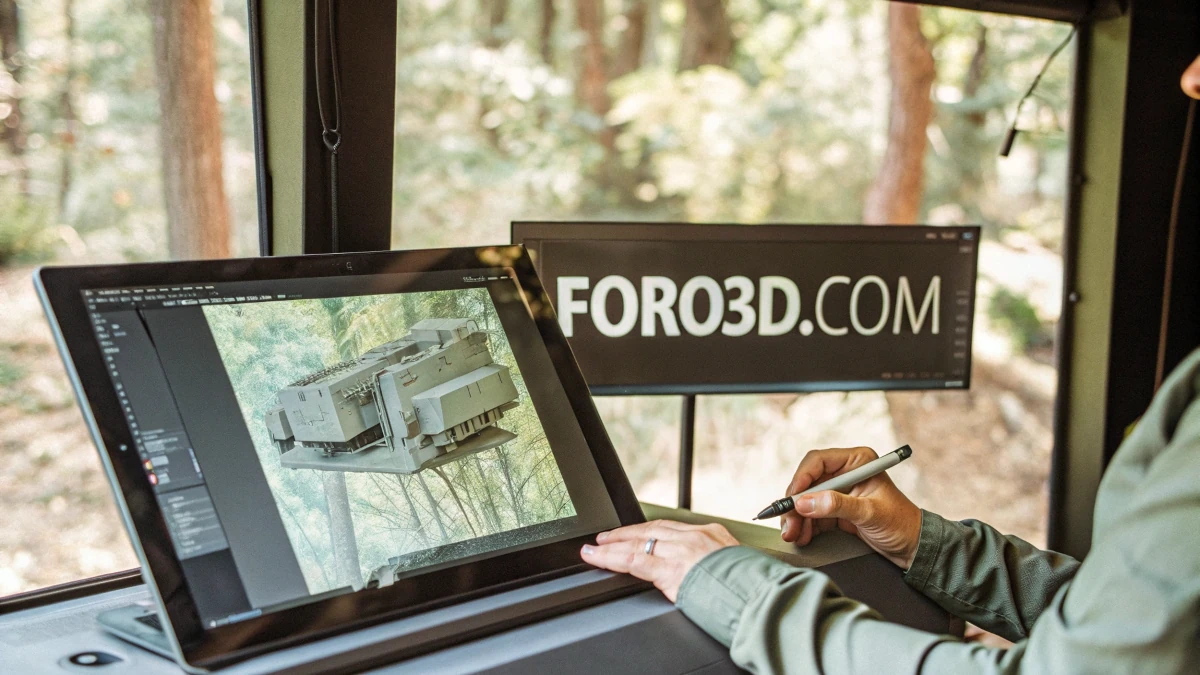
The Multires modifier in Blender has been a key tool for high-resolution sculpting. However, in previous versions, its performance was affected by fluidity issues and memory consumption. Thanks to recent optimizations, brush speeds and resource management have improved significantly.
The Challenge of High Subdivisions
One of the biggest drawbacks of the Multires system was the slowdown as subdivisions increased. At high levels, the data structure became less efficient, affecting brush speeds and unnecessarily increasing memory usage.
“A powerful tool is one that allows working at high resolution without compromising performance.”
Improvements in Data Structure
To optimize its operation, a storage system based on struct-of-arrays has been implemented, where position, normals, and mask data are organized more efficiently. This change has enabled:
- Reduction in memory access times, improving the workflow.
- 32% increase in brush performance at high subdivisions.
- Greater stability when sculpting complex models.
Optimization in Memory Management
Memory handling has been another key point in improving the Multires. Previously, data from each subdivision was stored redundantly, generating excessive resource usage. Now, the system:
- Loads only the necessary subdivision levels, reducing memory consumption.
- Improves real-time rendering efficiency.
- Optimizes performance on systems with more limited hardware.
Less Latency in Brush Application
Another detected issue was perceptible latency when applying brushes to models with high subdivisions. With the new optimization, the internal structure of the Multires is now more efficient in using multiple processing threads, allowing:
- Faster deformations without interruptions.
- Smoother response when sculpting at high resolution.
- Reduction in CPU and GPU load.
Impact on Workflow
The improvements in the Multires have allowed artists to enjoy a more agile and stable sculpting experience. Now, it's possible to work with complex models without worrying about performance issues, facilitating the creation of sculptures with a high level of detail.
A More Efficient Future for Digital Sculpting
The optimizations in the Multires modifier not only improve its current performance but also establish a solid foundation for future innovations in handling high-resolution meshes. With a more efficient data structure and better memory management, Blender continues to evolve as a reference in the world of digital sculpting.