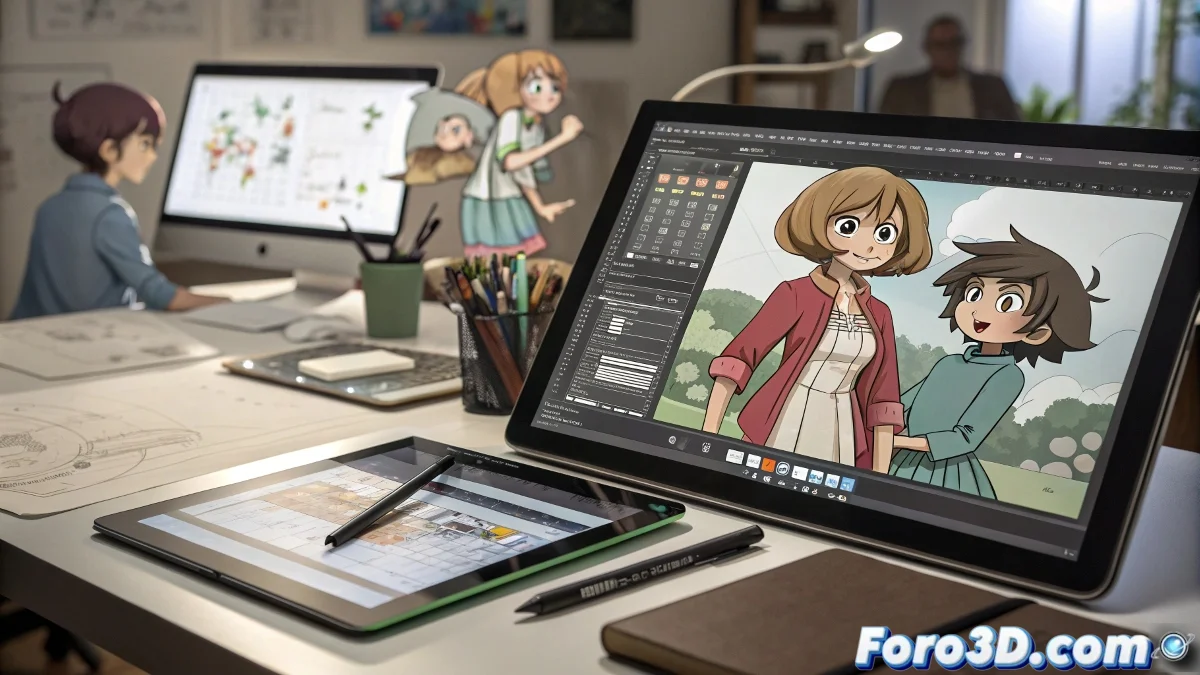
OpenToonz: The Foundations of Professional 2D Animation in the Digital Era
In a world where commercial animation software has become increasingly expensive and closed, OpenToonz emerges as that powerful and accessible alternative that keeps the essence of traditional 2D animation alive while embracing the advantages of digital workflow. It's not just another animation program; it's a complete production ecosystem with an impressive pedigree—being the software used by Studio Ghibli for masterpieces like "Spirited Away" and "Princess Mononoke". But beyond its glorious history, OpenToonz represents a particular philosophy about how 2D animation should be in the 21st century. 🎬
Technical Foundations: Where Traditional Meets Digital
The core of OpenToonz is built around a unique hybrid model that combines the best of traditional drawing with the advantages of digital processing. Its system of coexisting raster and vector levels in the same scene allows animators to work with digital painting techniques for backgrounds and effects, while using vector precision for characters and animation. The advanced color palette system maintains chromatic consistency throughout the project, while the scanning and cleanup tools facilitate the integration of paper drawings for those who prefer to start traditionally. 🖌️
Fundamental Pillars of OpenToonz:- hybrid raster/vector engine for maximum flexibility
- frame-based animation system (XSheet)
- digital painting tools and post-production effects
- compatibility with scanners and professional tablets
Production Architecture: From Sketch to Screen
OpenToonz is designed following a professional studio workflow. It starts with the scanning and cleanup module where paper drawings are digitized and prepared. Then it moves to the color and ink module where tones are applied and lines are defined. The animation and timing module allows adjusting movement using the XSheet—a digital version of the traditional exposure sheet—and finally the compositing and effects module integrates all elements. This modular structure reflects decades of real production experience rather than abstract theory. 🏗️
OpenToonz doesn't aim to be the most modern software, but the most sensible for serious 2D animation
Development Strategy: Open Source with Purpose
Digital Video's decision to release OpenToonz as open source in 2016 was strategic and visionary. Instead of competing directly with commercial solutions like Toon Boom or Adobe Animate, it adopted a model where the community contributes to development while maintaining the stability needed for professional production. The strategy has three pillars: accessibility (zero cost), customization (open code), and stability (curated official versions). This approach attracts both independent studios with limited budgets and educational institutions that need professional tools for teaching. 💡 OpenToonz Strategy Components:
- open source model with community development
- maintenance of compatibility with traditional workflows
- focus on stability over constant novelty
- commitment to education and accessibility
Competitive Advantages in the Current Ecosystem
In 2025, OpenToonz occupies a distinctive niche in the market. Where other software prioritize simplicity or the latest trends, OpenToonz focuses on functional depth and precise control. Its effects system (Fx Schematic) allows creating custom pipelines that rival expensive solutions. The native integration with GTS (Toonz Scanning) facilitates hybrid analog-digital workflows. And perhaps most importantly: its learning curve leads to solid animation fundamentals, creating better animators in the process rather than just software users. 🎯
The Future: Evolution Without Betraying Its Roots
OpenToonz's roadmap shows a careful and deliberate evolution. New versions add modern features like better tablet support, export to contemporary formats, and performance optimizations, but always maintaining the essence of the traditional workflow. The strategy seems to be "modernize without breaking"—improving the user experience without sacrificing the power and flexibility that made the software famous. For an industry where many animation projects last years, this stability is invaluable. 🔄
Future Development Directions:- UI improvements without changing the workflow
- performance optimization for modern hardware
- expansion of export and import formats
- collaborative tools for distributed studios
OpenToonz represents something rare in the software world: a commitment to craftsmanship over commercialization. It's not designed to be the easiest to use or the most popular, but to be the most capable tool for those who take 2D animation seriously. Its open source development strategy ensures it will continue evolving according to the real needs of animators rather than market demands. In an era of SaaS applications and monthly subscriptions, OpenToonz remains a bastion of independence and professionalism, reminding us that the most valuable software isn't necessarily the most expensive, but the one that best understands and respects the craft it aims to serve. 🛠️