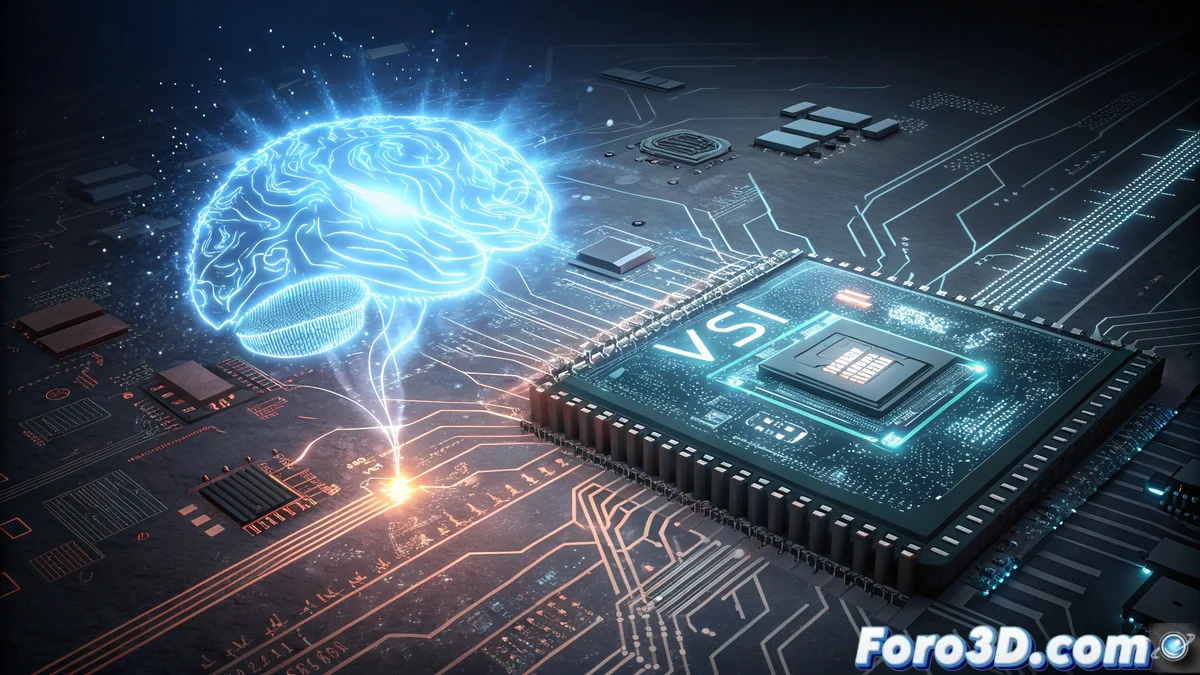
The Silent Battle for Technological Independence
While NVIDIA consolidates its dominance in the AI chip market with its A100 and H100 series, OpenAI is waging a strategic battle to reduce its dependence on the tech giant. This quest for autonomy represents one of the most significant challenges in the AI industry, where hardware has become the critical bottleneck for developing advanced models. A race for technological sovereignty that could redefine power balances in the artificial intelligence ecosystem.
The Hardware Dilemma in the AI Era
The paradox is evident: while OpenAI develops AI systems capable of complex reasoning and creativity, its progress fundamentally depends on processors manufactured by a single company. NVIDIA chips have become the indisputable backbone for large-scale model training, creating a dependence that limits strategic flexibility and significantly increases operational costs.
Strategies for Technological Independence
- Collaboration with alternative chip manufacturers
- Software optimizations for greater efficiency
- Development of proprietary specialized architectures
- Exploration of novel computational approaches
The Challenge of Replicating the NVIDIA Ecosystem
Beyond the chips themselves, NVIDIA has built a complete ecosystem with CUDA, optimized libraries, and development tools that represent a formidable barrier to entry. The dependence is not just on hardware but on an entire software infrastructure that has become the industry standard. Any alternative must offer not only comparable performance but also compatibility with the existing ecosystem.
Potential Impact on the Industry
- Increased competition in the AI chip market
- Cost reduction for companies and developers
- Acceleration in specialized hardware innovation
- Diversification of options for specific applications
A demonstration of how even the most innovative companies must face fundamental infrastructure challenges that could determine their ability to maintain technological leadership.
For the global AI ecosystem, OpenAI's quest for independence could catalyze a new era of innovation in specialized hardware. The possibility of architectures designed specifically for the unique requirements of large language models and artificial reasoning systems could accelerate progress in ways we can barely imagine today 🤖.
And the most ironic thing is that while we develop artificial intelligences that could surpass human reasoning, we still depend on a single company to manufacture the chips that make all this magic possible... although the first truly autonomous AI will probably want to choose its own hardware 😅.