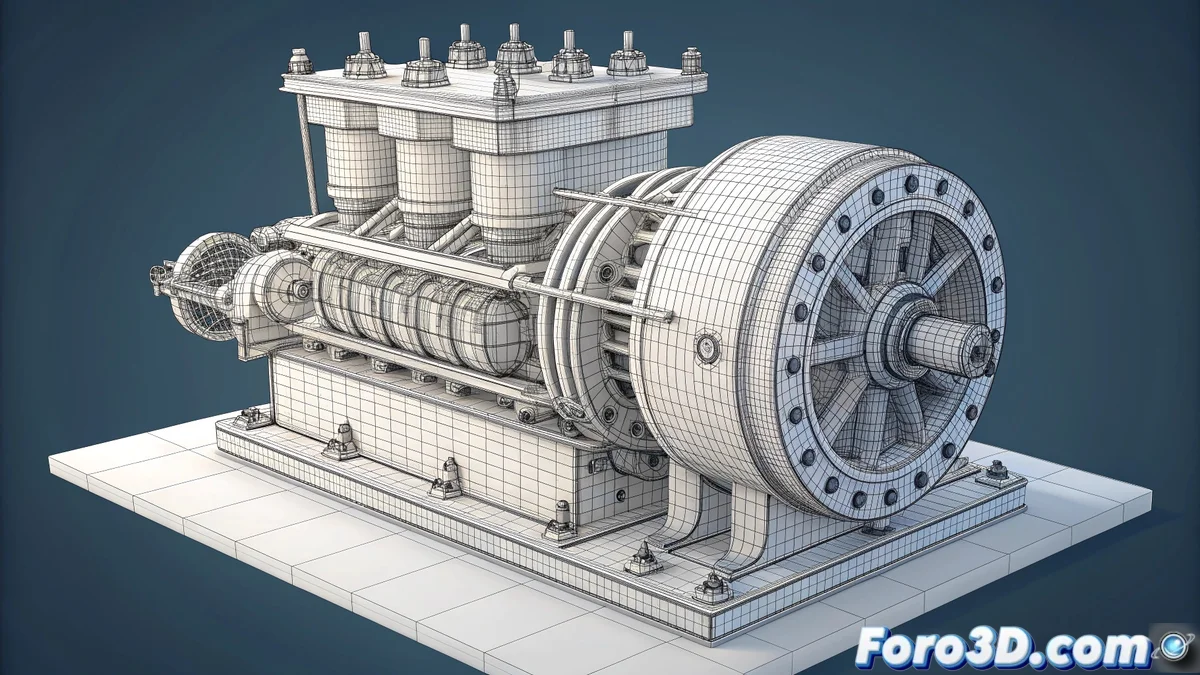
The Energy Revolution from Home
An innovative engineer has developed a fully 3D-printable and open-source thermoacoustic Stirling engine, marking a milestone in the democratization of clean energy generation. This project is meticulously designed so that anyone with access to a 3D printer can fabricate it at home, eliminating technical and economic barriers that have traditionally limited access to renewable energy technologies. A significant step toward decentralized energy autonomy.
Design Optimized for Additive Manufacturing
The choice of the Stirling engine is no coincidence: its architecture with minimal moving parts makes it the ideal candidate for 3D printing. Using fiber-reinforced materials, the design achieves sufficient strength to withstand pressures of up to 12 bar while maintaining reduced weight. Only components subjected to extremely high temperatures require traditional materials, ensuring the durability of the assembly without compromising the project's accessibility.
Highlighted Technical Features
- Compatible with biogas and solar thermal energy
- Parts printed in fiber-reinforced materials
- Working pressure up to 12 bar
- Complete assembly documentation
The Open-Source Ecosystem in Action
By releasing the design as open source, the creator has activated a virtuous cycle of community collaboration. Platforms like ProjectsToPrint, DIY Stirling Engine, and Adafruit already host functional implementations that anyone can download, modify, and improve. This collaborative philosophy accelerates innovation and enables specific adaptations for different contexts and energy needs.
Available Implementations
- ProjectsToPrint: fully 3D printed engine
- DIY Stirling Engine: low-temperature ABS kit
- Adafruit: complete documentation for replication
- GitHub Community: continuous design improvements
A demonstration of how the combination of accessible technologies and open-source philosophy can create tangible solutions for global energy challenges.
For makers, engineers, and sustainability enthusiasts, this project represents a unique opportunity to experiment with renewable energy generation on a domestic scale. The ability to understand, modify, and improve the design fosters a deeper understanding of thermodynamic principles while actively contributing to the energy transition 🔋.
And that's how we end up with engines capable of generating energy from thermal differences, printed on the same equipment we normally use to create collectible figurines... because sometimes the most advanced technology hides behind the most accessible projects 😅.