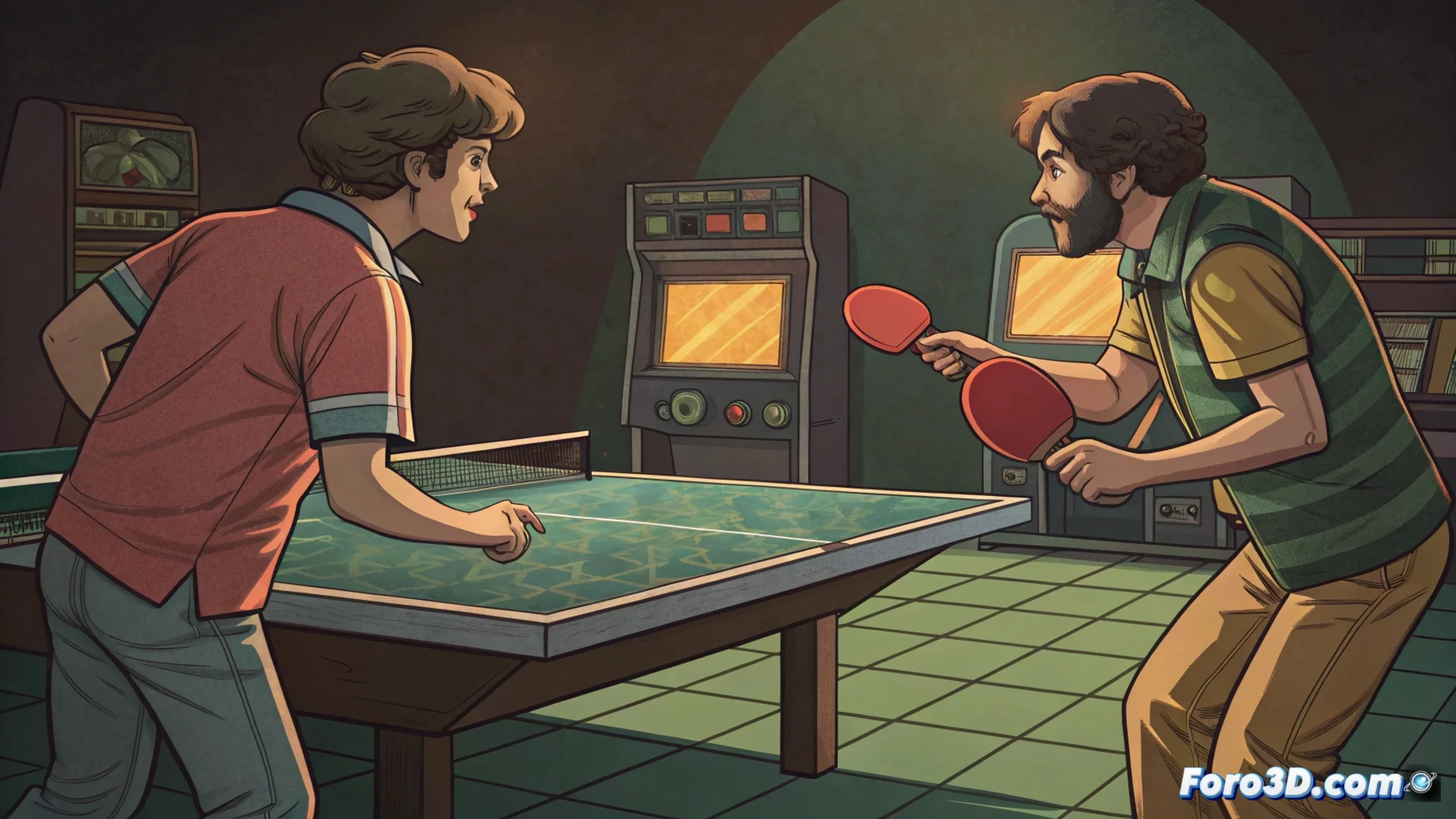
Pong: the genesis of video games that changed digital entertainment
When Atari presented Pong in 1972, it didn't just launch a product; it started a cultural revolution. This title, which simulates a ping-pong match on a screen, pits two players against each other who control paddles to bounce a point of light. Its objective was simple: score more points than the opponent. This brilliant simplicity laid the foundations for an entire genre and proved that there was a massive market for this new form of entertainment. 🎮
Technical architecture and symbolic value
Pong runs on a discrete circuit board, lacking a microprocessor like those we know today. The creators implemented all the game logic using basic electronic components, which generated those minimalist vector graphics: white shapes on a black canvas. This technical approach defined its iconic aesthetic. Beyond the screen, Pong became a symbol of innovation from the seventies, being for many the first time they interacted with a game on a screen, democratizing access to playful technology.
Keys to its design:- Dedicated hardware: Specific circuits to generate graphics and sound without a central CPU.
- Direct interaction: Two analog controls (knobs) that moved the paddles vertically.
- Basic physics: The ball bounces off the paddles and screen edges with predefined angles.
Pong's success was so overwhelming that the first arcade machines got jammed with coins because people didn't want to stop playing.
Its indelible footprint on game design
Pong's influence is profound and enduring. Its central concept of bouncing an object with a paddle directly inspired hits like Breakout and the entire Arkanoid saga. The principles it established—comprehensible physical simulation and direct competition between players—remain pillars of design. Today, numerous independent games and experimental projects pay homage to its aesthetic and mechanics, reinterpreting them with the power of modern technology. Studying Pong is analyzing the foundations of the user interface and game psychology.
Manifestations of its legacy:- "Bat and ball" genre: Games where the main objective is to deflect a projectile.
- Local competitive gameplay: It fostered face-to-face play on the same screen, a concept still popular.
- Retro aesthetic: Its minimalist look inspires the art direction of many current indie titles.
An icon that transcends time
Although its graphics seem primitive today, Pong proved that the essence of a video game lies in its gameplay, not its visual complexity. It popularized the arcade format and was the catalyst that took this nascent industry from arcades to living rooms worldwide with the first home consoles. Its story reminds us that the most powerful ideas are often the simplest, and that a white rectangle bouncing a square can change forever how we have fun. ✨