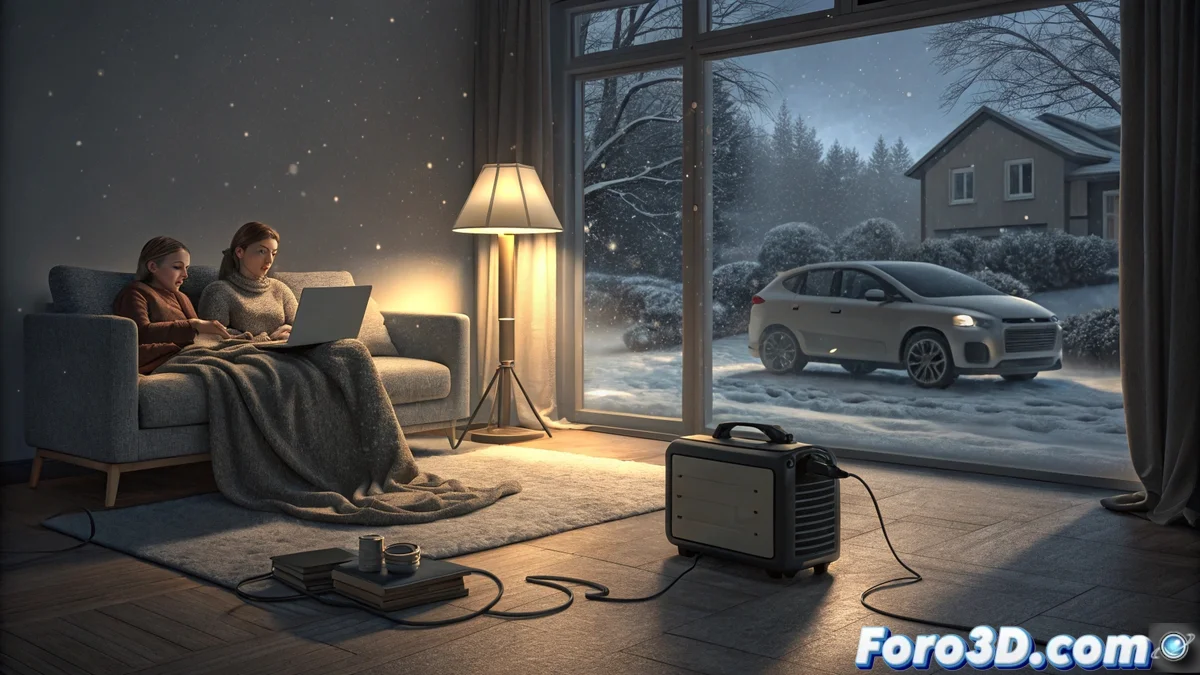
Of Blackouts and Batteries: How Electric Cars Are Changing Home Strategy
The frequency of power outages is increasing, a paradox in an era of technological advancement. Instead of looking for candles, many now turn to a solution linked to electric mobility. This winter, the way to respond to a blackout evolves toward portable and versatile energy systems. 🔋
The Power Station as the Core of Home Resilience
These devices, known as power stations or portable power plants, act as an autonomous energy bank for the home. They integrate a lithium-ion battery, inverters, and various outlets to connect essential equipment directly. Their main advantage is portability and the lack of complex installation.
Key Components and Functions:- High-Capacity Battery: Stores energy, measured in watt-hours (Wh), with models exceeding 2000 Wh.
- Integrated Inverter: Converts the battery's direct current into alternating current for use with appliances.
- Multiple Outlets: Allow powering refrigerators, routers, chargers, and small heaters simultaneously.
The new strategy is not just to bundle up, but to unplug the car to power the house.
The Essential Link with the Electric Vehicle
The connection with the electric car is fundamental. Many users already own these batteries as backup for trips or for their vehicle. During an outage, they move it to the home and connect it. Some powerful models can power critical home circuits through a manual transfer device, functioning as a silent generator without emissions.
Advantages of This Energy Ecosystem:- Dual Function: Serves for mobility and as a reserve for emergencies in the home.
- Clean Energy: Operates without fossil fuels, produces no fumes or noise.
- Quick Deployment: Activates instantly, without delays or complex technical procedures.
A Paradox That Defines the Moment
While the electrical grid shows weaknesses, the strategy shifts to using energy stored for mobility to stay at home. This paradox underscores a shift toward self-sufficiency. Large-capacity portable batteries redefine how we perceive and manage a home emergency, merging the world of transportation with the basic needs of the home. 🚗💡