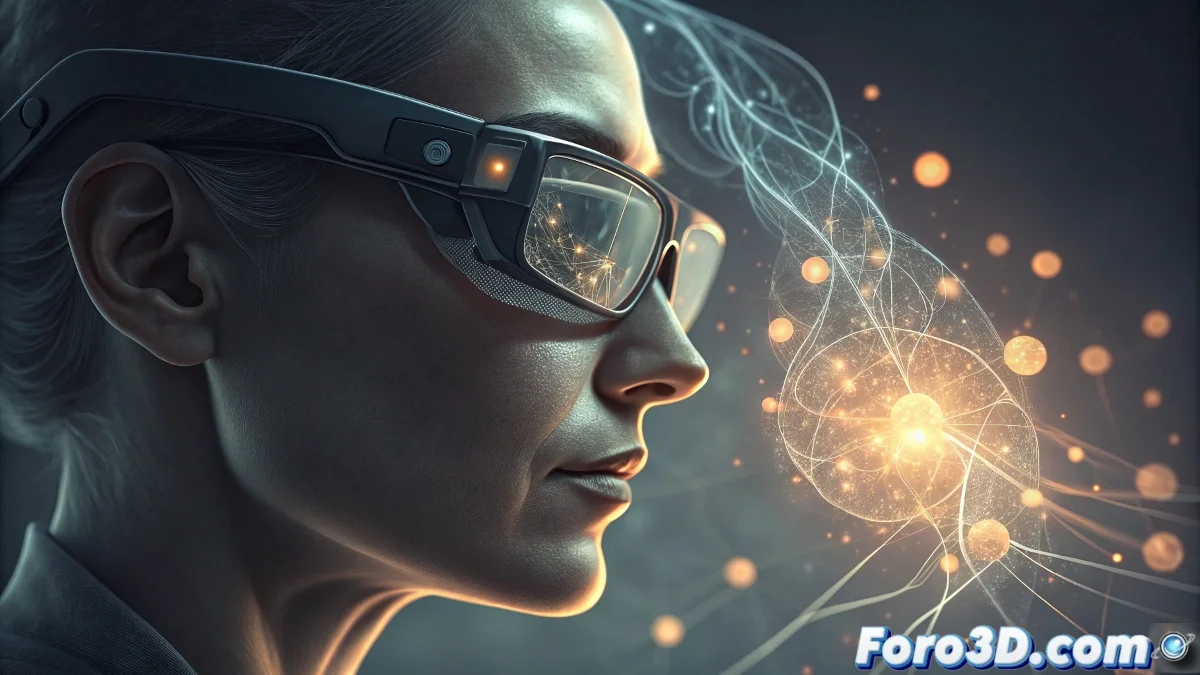
Ocular Implant and Smart Glasses Restore Partially Lost Vision
A revolutionary bionic system that combines a retinal implant with smart glasses is restoring partial visual capacity to people with blindness due to retinal degeneration. The technology, developed after years of research, uses an integrated camera in the glasses that transmits visual information directly to a chip implanted in the retina, bypassing the damaged photoreceptor cells and directly stimulating the optic nerve. 👁️
The Integrated Bionic Vision System
The system works through three main components that operate in perfect synchronization. The smart glasses contain a high-sensitivity camera that captures images of the surroundings, a miniature video processor that converts these images into digital signals, and a projection system that sends infrared light pulses to the retinal implant. This implant, which contains microscopic electrodes, converts the infrared signals into electrical stimuli that the brain interprets as shapes and movements.
Bionic system components:- Smart glasses with integrated camera and processor
- Retinal implant with microscopic electrode array
- Wireless communication system between glasses and implant
- Adaptive image processing software
"For the first time in ten years, I could see the silhouette of my wife - it's not perfect vision, but it's enough to completely change my life"
Applications in Degenerative Eye Conditions
The technology is specifically designed for people with retinitis pigmentosa and advanced macular degeneration, conditions where the photoreceptor cells deteriorate but the optic nerve remains functional. Patients who have tried the system report the ability to recognize doors and windows, avoid obstacles while walking, and even read large letters. The restored visual quality is described as black and white vision composed of points of light that the brain learns to interpret over time.
Restored visual capabilities:- Detection of movement and outlines of large objects
- Navigation in indoor and outdoor environments
- Recognition of basic human and facial shapes
- Identification of doors, furniture, and obstacles
Technical Advances and Adaptation Process
The retinal implant represents a significant advance in biocompatibility and neural integration. Made with biocompatible materials that minimize immune rejection, the device can function for years without needing replacement. Patients require a brain training period of several weeks where they learn to interpret the stimulation patterns as useful visual information. The system includes customizable adjustments that allow optimizing the visual quality according to specific needs of each user.
Advanced technical features:- 1,600-electrode array for improved visual resolution
- Wireless data and power transmission
- Rechargeable battery integrated into the glasses
- Remote software updates for continuous improvements
Impact on Quality of Life and Future of the Technology
The reported benefits go beyond functional visual improvement, including greater independence, reduction in depression, and improvement in social interactions. While the current technology provides partial vision, researchers are working on higher-resolution systems that could eventually restore full reading capacity and detailed facial recognition. This advance represents a crucial milestone in the convergence between technology, medicine, and neuroscience, offering hope to millions of people with visual loss due to degenerative conditions. 🔬